
TL;DR
This paper explores how neural stem cells help regulate brain cells under low oxygen conditions through specific mechanisms.
Contribution
The study reveals a novel regulatory mechanism involving miR-9 and Hes1 in neural stem cell-derived exosomes under hypoxia.
Findings
Neural stem cell-derived exosomes influence endothelial cell behavior via miR-9/Hes1.
These exosomes regulate proliferation, migration, and cell death under hypoxia.
The findings highlight potential therapeutic applications for brain-related diseases.
Abstract
The cover image is based on the article ‘Neural stem cell‐derived exosomes regulate cell proliferation, migration, and cell death of brain microvascular endothelial cells via the miR‐9/Hes1 axis under hypoxia’(DOI:10.1002/ame2.12394) reported by Xiaojun Deng, Xiaoyi Hu, et al. Stem cells, characterized by their undifferentiated nature, possess the remarkable ability for self‐renewal, high proliferation, anti‐inflammation and the potential to differentiate into various cell types. Stems cells, like dragons, symbolize regeneration and hope. These cells play pivotal roles in the body’s growth, development, and the onset of disease, rendering them as highly desirable targets in cell therapy.
Genes, proteins, chemicals, diseases, species, mutations and cell lines named across the full text — each resolved to its canonical identifier and authoritative record.
Click any figure to enlarge with its caption.
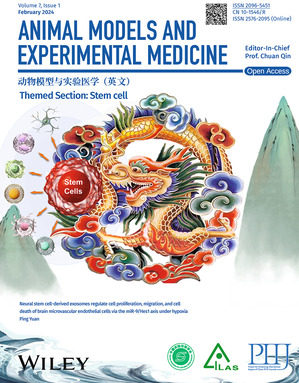 Figure 1
Peer Reviews
No public reviews on file for this paper yet. If you reviewed it on a platform where reviews are public (OpenReview, ICLR, NeurIPS, ICML), you can paste yours below so the community can read it here.
Videos
No videos yet. Explain this paper in a talk, walkthrough, or lecture? Add one.
Taxonomy
TopicsExtracellular vesicles in disease · MicroRNA in disease regulation · 3D Printing in Biomedical Research