The Relationship of Grade, Stage and Tobacco Usage in Head and Neck Squamous Cell Carcinoma With p53, PIK3CA and MicroRNA Profiles
Kamini Kiran, Nilotpal Chowdhury, Ashok Singh, Manu Malhotra, Sanjeev Kishore

TL;DR
This study explores how microRNA expression and protein levels relate to cancer grade, stage, and tobacco use in head and neck cancer, aiming to improve diagnosis and treatment.
Contribution
The study identifies candidate miRNAs potentially linked to cancer progression and tobacco use in HNSCC.
Findings
mir21 and mir15a show under-expression in higher-grade tumors.
mir155 and mir146a are overexpressed in stage IV tumors.
mir497 is overexpressed in tobacco users but without statistical significance.
Abstract
Background: Head and neck squamous cell carcinoma (HNSCC) has multiple epigenetic modifications including post-transcriptional regulation by microRNAs (miRNAs) as well as alterations in molecular pathways due to mutations. Examining these miRNAs and location-specific molecular alterations is essential to understanding the intricacies of HNSCC and directing focused diagnoses and treatments. Aim: To investigate tobacco-related changes in the expression of miRNAs and proteins with clinicopathological parameters of HNSCC and disease-modifying personal habits like tobacco and alcohol use. Methodology: The study concentrated on oropharyngeal cancers using immunohistochemistry and reverse transcription-polymerase chain reaction. Expression of microRNAs mir15a, mir20b, mir21, mir31, mir33b, mir146a, mir155, mir218, mir363 and mir497 and immunohistochemical expression of P53 and PIK3CA were…
Genes, proteins, chemicals, diseases, species, mutations and cell lines named across the full text — each resolved to its canonical identifier and authoritative record.
Click any figure to enlarge with its caption.
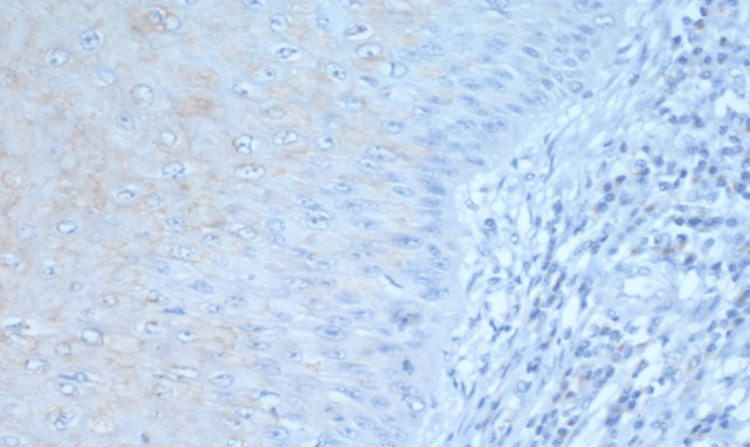 Figure 1
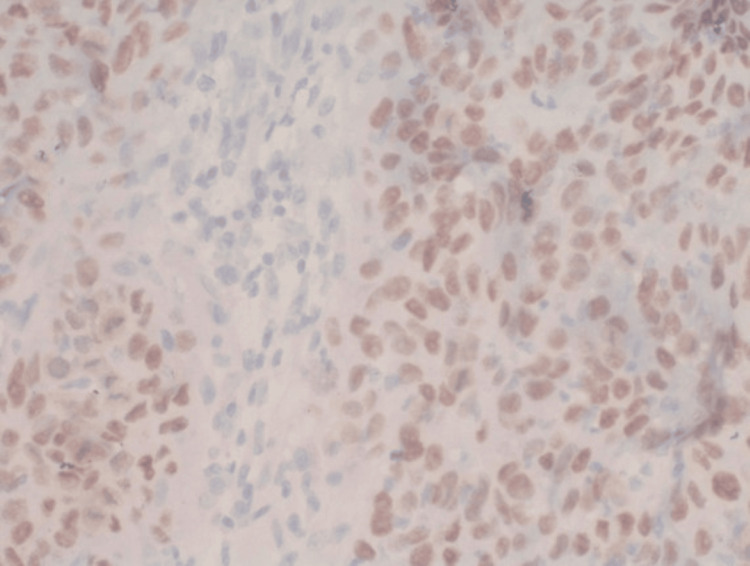 Figure 2
| miRNA | Grade | Mean±SD of ΔCt | Number of cases showing expression | Number of cases showing no expression of miRNA | ΔΔCT | Relative expression (2-ΔΔCT) | P value |
| mir155 | Well-differentiated | 5.98±4.16 | 54 | 13 | NA | NA | 0.33 |
| Moderately differentiated | 6.04±4.02 | 69 | 5 | 0.06 | 0.96 | ||
| Poorly differentiated | 8.25±4.72 | 8 | 1 | 2.27 | 0.21 | ||
| mir146a | Well-differentiated | 6.07±3.48 | 56 | 11 | NA | NA | 0.51 |
| Moderately differentiated | 6.54±4.03 | 68 | 6 | 0.47 | 0.72 | ||
| Poorly differentiated | 7.63±5.69 | 9 | 0 | 1.56 | 0.34 | ||
| mir218 | Well-differentiated | 9.04±5.30 | 41 | 26 | NA | NA | 0.87 |
| Moderately differentiated | 9.05±3.99 | 43 | 31 | 0.01 | 0.99 | ||
| Poorly differentiated | 7.60±9.16 | 3 | 6 | -1.44 | 2.71 | ||
| mir31 | Well-differentiated | 7.69±4.29 | 53 | 14 | NA | NA | 0.156 |
| Moderately differentiated | 9.07±3.14 | 62 | 12 | 1.39 | 0.38 | ||
| Poorly differentiated | 8.98±6.37 | 7 | 2 | 1.29 | 0.41 | ||
| mir21 | Well-differentiated | 1.13±4.68 | 61 | 6 | NA | NA | 0.094 |
| Moderately differentiated | 2.74±5.68 | 69 | 5 | 1.62 | 0.33 | ||
| Poorly differentiated | 4.37±5.45 | 9 | 0 | 3.24 | 0.11 | ||
| mir497 | Well-differentiated | 8.54±4.07 | 40 | 27 | NA | NA | 0.097 |
| Moderately differentiated | 10.56±3.61 | 39 | 35 | 2.02 | 0.25 | ||
| Poorly differentiated | 10.92±10.36 | 4 | 5 | 2.38 | 0.19 | ||
| mir363 | Well-differentiated | 9.78±4.09 | 33 | 34 | NA | NA | 0.70 |
| Moderately differentiated | 10.56±3.91 | 41 | 33 | 0.78 | 0.58 | ||
| Poorly differentiated | 10.34±3.05 | 3 | 6 | 0.56 | 0.68 | ||
| mir33b | Well-differentiated | 8.72±5.31 | 42 | 25 | NA | NA | 0.19 |
| Moderately differentiated | 9.48±4.46 | 53 | 21 | 0.76 | 0.59 | ||
| Poorly differentiated | 12.13±4.76 | 8 | 1 | 3.41 | 0.09 | ||
| mir20b | Well-differentiated | 8.84±6.38 | 18 | 49 | NA | NA | 0.90 |
| Moderately differentiated | 8.48±5.25 | 14 | 60 | -0.36 | 1.28 | ||
| Poorly differentiated | 6.20 ±NA | 1 | 8 | -2.65 | 6.27 | ||
| mir15a | Well-differentiated | 7.02±4.16 | 51 | 16 | NA | NA | 0.05 |
| Moderately differentiated | 8.99±3.96 | 55 | 19 | 1.96 | 0.26 | ||
| Poorly differentiated | 9.53±9.02 | 6 | 3 | 2.51 | 0.18 |
| miRNA | Stage | Mean±SD of ΔCt | Number of cases showing expression | Number of cases showing no expression of miRNA | ΔΔCt | Relative expression (2-ΔΔCt) | P value |
| mir155 | I | 6.68±3.94 | 11 | 0 | NA | NA | 0.33 |
| II | 6.20±4.25 | 16 | 2 | -0.48 | 1.40 | ||
| III | 6.15±3.39 | 21 | 5 | -0.53 | 1.44 | ||
| IVA | 6.44±4.42 | 74 | 11 | -0.24 | 1.18 | ||
| IVB | 3.07±2.12 | 9 | 1 | -3.62 | 12.26 | ||
| mir146a | I | 7.15±4.28 | 11 | 0 | NA | NA | 0.51 |
| II | 5.95±5.87 | 17 | 1 | -1.19 | 2.28 | ||
| III | 6.61±2.53 | 20 | 6 | -0.53 | 1.45 | ||
| IVA | 6.61±3.82 | 76 | 9 | -0.53 | 1.45 | ||
| IVB | 4.33±2.01 | 9 | 1 | -2.81 | 7.02 | ||
| mir218 | I | 8.77±2.32 | 7 | 4 | NA | NA | 0.99 |
| II | 9.29±3.17 | 6 | 12 | 0.52 | 0.70 | ||
| III | 8.53±5.21 | 20 | 6 | -0.24 | 1.18 | ||
| IVA | 9.18±5.44 | 45 | 40 | 0.41 | 0.75 | ||
| IVB | 9.09±2.77 | 9 | 1 | 0.32 | 0.80 | ||
| mir31 | I | 6.16±3.34 | 10 | 1 | NA | NA | 0.24 |
| II | 8.84±4.59 | 16 | 2 | 2.68 | 0.16 | ||
| III | 7.65±3.34 | 20 | 6 | 1.49 | 0.36 | ||
| IVA | 8.88±4.12 | 67 | 18 | 2.72 | 0.15 | ||
| IVB | 9.09±1.73 | 9 | 1 | 2.93 | 0.13 | ||
| mir21 | I | 1.07±6.16 | 11 | 0 | 0.93 | ||
| II | 2.89±6.73 | 16 | 2 | 1.83 | 0.28 | ||
| III | 1.92±4.90 | 22 | 4 | 0.85 | 0.55 | ||
| IVA | 2.23±5.10 | 80 | 5 | 1.16 | 0.45 | ||
| IVB | 1.84±5.09 | 10 | 0 | 0.77 | 0.58 | ||
| mir497 | I | 8.58±1.83 | 7 | 4 | NA | NA | 0.62 |
| II | 9.81±4.64 | 8 | 10 | 1.23 | 0.43 | ||
| III | 8.34±4.73 | 16 | 10 | -0.25 | 1.19 | ||
| IVA | 9.97±4.74 | 44 | 41 | 1.39 | 0.38 | ||
| IVB | 10.8±12.04 | 8 | 2 | 2.22 | 0.21 | ||
| mir363 | I | 11.65±2.28 | 6 | 5 | NA | NA | 0.56 |
| II | 9.43±2.78 | 7 | 11 | -2.21 | 4.64 | ||
| III | 9.16±4.41 | 15 | 11 | -2.49 | 5.62 | ||
| IVA | 10.6±84.35 | 41 | 44 | -0.97 | 1.96 | ||
| IVB | 9.49±1.99 | 8 | 2 | -2.16 | 4.46 | ||
| mir33b | I | 11.79±4.54 | 8 | 3 | NA | NA | 0.33 |
| II | 9.20±4.11 | 13 | 5 | -2.59 | 6.03 | ||
| III | 8.37±4.44 | 16 | 10 | -3.42 | 10.73 | ||
| IVA | 9.66±5.38 | 58 | 27 | -2.13 | 4.37 | ||
| IVB | 7.13±2.02 | 8 | 2 | -4.66 | 25.33 | ||
| mir20b | I | 12.02±1.71 | 5 | 6 | NA | NA | 0.44 |
| II | 8.04±3.24 | 3 | 15 | -3.98 | 15.81 | ||
| III | 5.20±7.10 | 5 | 21 | -6.82 | 113.18 | ||
| IVA | 8.54±6.21 | 19 | 66 | -3.48 | 11.18 | ||
| IVB | 11.78 ±NA | 1 | 9 | -0.24 | 1.18 | ||
| mir15a | I | 7.34±4.71 | 10 | 1 | NA | NA | 0.66 |
| II | 8.51±6.62 | 10 | 8 | 1.17 | 0.44 | ||
| III | 7.05±2.95 | 19 | 7 | -0.29 | 1.22 | ||
| IVA | 8.32±4.66 | 65 | 20 | 0.98 | 0.51 | ||
| IVB | 9.57±2.62 | 8 | 2 | 2.23 | 0.21 |
| miRNA | Habit | Mean±SD of ΔCt | Number of cases showing expression | Number of cases showing no expression of miRNA | ΔΔCt | Relative expression (2-ΔΔCt) | P value |
| miRNA155 | Alcohol | 2.27± NA | 1 | 0 | NA | NA | 0.90 |
| Nil | 6.43± 3.91 | 24 | 1 | NA | NA | ||
| Tobacco | 6.06± 4.17 | 79 | 15 | -0.37 | 1.30 | ||
| Tobacco and Alcohol | 6.33± 4.32 | 27 | 3 | -0.10 | 1.07 | ||
| mir146a | Alcohol | 3.91± NA | 1 | 0 | NA | NA | 0.40 |
| Nil | 6.74± 2.73 | 24 | 1 | NA | NA | ||
| Tobacco | 6.64± 3.60 | 82 | 12 | -0.10 | 1.07 | ||
| Tobacco and Alcohol | 5.51± 5.58 | 26 | 4 | -1.24 | 2.36 | ||
| mir218 | Alcohol | 10.67± NA | 1 | 0 | NA | NA | 0.50 |
| Nil | 10.23± 4.55 | 15 | 10 | NA | NA | ||
| Tobacco | 8.58± 4.60 | 53 | 41 | -1.65 | 3.15 | ||
| Tobacco and Alcohol | 9.10± 5.64 | 18 | 12 | -1.13 | 2.18 | ||
| mir31 | Alcohol | 11.67± NA | 1 | 0 | NA | NA | 0.70 |
| Nil | 9.08± 3.08 | 21 | 4 | NA | NA | ||
| Tobacco | 8.34± 3.84 | 75 | 19 | -0.74 | 1.68 | ||
| Tobacco and Alcohol | 8.20± 4.80 | 25 | 5 | -0.88 | 1.84 | ||
| mir21 | Alcohol | 6.90± NA | 1 | 0 | NA | NA | 0.92 |
| Nil | 2.20± 4.78 | 24 | 1 | NA | NA | ||
| Tobacco | 2.20± 4.96 | 85 | 9 | -0.01 | 1.00 | ||
| Tobacco and Alcohol | 1.76± 6.70 | 29 | 1 | -0.44 | 1.36 | ||
| mir497 | Alcohol | 10.92± NA | 1 | 0 | NA | NA | 0.20 |
| Nil | 11.41± 3.87 | 14 | 11 | NA | NA | ||
| Tobacco | 9.37± 4.43 | 53 | 41 | -2.04 | 4.11 | ||
| Tobacco and Alcohol | 8.68± 4.42 | 15 | 15 | -2.73 | 6.62 | ||
| mir363 | Alcohol | NaN | 0 | 1 | NA | NA | 0.36 |
| Nil | 11.14± 3.70 | 15 | 10 | NA | NA | ||
| Tobacco | 10.26± 3.84 | 49 | 45 | -0.89 | 1.85 | ||
| Tobacco and Alcohol | 9.03± 4.52 | 13 | 17 | -2.12 | 4.33 | ||
| mir33b | Alcohol | 7.29 | 1 | 0 | NA | NA | 0.77 |
| Nil | 9.94± 4.29 | 17 | 8 | NA | NA | ||
| Tobacco | 9.12± 4.69 | 63 | 31 | -0.82 | 1.77 | ||
| Tobacco and Alcohol | 9.75± 6.00 | 22 | 8 | -0.19 | 1.14 | ||
| mir20b | Alcohol | NaN | 0 | 1 | NA | NA | 0.95 |
| Nil | 9.09± 6.28 | 5 | 20 | NA | NA | ||
| Tobacco | 8.36± 5.72 | 21 | 73 | -0.72 | 1.65 | ||
| Tobacco and Alcohol | 9.01± 6.33 | 7 | 23 | -0.07 | 1.05 | ||
| mir15a | Alcohol | 11.79± NA | 1 | 0 | NA | NA | 0.40 |
| Nil | 8.84± 3.84 | 19 | 6 | NA | NA | ||
| Tobacco | 8.21± 4.36 | 72 | 22 | -0.63 | 1.55 | ||
| Tobacco and Alcohol | 6.96± 5.46 | 20 | 10 | -1.88 | 3.68 |
| IHC marker | Expression | Nil (N) | Tobacco (N) | Tobacco & Alcohol (N) | P value |
| PIK3CA | Negative | 19 | 78 | 20 | 0.157 |
| Positive | 6 | 16 | 10 | ||
| P53 | Negative | 9 | 42 | 10 | 0.504 |
| Positive | 15 | 52 | 20 |
| TNM Staging | |||||||
| IHC marker | Expression | I (N) | II (N) | III (N) | IVA (N) | IVB (N) | P value |
| PIK3CA | Negative | 9 | 14 | 19 | 68 | 8 | 0.956 |
| Positive | 2 | 4 | 7 | 17 | 2 | ||
| P53 | Negative | 5 | 7 | 9 | 36 | 5 | 0.911 |
| Positive | 6 | 11 | 17 | 48 | 5 | ||
| Grading | |||||
| IHC marker | Expression | Well-Differentiated (N) | Mod differentiated (N) | Poorly differentiated (N) | P value |
| PIK3CA | Negative | 52 | 60 | 6 | 0.585 |
| Positive | 15 | 14 | 3 | ||
| P53 | Negative | 23 | 35 | 4 | 0.260 |
| Positive | 44 | 38 | 5 | ||
| Site | Frequency | Percentage |
| Buccal mucosa | 55 | 36.7% |
| Tongue | 48 | 32.0% |
| Alveolus | 9 | 6.0% |
| Gingivobuccal sulcus | 5 | 3.3% |
| Maxillary sinus | 5 | 3.3% |
| Supraglottis | 8 | 5.3% |
| Hard palate | 6 | 4.0% |
| Lip | 3 | 2.0% |
| Mandible | 2 | 1.3% |
| Other/Multiple | 9 | 6.0% |
| Total | 150 | 100 |
Peer Reviews
No public reviews on file for this paper yet. If you reviewed it on a platform where reviews are public (OpenReview, ICLR, NeurIPS, ICML), you can paste yours below so the community can read it here.
Videos
No videos yet. Explain this paper in a talk, walkthrough, or lecture? Add one.
Taxonomy
TopicsCancer-related molecular mechanisms research · MicroRNA in disease regulation · Head and Neck Cancer Studies
Introduction
Cancers affecting the mucosal lining of the mouth, throat, and larynx are collectively known as head and neck squamous cell carcinomas (HNSCCs). The complex interaction between viral, environmental, and genetic variables leads to the multifactorial aetiology of HNSCC [1]. Human papillomavirus (HPV)-associated HNSCC, especially in the oropharyngeal area, has demonstrated unique clinical and molecular characteristics [2,3]. Tobacco and HPV work synergistically to promote carcinogenicity [4].
The literature provides extensive information on HPV-related HNSCC, highlighting debates, novel ideas, and cutting-edge treatments. Nonetheless, there is a pressing need to investigate the regional variations of HNSCC and the effects of tobacco use and HPV infection on molecular changes in various head and neck anatomical locations [5-7].
Impact of microRNAs (miRNAs) and proteins
Proteins and miRNAs are key components of the pathophysiology of HNSCC. Deciphering their changes in a location-specific way is essential to understanding the complexity of the illness. To shed light on the molecular pathways, diagnostics, and therapy options using nanomedicine, Bhattacharjee et al. [3] investigated the pharmacological influence of miRNAs in HNSCC. With respect to the molecular and clinical implications, Powell et al. (2021) highlighted the fundamental distinctions between head and neck malignancies that are HPV-positive and HPV-negative [8].
Even though there is an extensive body of literature on HNSCC, there remain unanswered questions, especially regarding region-specific molecular changes. Sabatini et al. discussed the intricate mechanisms underlying viral-associated carcinogenesis in head and neck cancers. The regulatory roles and possible implications of miRNAs for targeted therapeutics were highlighted in an investigation of the miRNAs landscape in head and neck cancer [5].
Immunohistochemical (IHC) markers (P53, PIK3CA)
In HNSCC, understanding the molecular pathways and predicting patient outcomes is greatly aided by the use of various IHC markers, especially in the context of HPV infection. Salazar et al. (2014) and Smith et al. (2010) have identified p53 as important markers associated with survival in HNSCC [9,10]. Aguayo et al. (2023) and Kommineni et al. (2015) studied the significance of PIK3CA mutations in the PI3K/AKT/mTOR signalling pathway [11,12]. The role of PIK3CA in HPV-positive oropharyngeal squamous cell carcinoma was studied by Chiosea et al. (2013) [13]. These IHC markers collectively offer valuable information on the molecular profile of HNSCC.
To fill research gaps, the present study examined grade, stage and tobacco-related changes in proteins and miRNAs in HNSCC.
Materials and methods
The present study was conducted in the Department of Pathology and Lab Medicine, at the All India Institute of Medical Sciences, Rishikesh, India. The study was approved by the institution’s ethical committee (IEC - AIIMS/IEC/18/505). This was an exploratory study having a sample size of one hundred and fifty HNSCC samples.
Histologically confirmed cases of malignant squamous lesions of the oropharyngeal tracts, which include the tongue, buccal mucosa, floor of the mouth, alveolus, maxilla, and larynx, were retrieved from archival blocks and included and patients with a history of previous radiation therapy were excluded from the study.
Archived formalin-fixed paraffin-embedded (FFPE) tissue sections (3 μm) were carefully deparaffinized, rehydrated, and pretreated with antigen retrieval. Using antibodies that target important indicators, an IHC examination was performed.
Antibodies against PIK3CA and P53 (DO7) (Invitrogen, Thermofisher, USA) were used in the IHC analysis. Based on predetermined scoring criteria for PIK3CA and P53, the assessment of positive and negative staining for each marker involved a minimum evaluation of 10 high-power fields of invasive cancer. In PIK3CA both cytoplasmic and nuclear positivity were taken positive and in p53 nuclear positive staining was taken as positive. Representative pictures of IHC are given in Figures 1-2.
The figure represents a photomicrograph of IHC PIK3CA (magnification 40x)IHC - immunohistochemistry
The figure represents a photomicrograph of IHC p53 (magnification, 40x)IHC - immunohistochemistry
The mirVana miRNA Isolation Kit (Invitrogen, Thermofisher, USA) was used to isolate RNA from FFPE tissue sections. The following miRNA were studied: mir15a, mir20b, mir21, mir31, mir33b, mir146a, mir155, mir218, mir363 and mir497. The concentration and purity of RNA were estimated using a Tecan reader (infinite F200 PRO, Germany). Synthesis of cDNA was carried out using the Mir-X miRNA First-Strand Synthesis Kit (Takara Bio, USA). U6 was taken as a housekeeping gene. Reverse transcription-polymerase chain reaction (RT-PCR) was carried out using a Bio-Rad CFX96 machine (Bio-Rad Laboratories, Hercules, CA). The cycle threshold (Ct) for each miRNA was estimated from the inbuilt software of the instrument. Delta Ct (ΔCt) values for each miRNA were estimated by subtracting the mean Ct of the miRNA probe from the mean Ct of the housekeeping U6 gene. ΔΔCt values were then calculated by subtracting the ΔCt values of the subgroup of interest from the ΔCt of a reference subgroup. For the relative expression between different grades, well-differentiated carcinoma formed the reference subgroup, against which the relative expression of moderately differentiated and poorly differentiated carcinomas was studied. For stage, stage I formed the reference subgroup, against which the relative expression of Stage II, Stage III, Stage IVA, and Stage IVB were studied. For personal habits, patients not having either tobacco or alcohol use was the reference subgroup, against which the relative expressions of the subgroups showing tobacco use alone or tobacco and alcohol use were studied. Only one subject reported alcohol use alone for whom relative expression was not calculated. Relative miRNA expression levels were calculated using the 2^-ΔΔCt^ method, normalized to the housekeeping gene U6. Statistical significance was tested using one-way analysis of variance (ANOVA) on ΔCt values.
Results
This paper provides an examination of HNSCC, emphasizing the role of tobacco use, grade and stage with changes in p53 and PIK3CA protein and miRNA expression. mir21, mir146a, mir155 and mir31 showed amplification in more than 80% of the tumours (139/150 for mir21,133/150 for mir146a,131/150 for mir155 and 122/150 for mir31). mir15a showed amplification in around 75% (112/150 tumours). mir20b, mir33b, mir218, mir363 and mir497 showed no amplification in more than one-fourth of the tumours and hence the interpretability of these mirs was limited.
miRNA expression with grade
Table 1 displays the differences in miRNA expression between the different grades of HNSCC. Notably, mir21 and mir15a are underexpressed in higher grades with a ΔΔCT of more than 2 and a trend towards statistical significance. Though mir33b and mir 497 also showed large-fold changes, the results for these miRNAs are limited by a large number of tumours showing no expression of that particular miRNA.
miRNA expression with stage
Table 2 shows the changes in the expression of miRNA between the HNSCC stages (I-VB). In moderately differentiated squamous cell carcinoma (MDSCC), mir155 and mir146a are overexpressed in stage IV tumours while mir31 is underexpressed in stage IV tumours. However, statistical significance was not achieved at any stage.
miRNA expression by associated habit
In Table 3, the relationship of miRNA expression with lifestyle choices (alcohol, tobacco, alcohol and tobacco) is given. Only mir497 showed overexpression in tobacco users, but these results were limited by many tumours not showing any amplification for the miRNA.
IHC marker expression
There was no statistically significant relationship between PIK3CA or p53 with either grade or stage or associated habits (Tables 4-6).
Demographic characteristics
The study included 129 male participants and 21 female participants, the median age was 46 years, ranging from 20 to 82 years and the distribution of the site of the tumours is given in Table 7.
Discussion
The molecular complexities of HNSCC must be fully understood to improve diagnostic and treatment strategies. HNSCC is a significant global health concern. This study focused on miRNAs, which are important molecules in cancer biology because they affect critical cellular functions. The goal of the project was to identify patterns of miRNA expression in various HNSCC subtypes and investigate how these patterns are associated with lifestyle decisions, clinicopathological variables, and the expression of important IHC markers.
miRNAs are important players in the complex dynamics of HNSCC, affecting many aspects including gene expression, grading, and staging. Some patterns stand out, such as the low expression of mir21, mir15a and mir497 in poorly differentiated squamous cell carcinoma (PDSCC), which is consistent with the prognostic relevance observed by Dioguardi et al. (2022) [14]. These findings suggest the possible use of mir21 and mir33b as biomarkers for the severity and course of illness, but need larger studies due to the borderline statistical significance.
Our examination of miRNA expression in relation to TNM staging revealed dynamic patterns indicating possible roles in the advancement of HNSCC. The observed decrease in the expression of mir155 in MDSCC from stage I to stage IVB is consistent with data from Dioguardi et al. (2022) highlighting the significance of using miRNA profiles for accurate staging [14]. Inter-stage differences in the expression of mir146a and mir363 suggest their involvement in distinct stages of HNSCC, which is consistent with the complex molecular dynamics highlighted in earlier studies [4,14-16].
The associations between lifestyle decisions and miRNA expression highlight how the environment potentially affects the biology of HNSCCs. We could not confirm changes in expression of mir155 in tobacco users which was found in Bhat et al. (2018) [17]. We however observed an upregulation of mir497 in alcohol and tobacco users [17,18].
The interaction of genetic and environmental variables in HNSCC was demonstrated by the examination of PIK3CA and P53 IHC markers. We did not find the increased expression of PIK3CA in tobacco smokers which was found in a previous study (Hashmi et al., 2018). No association between lifestyle choices and P53 expression was observed [19].
Understanding the clinical importance of IHC markers is nuanced when viewed in the context of TNM staging and tumour grading. The limited associations observed between IHC markers and HNSCC are consistent with the research conducted by Hashmi et al. (2018) [19]. The function of miRNAs, HPV association, and genetic variation have been explored in several HNSCC-related studies, Sais et al. (2018), Momi et al. (2014), Miller et al. (2015), and Wilkins et al. (2018) [20-23].
To better understand particular indicators and pathways connected to the disease, we examined the findings of the present study in the context of the existing literature on HNSCC and tobacco use. Our findings are consistent with an earlier examination of miRNA dynamics in oral and oropharyngeal squamous cell carcinomas associated with HPV, which identified common patterns of dysregulation, such as the downregulation of mir497 in well-differentiated squamous cell carcinoma (WDSCC) (Salazar et al., 2014) [9].
Conclusions
The present study has demonstrated complex molecular dynamics in HNSCC, highlighting the crucial function of miRNAs and their interaction with IHC markers and lifestyle decisions. The expression of miRNAs, particularly those associated with disease severity (mir21 and mir33b), provides important information for precise disease classification among HNSCC subtypes.
Understanding the complex interplay among genetics, lifestyle, and molecular pathways in HNSCC is promising in terms of improving the accuracy of diagnosis and customizing treatment approaches. However, larger studies are required since statistical significance was not reached. It is essential to carry out such studies, both now and in the future, to improve patient outcomes and influence the management of HNSCC.
The reference list from the paper itself. Each links out to its DOI / PubMed record.
- 1Human papillomavirus associated head and neck squamous cell carcinoma: controversies and new concepts J Oral Biol Craniofac Res Husain N Neyaz A 198205720172912400010.1016/j.jobcr.2017.08.003PMC 5670302 · doi ↗ · pubmed ↗
- 2Head and neck squamous cell carcinoma Nat Rev Dis Primers Johnson DE Burtness B Leemans CR Lui VW Bauman JE Grandis JR 92620203324398610.1038/s 41572-020-00224-3PMC 7944998 · doi ↗ · pubmed ↗
- 3Pharmacological impact of micro RN As in head and neck squamous cell carcinoma: prevailing insights on molecular pathways, diagnosis, and nanomedicine treatment Front Pharmacol Bhattacharjee B Syeda AF Rynjah D 11743301420233720590410.3389/fphar.2023.1174330 PMC 10188950 · doi ↗ · pubmed ↗
- 4An update on cellular micro RNA expression in human papillomavirus-associated head and neck squamous cell carcinoma Oncology Emmett S Whiteman DC Panizza BJ Antonsson A 1932019520182992048510.1159/000489786 · doi ↗ · pubmed ↗
- 5Human papillomavirus as a driver of head and neck cancers Br J Cancer Sabatini ME Chiocca S 30631412220203170857510.1038/s 41416-019-0602-7PMC 7000688 · doi ↗ · pubmed ↗
- 6Micro RN As in head and neck cancer Int J Dent John K Wu J Lee BW Farah CS 650218201320132426003510.1155/2013/650218 PMC 3821954 · doi ↗ · pubmed ↗
- 7Epigenetic mechanisms of human papillomavirus-associated head and neck cancer Arch Pathol Lab Med Anayannis NV Schlecht NF Belbin TJ 1373137813920152597876610.5858/arpa.2014-0554-RA · doi ↗ · pubmed ↗
- 8The key differences between human papillomavirus-positive and -negative head and neck cancers: biological and clinical implications Cancers (Basel) Powell SF Vu L Spanos WC Pyeon D 52061320213468035410.3390/cancers 13205206 PMC 8533896 · doi ↗ · pubmed ↗