See Elegans: Simple-to-use, accurate, and automatic 3D detection of neural activity from densely packed neurons
Enrico Lanza, Valeria Lucente, Martina Nicoletti, Silvia Schwartz, Ilaria F. Cavallo, Davide Caprini, Christopher W. Connor, Mashel Fatema A. Saifuddin, Julia M. Miller, Noelle D. L’Etoile, Viola Folli

TL;DR
See Elegans is a new tool that automatically detects neural activity in 3D brain imaging of C. elegans with high accuracy and ease of use.
Contribution
See Elegans introduces a novel automatic method for neuron segmentation and tracking without requiring the RFP channel.
Findings
See Elegans outperforms existing algorithms in most cases for neuron detection.
The tool allows identification of head neurons based on position and activity.
It provides a user-friendly interface for processing volumetric calcium imaging data.
Abstract
In the emerging field of whole-brain imaging at single-cell resolution, which represents one of the new frontiers to investigate the link between brain activity and behavior, the nematode Caenorhabditis elegans offers one of the most characterized models for systems neuroscience. Whole-brain recordings consist of 3D time series of volumes that need to be processed to obtain neuronal traces. Current solutions for this task are either computationally demanding or limited to specific acquisition setups. Here, we propose See Elegans, a direct programming algorithm that combines different techniques for automatic neuron segmentation and tracking without the need for the RFP channel, and we compare it with other available algorithms. While outperforming them in most cases, our solution offers a novel method to guide the identification of a subset of head neurons based on position and…
Genes, proteins, chemicals, diseases, species, mutations and cell lines named across the full text — each resolved to its canonical identifier and authoritative record.
Click any figure to enlarge with its caption.
 Figure 1
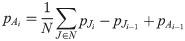 Figure 2
 Figure 3
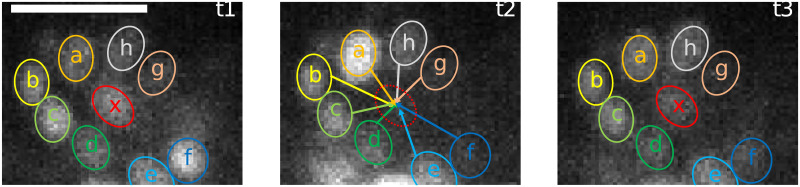 Figure 4
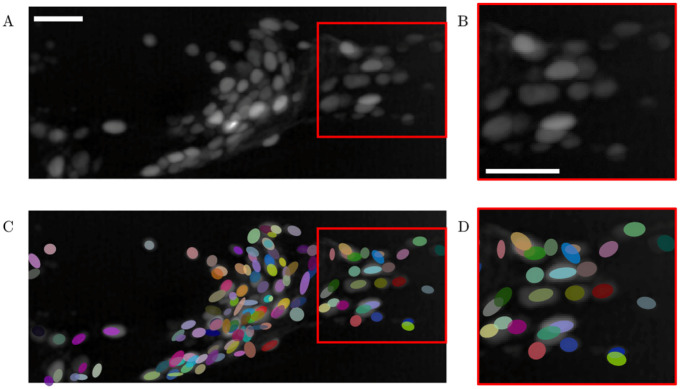 Figure 5
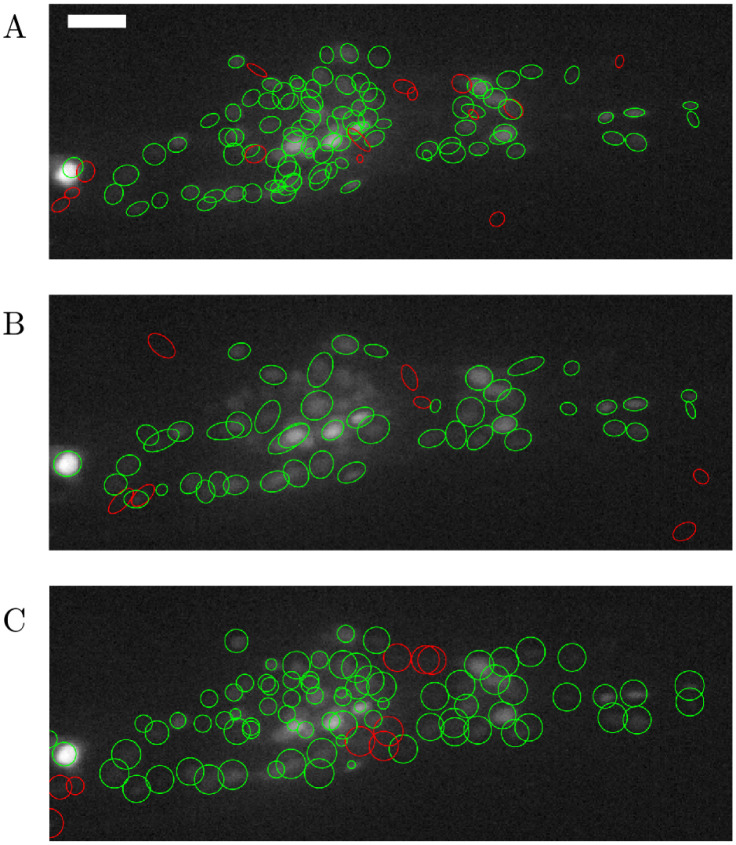 Figure 6
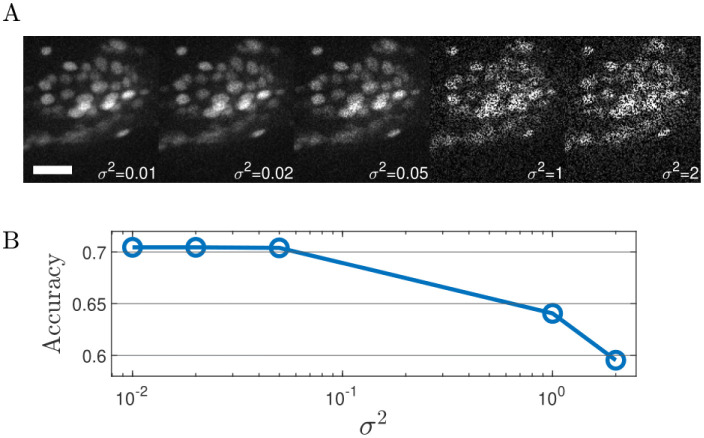 Figure 7
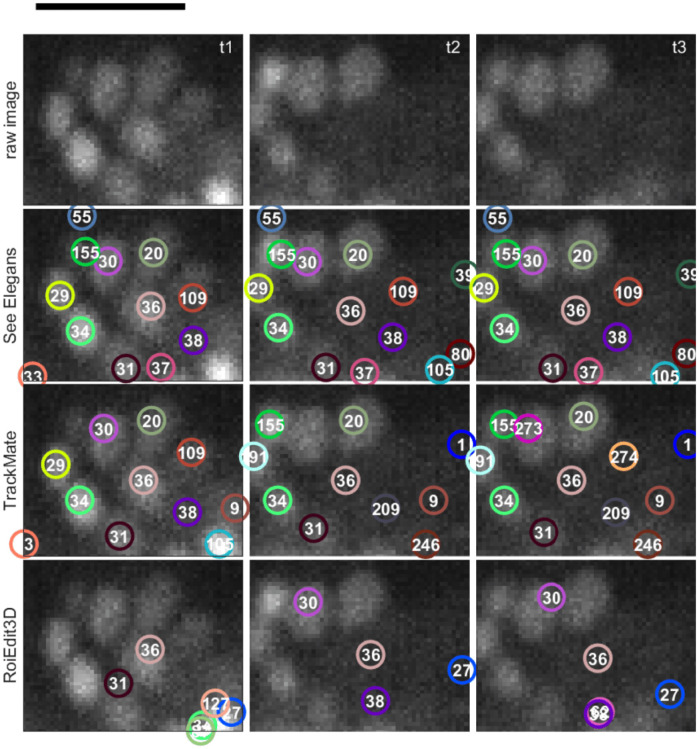 Figure 8
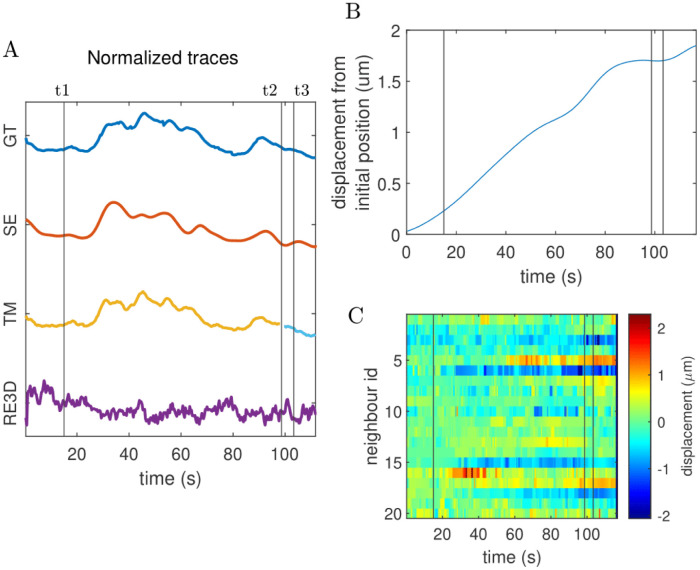 Figure 9
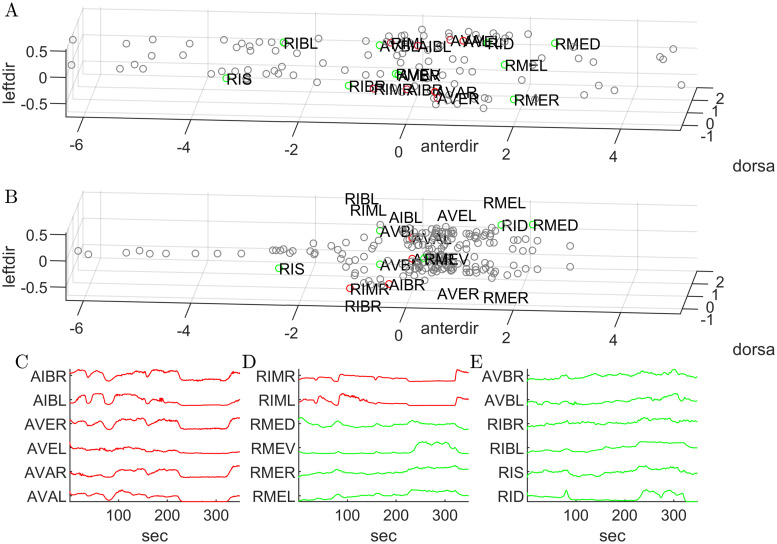 Figure 10
 Figure 11
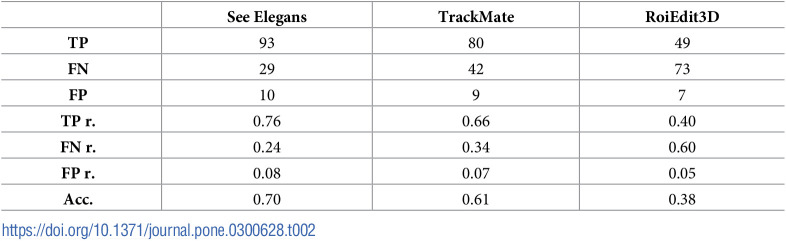 Figure 12
 Figure 13
 Figure 14
 Figure 15
Peer Reviews
No public reviews on file for this paper yet. If you reviewed it on a platform where reviews are public (OpenReview, ICLR, NeurIPS, ICML), you can paste yours below so the community can read it here.
Videos
No videos yet. Explain this paper in a talk, walkthrough, or lecture? Add one.
Taxonomy
TopicsNeural dynamics and brain function · Genetics, Aging, and Longevity in Model Organisms · Photoreceptor and optogenetics research