Lyme borreliosis and medical wandering: what do patients think about multidisciplinary management? A qualitative study in the context of scientific and social controversy
Alice Raffetin, Costanza Puppo, Amal Chahour, Assia Belkasmi, Elisabeth Baux, Solène Patrat-Delon, Pauline Caraux-Paz, Julie Rivière, Sébastien Gallien

TL;DR
This study explores how patients with suspected Lyme borreliosis perceive multidisciplinary care in specialized centers, finding that it helps reduce medical wandering and misinformation.
Contribution
The study introduces a novel qualitative analysis of patient satisfaction in multidisciplinary care for Lyme borreliosis amid scientific and social controversy.
Findings
Multidisciplinary care improves patient satisfaction by providing dedicated time and seamless carepaths.
Patient trust in the team's competence is central to care satisfaction.
Communication gaps and controversy around Lyme borreliosis remain significant challenges.
Abstract
To answer to patients’ medical wandering, often due to “unexplained symptoms” of “unexplained diseases” and to misinformation, multidisciplinary care centers for suspected Lyme borreliosis (LB), such as the 5 Tick-Borne Diseases (TBDs) Reference Centers (TBD-RC), were created a few years ago in France, the Netherlands and Denmark. Our study consisted of a comprehensive analysis of the satisfaction of the patients managed at a TBD-RC for suspected LB in the context of scientific and social controversy. We included all adults who were admitted to one of the TBD-RC from 2017 to 2020. A telephone satisfaction survey was conducted 12 months after their first consultation. It consisted of 5 domains, including 2 free-text items: “What points did you enjoy?” and “What would you like us to change or to improve?”. In the current study, the 2 free-items were analyzed with a qualitative method…
Genes, proteins, chemicals, diseases, species, mutations and cell lines named across the full text — each resolved to its canonical identifier and authoritative record.
Click any figure to enlarge with its caption.
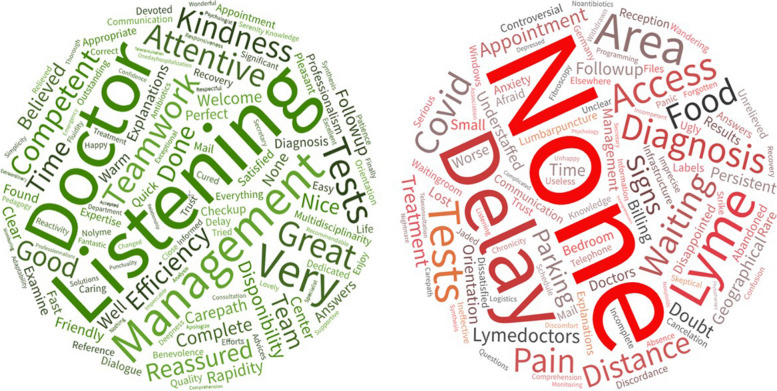 Figure 1
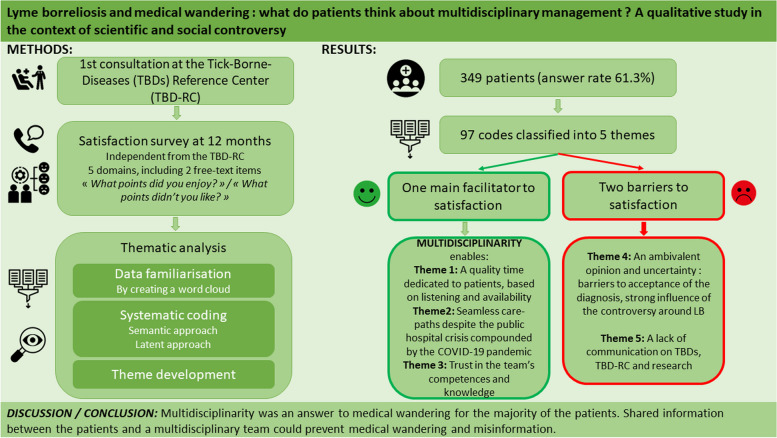 Figure 2
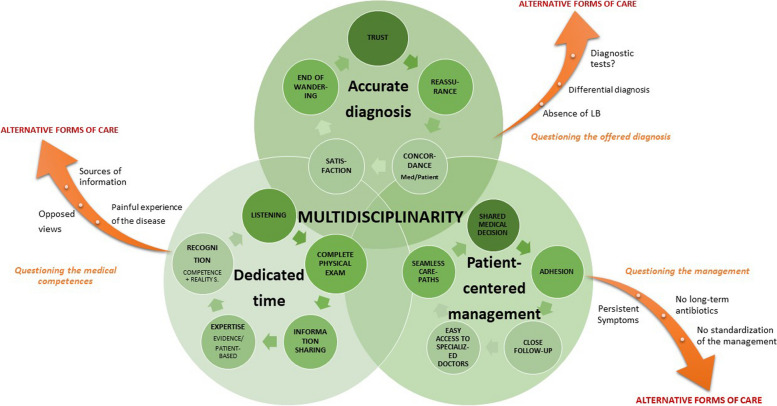 Figure 3
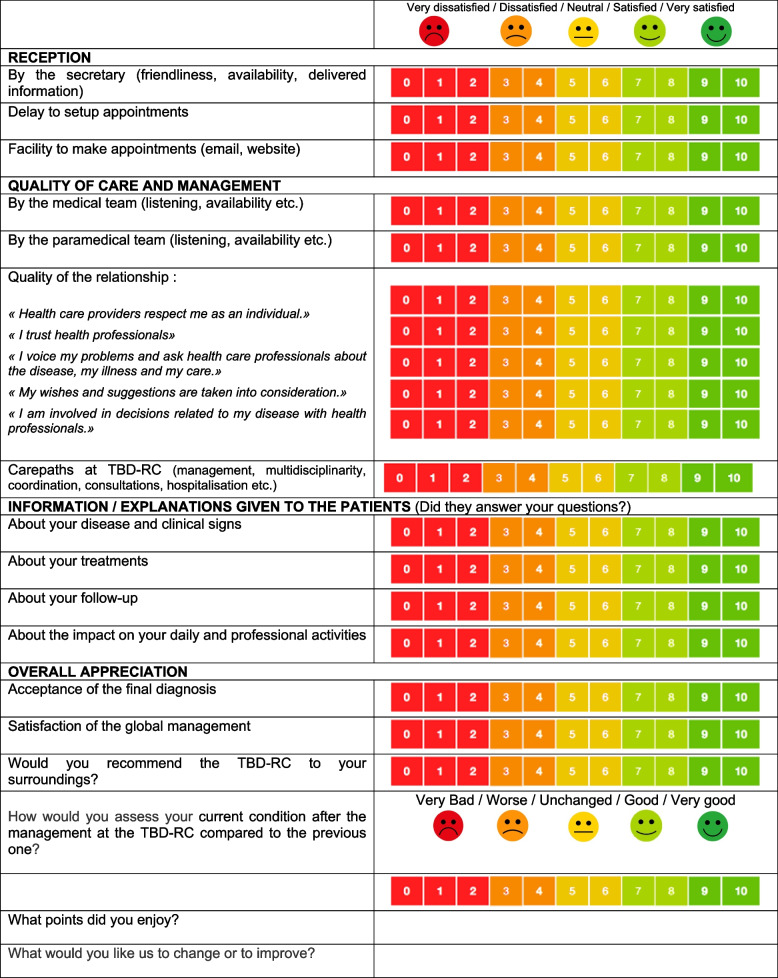 Figure 4
Peer Reviews
No public reviews on file for this paper yet. If you reviewed it on a platform where reviews are public (OpenReview, ICLR, NeurIPS, ICML), you can paste yours below so the community can read it here.
Videos
No videos yet. Explain this paper in a talk, walkthrough, or lecture? Add one.
Taxonomy
TopicsVector-borne infectious diseases · Viral Infections and Vectors · Zoonotic diseases and public health