Hazard rate estimation when the measurement error has a normal or logistic distribution
Parviz Nasiri, Rougheih Kheirazar, Abbas Rasouli, Ali Shadrokh

TL;DR
This paper studies how to estimate hazard rates when data has normal or logistic measurement errors, improving reliability analysis.
Contribution
The paper introduces a method for hazard rate estimation with measurement errors from normal or logistic distributions.
Findings
Local time polynomial estimators were used to estimate the density function.
The risk rate function was estimated under 15% and 30% contamination levels.
Numerical analysis demonstrated the effectiveness of the proposed method.
Abstract
Statistical data analysis available in most scientific fields is often recorded with measurement error. The modeling of these statistical data by ignoring the measurement errors, leads to estimators of the parameters of the distributions, whose use does not achieve sufficient accuracy in the goodness of fit. In reliability criteria, one of the important issues is hazard rate function. It prompted us to investigate the hazard rate criterion in the presence of measurement error generated from the normal or logistic distribution. Now, while providing the estimator for the density function using local time polynomial estimator methods, the risk rate function is estimated according to the contamination degree of 15 or 30%. Finally, we present the numerical analysis.
Genes, proteins, chemicals, diseases, species, mutations and cell lines named across the full text — each resolved to its canonical identifier and authoritative record.
Click any figure to enlarge with its caption.
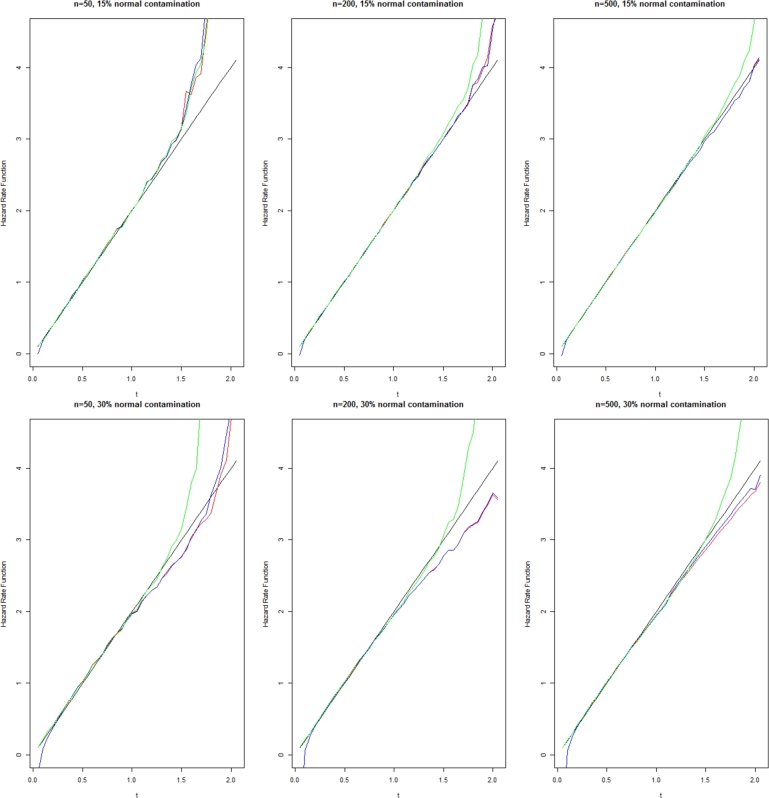 Figure 1
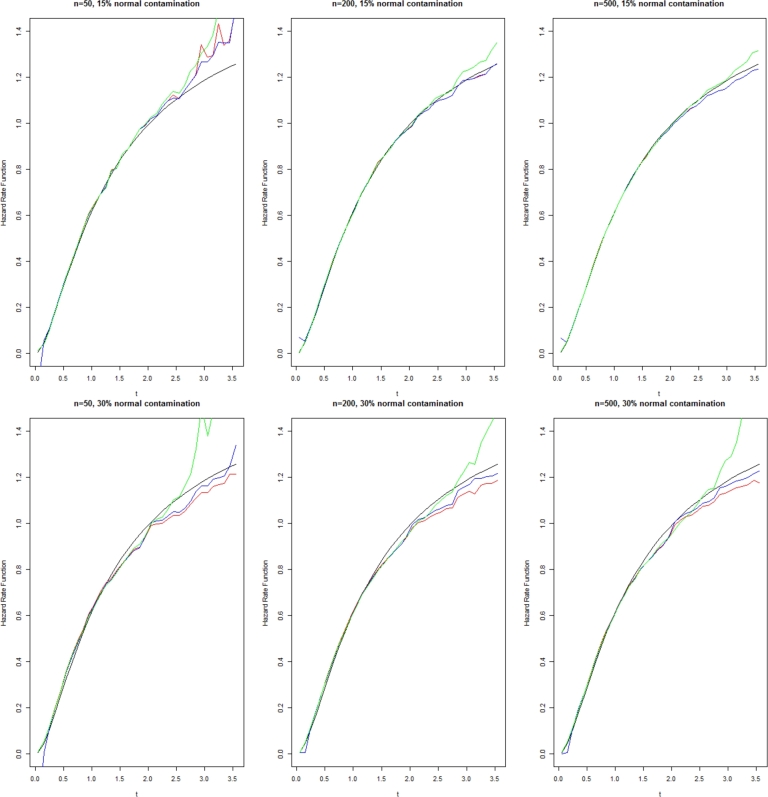 Figure 2
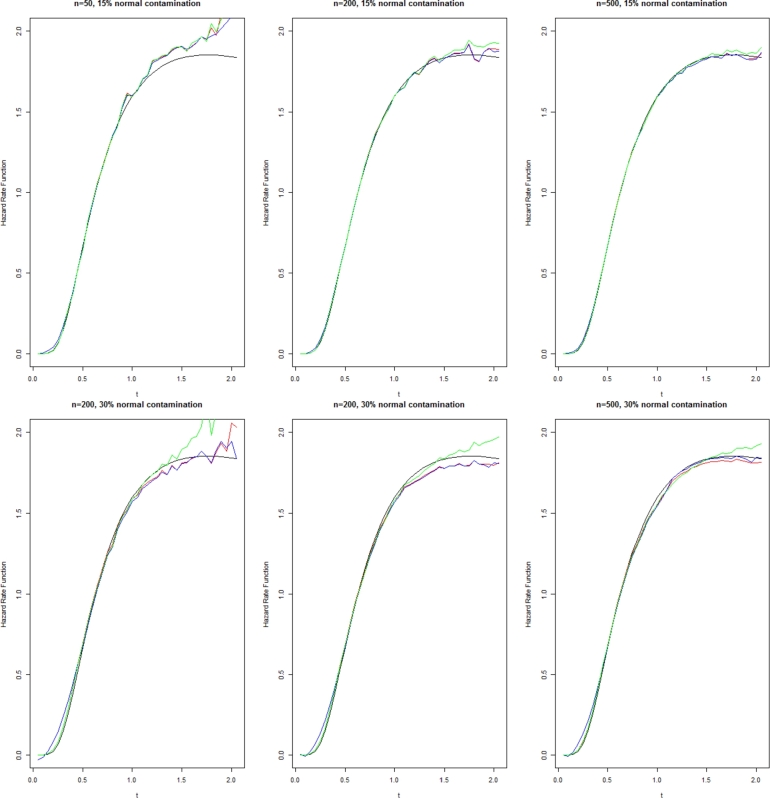 Figure 3
Peer Reviews
No public reviews on file for this paper yet. If you reviewed it on a platform where reviews are public (OpenReview, ICLR, NeurIPS, ICML), you can paste yours below so the community can read it here.
Videos
No videos yet. Explain this paper in a talk, walkthrough, or lecture? Add one.
Taxonomy
TopicsStatistical Distribution Estimation and Applications · Advanced Statistical Methods and Models · Fault Detection and Control Systems