Improving the Efficiency of Inferences From Hybrid Samples for Effective Health Surveillance Surveys: Comprehensive Review of Quantitative Methods
Mansour Fahimi, Elizabeth C Hair, Elizabeth K Do, Jennifer M Kreslake, Xiaolu Yan, Elisa Chan, Frances M Barlas, Abigail Giles, Larry Osborn

TL;DR
This paper reviews traditional and introduces a more efficient method for combining data from hybrid survey samples to improve health surveillance.
Contribution
The paper introduces composite weighting, a computationally and inferentially superior method to composite estimation for hybrid samples.
Findings
Composite weighting is less computationally demanding than composite estimation.
Composite weighting produces more efficient and externally valid estimates from hybrid samples.
Traditional methods are shown to be inadequate for modern hybrid sampling needs.
Abstract
Increasingly, survey researchers rely on hybrid samples to improve coverage and increase the number of respondents by combining independent samples. For instance, it is possible to combine 2 probability samples with one relying on telephone and another on mail. More commonly, however, researchers are now supplementing probability samples with those from online panels that are less costly. Setting aside ad hoc approaches that are void of rigor, traditionally, the method of composite estimation has been used to blend results from different sample surveys. This means individual point estimates from different surveys are pooled together, 1 estimate at a time. Given that for a typical study many estimates must be produced, this piecemeal approach is computationally burdensome and subject to the inferential limitations of the individual surveys that are used in this process. In this paper,…
Genes, proteins, chemicals, diseases, species, mutations and cell lines named across the full text — each resolved to its canonical identifier and authoritative record.
Click any figure to enlarge with its caption.
 Figure 1
 Figure 10
 Figure 11
 Figure 12
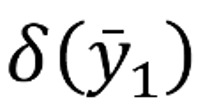 Figure 13
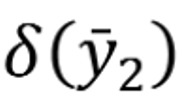 Figure 14
 Figure 15
 Figure 16
 Figure 17
 Figure 18
 Figure 19
 Figure 2
 Figure 20
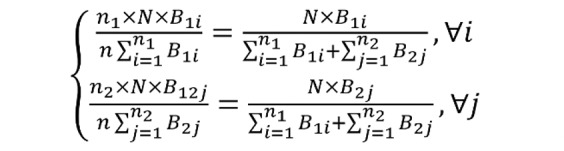 Figure 21
 Figure 22
 Figure 23
 Figure 24
 Figure 25
 Figure 3
 Figure 4
 Figure 5
 Figure 6
 Figure 7
 Figure 8
 Figure 9
Peer Reviews
No public reviews on file for this paper yet. If you reviewed it on a platform where reviews are public (OpenReview, ICLR, NeurIPS, ICML), you can paste yours below so the community can read it here.
Videos
No videos yet. Explain this paper in a talk, walkthrough, or lecture? Add one.
Taxonomy
TopicsData-Driven Disease Surveillance · Food Security and Health in Diverse Populations · Survey Methodology and Nonresponse