The efficient synthesis and purification of 2′3’- cGAMP from Escherichia coli
Rohan Kulkarni, Vijay Maranholkar, Nam Nguyen, Patrick C. Cirino, Richard C. Willson, Navin Varadarajan

TL;DR
This paper describes a new, efficient, and eco-friendly method to produce a potential cancer immunotherapy molecule using bacteria instead of chemical synthesis.
Contribution
A recombinant whole-cell biocatalysis platform for producing cGAMP in E. coli with optimized yield and a single-step purification method.
Findings
Recombinant expression of mcGAS in E. coli increased cGAMP yield by 30% under optimized conditions.
Anion exchange chromatography enabled single-step purification of cGAMP with high yield and low endotoxin.
The method avoids organic solvents and supports sustainable production of cGAMP.
Abstract
Agonists of the stimulator of interferon genes (STING) pathway are being explored as potential immunotherapeutics for the treatment of cancer and as vaccine adjuvants for infectious diseases. Although chemical synthesis of 2′3’ - cyclic Guanosine Monophosphate–Adenosine Monophosphate (cGAMP) is commercially feasible, the process results in low yields and utilizes organic solvents. To pursue an efficient and environmentally friendly process for the production of cGAMP, we focused on the recombinant production of cGAMP via a whole-cell biocatalysis platform utilizing the murine cyclic Guanosine monophosphate–Adenosine monophosphate synthase (mcGAS). In E. coli BL21(DE3) cells, recombinant expression of mcGAS, a DNA-dependent enzyme, led to the secretion of cGAMP to the supernatants. By evaluating the: (1) media composition, (2) supplementation of divalent cations, (3) temperature of…
Genes, proteins, chemicals, diseases, species, mutations and cell lines named across the full text — each resolved to its canonical identifier and authoritative record.
Click any figure to enlarge with its caption.
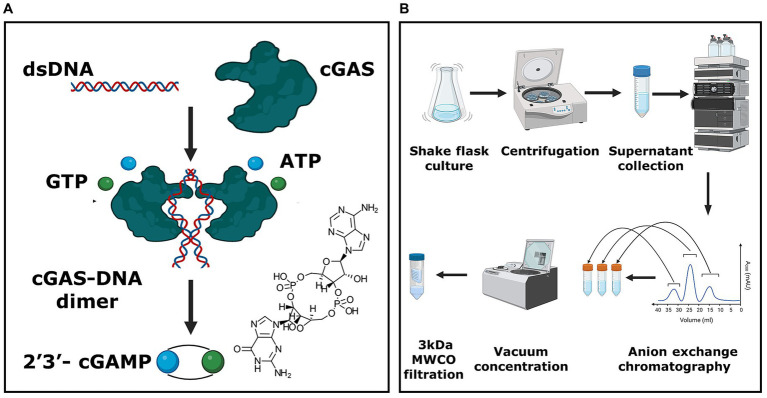 Figure 1
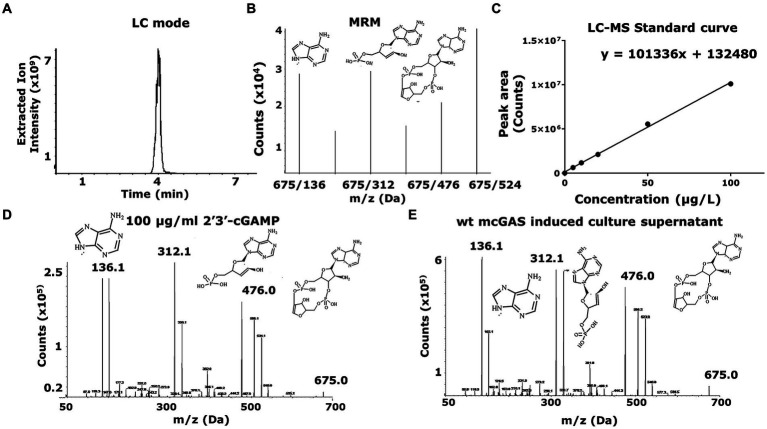 Figure 2
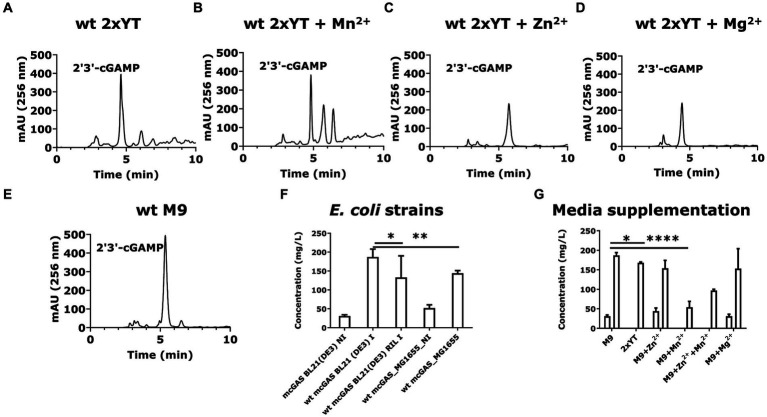 Figure 3
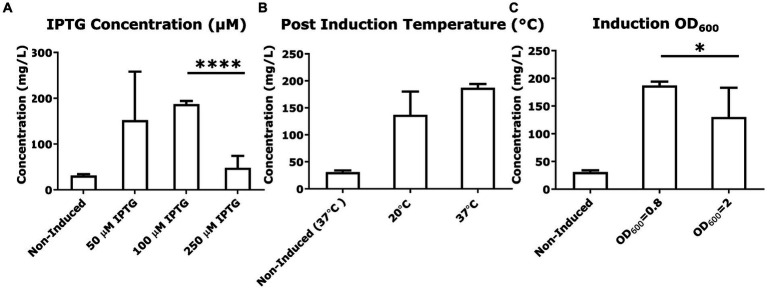 Figure 4
 Figure 5
 Figure 6
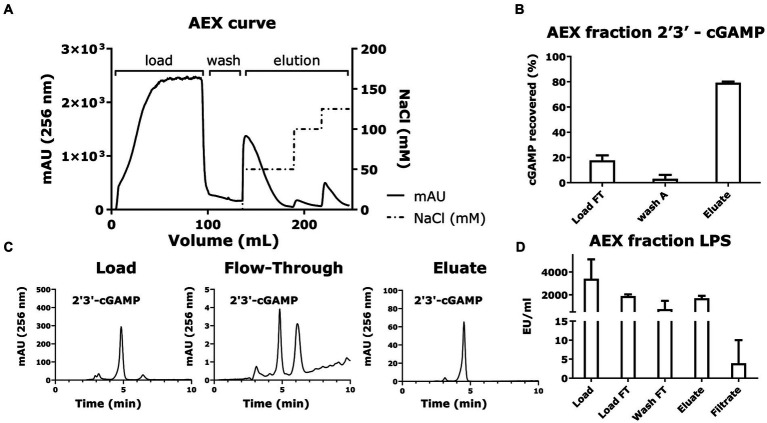 Figure 7
Peer Reviews
No public reviews on file for this paper yet. If you reviewed it on a platform where reviews are public (OpenReview, ICLR, NeurIPS, ICML), you can paste yours below so the community can read it here.
Videos
No videos yet. Explain this paper in a talk, walkthrough, or lecture? Add one.
Taxonomy
Topicsinterferon and immune responses · Viral Infections and Vectors · Immune Response and Inflammation