UK biobank: Enhanced assessment of the epidemiology and long-term impact of coronavirus disease-2019
Qi Feng, Ben Lacey, Jelena Bešević, Wemimo Omiyale, Megan Conroy, Fenella Starkey, Catherine Calvin, Howard Callen, Laura Bramley, Samantha Welsh, Allen Young, Mark Effingham, Alan Young, Rory Collins, Jo Holliday, Naomi Allen, Salome Scholtens

TL;DR
UK Biobank used its large dataset to study the long-term health effects of COVID-19 and factors influencing severe disease.
Contribution
The paper highlights how UK Biobank rapidly adapted to study SARS-CoV-2 through new data linkages and sub-studies.
Findings
UK Biobank collected blood samples and repeat imaging to study SARS-CoV-2 infection and antibody persistence.
A self-test antibody sub-study provided data on prior infections from 200,000 participants.
The study enabled research into genetic and lifestyle factors affecting severe COVID-19 outcomes.
Abstract
UK Biobank is an intensively characterised prospective cohort of 500,000 adults aged 40–69 years when recruited between 2006 and 2010. The study was established to enable researchers worldwide to undertake health-related research in the public interest. The existence of such a large, detailed prospective cohort with a high degree of participant engagement enabled its rapid repurposing for coronavirus disease-2019 (COVID-19) research. In response to the pandemic, the frequency of updates on hospitalisations and deaths among participants was immediately increased, and new data linkages were established to national severe acute respiratory syndrome coronavirus 2 (SARS-CoV-2) testing and primary care health records to facilitate research into the determinants of severe COVID-19. UK Biobank also instigated several sub-studies on COVID-19. In 2020, monthly blood samples were collected from…
Genes, proteins, chemicals, diseases, species, mutations and cell lines named across the full text — each resolved to its canonical identifier and authoritative record.
Click any figure to enlarge with its caption.
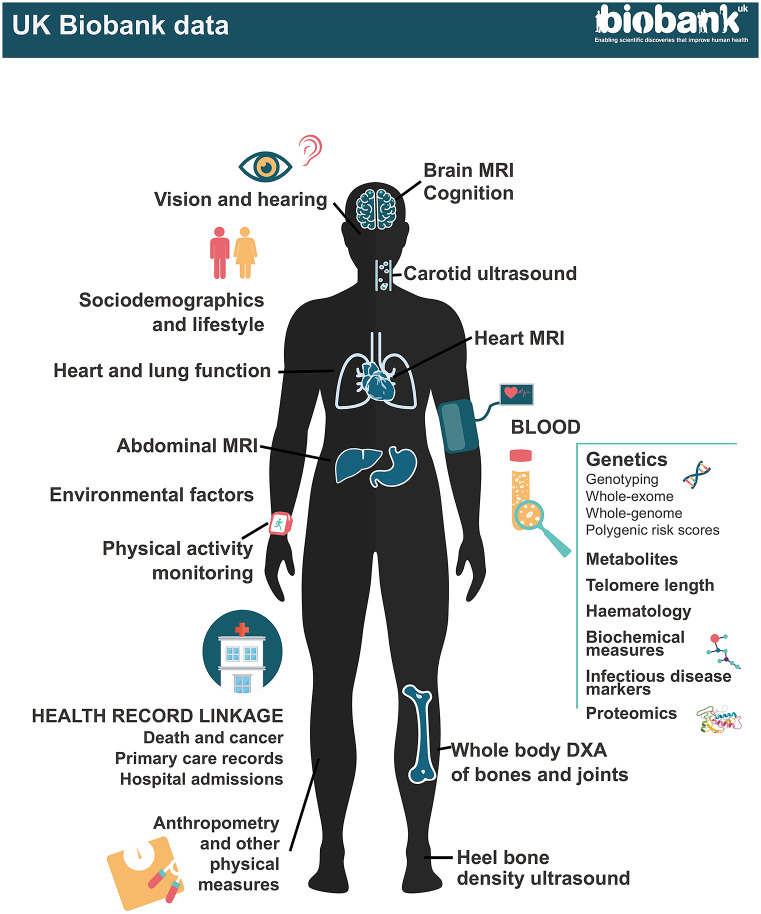 Figure 1
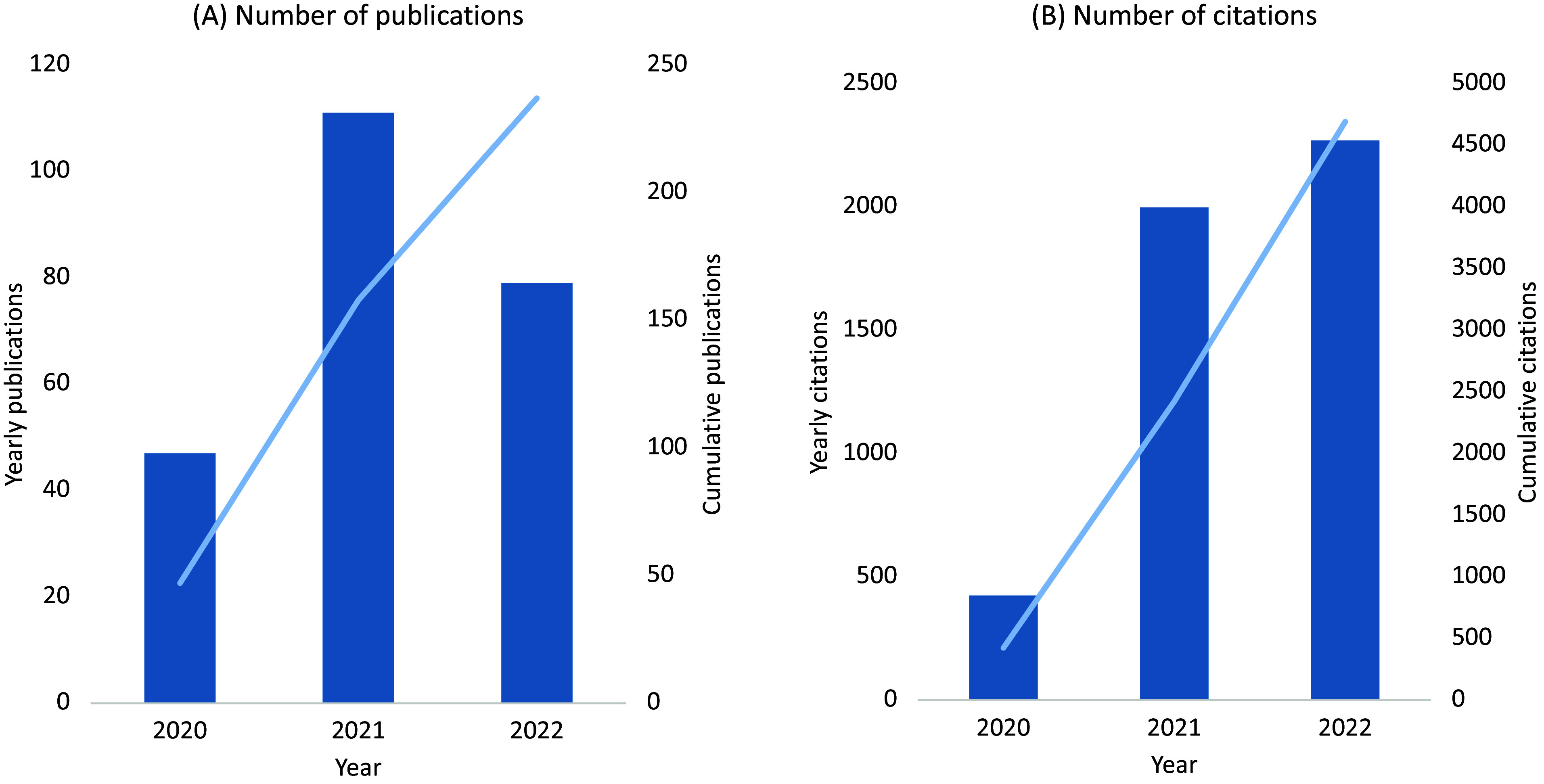 Figure 2
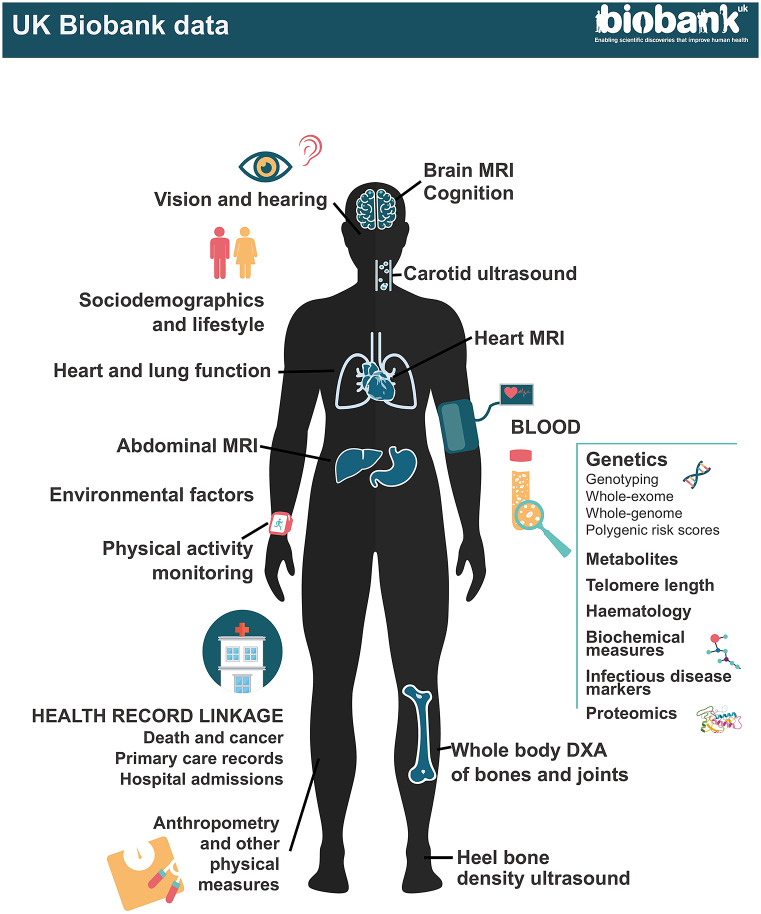 Figure 3
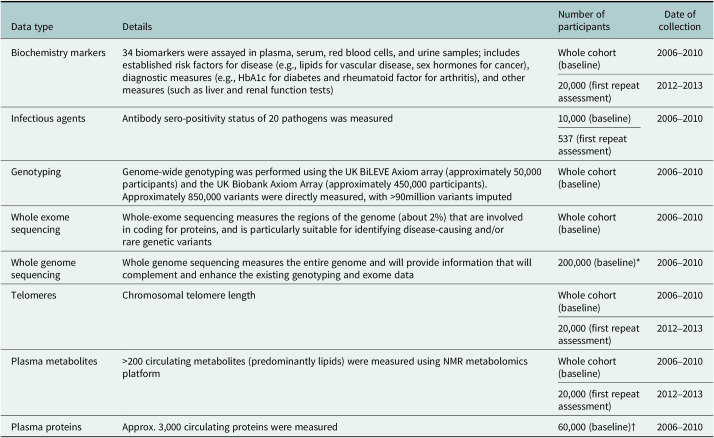 Figure 4
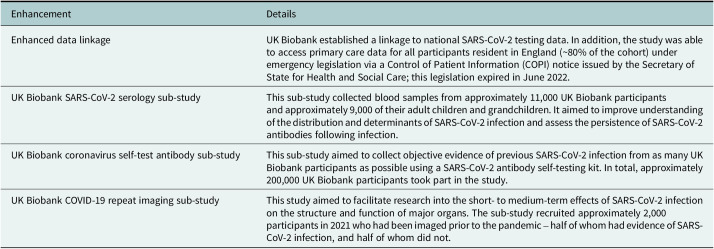 Figure 5
Peer Reviews
No public reviews on file for this paper yet. If you reviewed it on a platform where reviews are public (OpenReview, ICLR, NeurIPS, ICML), you can paste yours below so the community can read it here.
Videos
No videos yet. Explain this paper in a talk, walkthrough, or lecture? Add one.
Taxonomy
TopicsNeurobiology of Language and Bilingualism · Hearing Impairment and Communication · Categorization, perception, and language