Gender Determination Using Index and Ring Finger Linear Measurements in North Indian Population: A Cross-Sectional Study
Prabhpreet Kaur, Pratham Mittal, Harleen Kaur, Jyoti Kiran, Simarjeev Singh, Reeturaj Medhi

TL;DR
This study explores using finger length ratios to determine gender in a North Indian population, offering a new method for human identification in forensic and archaeological contexts.
Contribution
The study introduces finger length ratios as a novel, non-invasive method for gender determination in fragmentary human remains.
Findings
Women had significantly longer index-to-ring finger length ratios than men (p<0.001).
Threshold values for gender determination were established for both right and left hands.
The method provides a useful tool for bio-archaeological and forensic investigations.
Abstract
Background: In the fields of medico-legal matters and bio-archaeological settings, gender evaluation plays a pivotal role in the initial stages of human identification. Approximately half of the population at risk is excluded when gender is determined, making it the most essential factor for identification. When it comes to medico-legal matters and bio-archaeological settings, gender evaluation is a crucial initial step in human identification. Traditional gender determination procedures, such as skull and pelvic analysis, may be hindered by fragmentary human remains that have been degraded by various forms of inhumation or physical assaults. Aim: To investigate sexual dimorphism, this study examined the ratio of index finger length to ring finger length. Materials and method: The lengths of the index and ring fingers were measured and the ratios between them were calculated for both…
Genes, proteins, chemicals, diseases, species, mutations and cell lines named across the full text — each resolved to its canonical identifier and authoritative record.
Click any figure to enlarge with its caption.
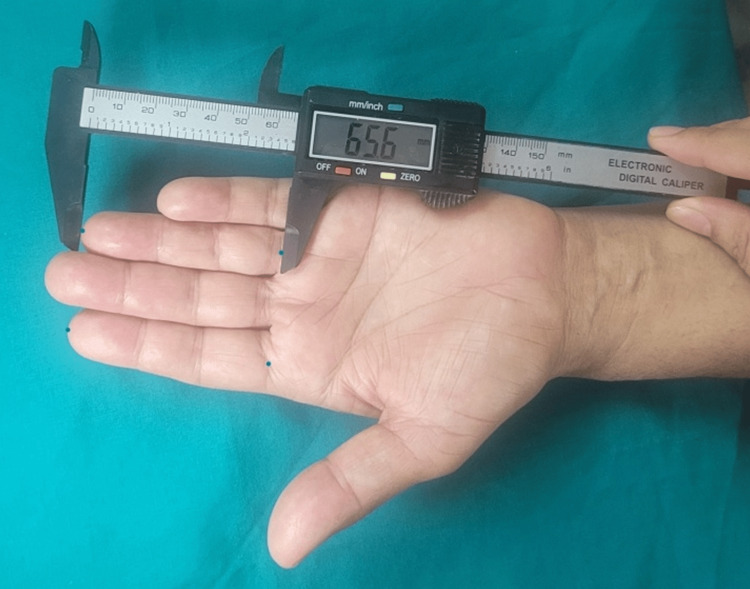 Figure 1
Peer Reviews
No public reviews on file for this paper yet. If you reviewed it on a platform where reviews are public (OpenReview, ICLR, NeurIPS, ICML), you can paste yours below so the community can read it here.
Videos
No videos yet. Explain this paper in a talk, walkthrough, or lecture? Add one.
Taxonomy
TopicsSexual Differentiation and Disorders · Forensic Anthropology and Bioarchaeology Studies · Female Genital Mutilation/Cutting Issues