Three-dimensional model of normal human dermal tissue using serial tissue sections
Peng Liu, Tao Zhang, Yihui Huang

TL;DR
This study creates a 3D model of human skin dermis using tissue sections to understand its structure and porosity for tissue engineering.
Contribution
A novel method for reconstructing high-precision 3D dermal tissue models using continuous sections and image alignment techniques.
Findings
Dermal porosity was measured at 18.96 ± 4.41% with an average pore diameter of 219.29 ± 34.27 μm.
Porosity and pore diameter distribution showed a layered pattern, increasing then decreasing in specific dermal layers.
SIFT image alignment proved more robust than StackReg for aligning tissue section images.
Abstract
Background: This study aims to construct a three-dimensional model of skin dermis utilizing continuous tissue sections, with the primary objective of obtaining anatomical structure data for normal human dermal tissues. Methods: Normal skin tissue specimens were acquired, paraffin-embedded, and subjected to HE staining. Panoramic images of skin sections were captured using a microscope. Tissue section images were aligned using the SIFT and StackReg image alignment methods, with analysis conducted using the OpenCV module. Mimics17 software facilitated the reconstruction of the skin dermal 3D model, enabling the calculation of dermal porosity and the void diameter. Results: Panoramic skin slices exhibited high-resolution differentiation of dermal fibers and cellular structures. Both SIFT and StackReg image alignment methods yielded similar results, although the SIFT method demonstrated…
Genes, proteins, chemicals, diseases, species, mutations and cell lines named across the full text — each resolved to its canonical identifier and authoritative record.
Click any figure to enlarge with its caption.
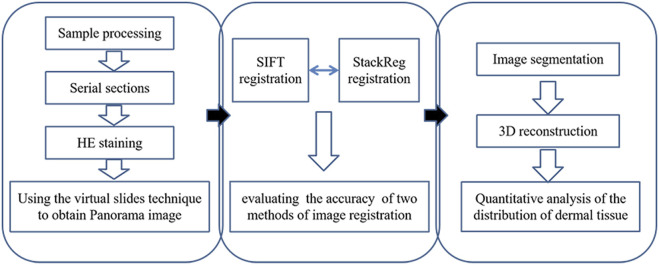 Figure 1
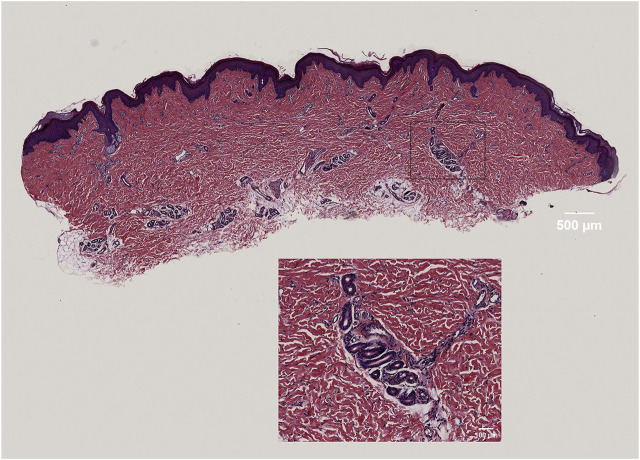 Figure 2
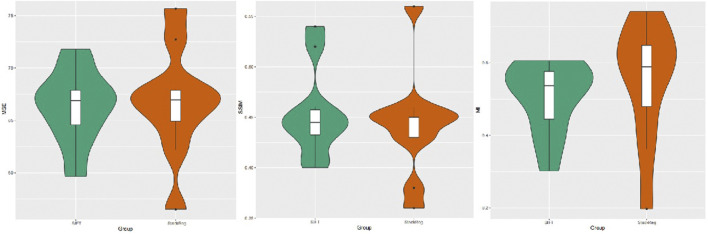 Figure 3
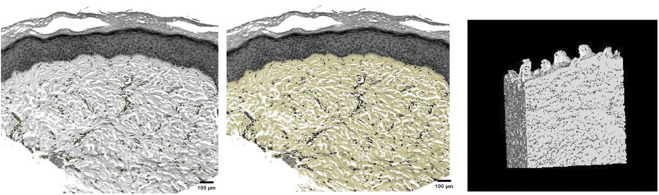 Figure 4
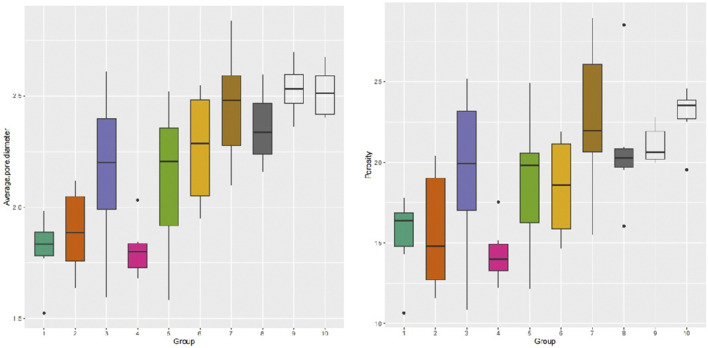 Figure 5
Peer Reviews
No public reviews on file for this paper yet. If you reviewed it on a platform where reviews are public (OpenReview, ICLR, NeurIPS, ICML), you can paste yours below so the community can read it here.
Videos
No videos yet. Explain this paper in a talk, walkthrough, or lecture? Add one.
Taxonomy
TopicsHistorical and socio-economic studies of Spain and related regions · Spanish Literature and Culture Studies · Media, Journalism, and Communication History