Reflecting on the Communications Biology Editor Training Program

TL;DR
This paper reflects on a 2023 virtual training program for early-career researchers in academic journal editing.
Contribution
The paper introduces and evaluates a new training initiative for early-career researchers in journal editing.
Findings
The program aimed to teach the fundamentals of academic journal editing.
It was conducted virtually and targeted early-career researchers.
The paper discusses the mission and outcomes of the training program.
Abstract
In 2023, we conducted a virtual program to introduce early-career researchers to the fundamentals of academic journal editing. Here, we reflect on the mission of this program and its outcomes.
Genes, proteins, chemicals, diseases, species, mutations and cell lines named across the full text — each resolved to its canonical identifier and authoritative record.
Click any figure to enlarge with its caption.
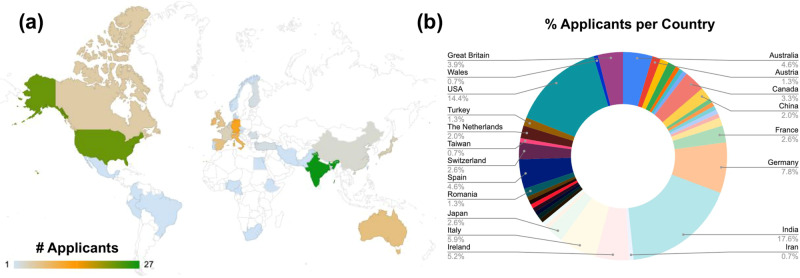 Figure 1
Peer Reviews
No public reviews on file for this paper yet. If you reviewed it on a platform where reviews are public (OpenReview, ICLR, NeurIPS, ICML), you can paste yours below so the community can read it here.
Videos
No videos yet. Explain this paper in a talk, walkthrough, or lecture? Add one.
Taxonomy
TopicsScientific Computing and Data Management · Genetics, Bioinformatics, and Biomedical Research
When interacting with researchers at conferences or institutional site visits, our editors are often asked about how they prepared for a career in publishing, and whether there are any programs that might serve as an entry-point for an editorial career. These questions are increasingly relevant considering the limited number of available tenure-track research positions compared to the number of PhD graduates each year. As outlined in our editorial values statement, part of our mission as a journal is to “engage with researchers at all stages of their career to understand their needs and advocate for positive change”. In that spirit, in 2023 we developed an Editor Training Program to provide hands-on experience and a personalized training environment for ECRs interested in editorial careers.
Briefly, the Editor Training Program consisted of hour-long virtual sessions that took place over six consecutive weeks, with each week focusing on a different topic or task within the publication process (Table 1). After each session, participants were given take-home assignments meant to simulate specific editorial tasks like assessing a new manuscript or evaluating reviewer comments. Participants were also paired with one of our in-house editors, who provided direct feedback on each assignment. The last session of the program was a career panel featuring our external Editorial Board Members and editors at other Nature Portfolio journals, with the aim of exposing trainees to other editorial career paths. Finally, we invited each trainee to write a Research Highlight that would be published in Communications Biology. These Research Highlights^1–8^ can be found on our journal website.Table 1Communications Biology Editor Training Program ScheduleProgram WeekTopicTake-Home Assignment1Introduction to editing and academic publishingReview an Article2Discussing the roles of editors vs. reviewersWrite an editorial assessment for an Article3Identifying potential reviewers and evaluating their feedbackWrite an editorial assessment for an Article, and draft a post-review decision based on reviewer feedback.4Assessing journal front-half content and writing Research HighlightsWrite editorial assessment for a Review, Mini-Review, Comment, or Perspective.Identify 3 articles for Research Highlight.5The editorial process after accepting a manuscript for publicationWork on Research Highlight.6Editorial career panelFinalize Research Highlight
We first ran this program as a pilot between July-August 2022, with a cohort of 5 trainees split across the USA (3), Spain (1), and Italy (1). For the purpose of this pilot, we invited participants we had previously met through editorial outreach events, and trainees were similarly given the chance to complete a Research Highlight^9–13^. In 2023, however, we hosted an open call for participants, which asked applicants to complete 3 short essay questions:
- Tell us why participating in this training program is important to you.
- Provide a brief, lay summary of your research (using terms that non-specialists could understand).
- Describe a recent paper (published since January 2022) in your area of expertise and why it is important to your field (using terms which non-specialists can understand). If you were to receive this paper as an editor, what expertise would you look for in editors?
We ultimately considered 158 applicants from 40 countries, with most applications coming from India (17.6%), the USA (14.4%) or Germany (7.8%), though the full distribution can be seen in Fig. 1. Applications were judged by a panel of in-house editors and our Editorial Board Members, to recruit a final cohort of 8 participants spread across India (2), the USA (1), Spain (1), Japan (1), Canada (1), Belgium (1), and Australia (1). At the end of the program, we received feedback from 7/8 of these participants, all of whom agreed that the experience provided “new information about the publication process”, that it helped them “feel confident about what an editorial career entails”, and that they would “recommend the program to a colleague” (based on a score of 4 or more, on a scale of 1–5). In the words of one trainee:“Confidence is the most succinct way to describe what I feel I’ve gained. I loved getting insight into the publication process from the editorial perspective.”Fig. 1. Geographic distribution of 158 applicants for the Communications Biology Editor Training Program in 2023.a World map depicting the number of applicants per country. b Pie chart depicting the percentage of total applicants per country.
Conducting this program has been a rewarding experience for our editorial team, and we hope to provide similar career development experiences for trainees in the future. After all, in the words of one of our trainees: “Workshops like this are such an integral part of academia, as is the actual editing process and more researchers should have the opportunity to learn about it.”
The reference list from the paper itself. Each links out to its DOI / PubMed record.
- 1Chatterjee SA light and sound show of cancer therapy Commun. Biol.2024720710.1038/s 42003-024-05900-838378925 PMC 10879207 · doi ↗ · pubmed ↗
- 2Saito VM Cerebellar vermis joins the brain’s social network Commun. Biol.20236129110.1038/s 42003-023-05673-638129521 PMC 10739824 · doi ↗ · pubmed ↗
- 3Wooff Y Locked and loaded: targeting extracellular vesicles to preserve sight Commun. Biol.20236127710.1038/s 42003-023-05672-738110548 PMC 10728119 · doi ↗ · pubmed ↗
- 4Joseph JP Tough surroundings make cancer tougher for immune cells to fight Commun. Biol.202477210.1038/s 42003-023-05756-438195926 PMC 10776851 · doi ↗ · pubmed ↗
- 5Thurston LT Pair-bonding on the brain Commun. Biol.202477510.1038/s 42003-023-05711-338195828 PMC 10776569 · doi ↗ · pubmed ↗
- 6van der Hilst J Unclogged pores: designer channels for protein translocation Commun. Biol.202477110.1038/s 42003-023-05723-z 38195667 PMC 10776762 · doi ↗ · pubmed ↗
- 7Vahldick H Don’t be MI Zguided, know where to grow!Commun. Biol.202477310.1038/s 42003-023-05707-z 38195918 PMC 10776833 · doi ↗ · pubmed ↗
- 8Paliou C Gene regulation helps species thrive in new climates Commun. Biol.202478210.1038/s 42003-023-05755-538212626 PMC 10784463 · doi ↗ · pubmed ↗