Commentary: Physical therapy for sleep apnea: a smartphone application for home-based physical therapy for patients with obstructive sleep apnea
Carlos O'Connor Reina, Peter Baptista, Guillermo Plaza

Abstract
Genes, proteins, chemicals, diseases, species, mutations and cell lines named across the full text — each resolved to its canonical identifier and authoritative record.
Click any figure to enlarge with its caption.
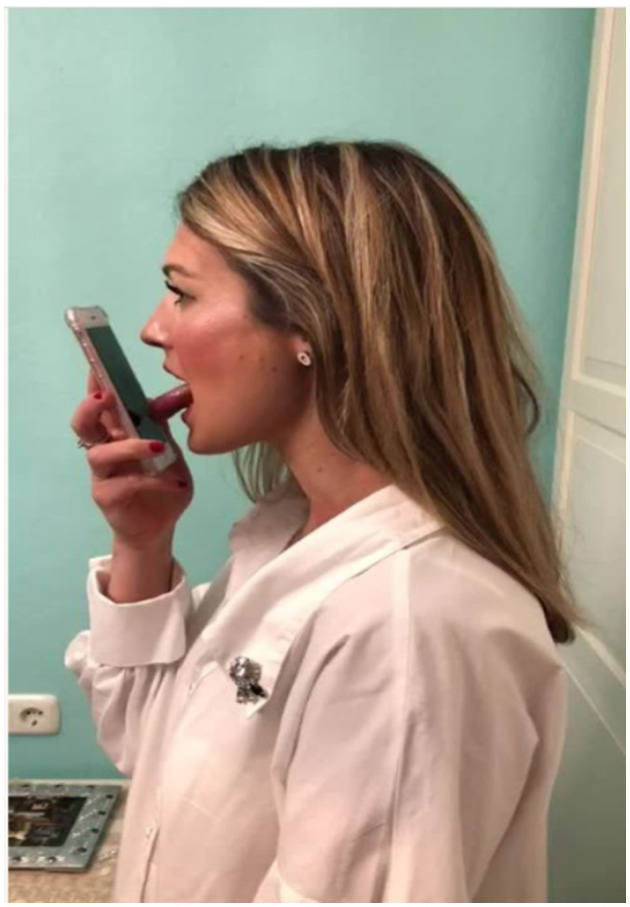 Figure 1
Peer Reviews
No public reviews on file for this paper yet. If you reviewed it on a platform where reviews are public (OpenReview, ICLR, NeurIPS, ICML), you can paste yours below so the community can read it here.
Videos
No videos yet. Explain this paper in a talk, walkthrough, or lecture? Add one.
Taxonomy
TopicsObstructive Sleep Apnea Research · Neuroscience of respiration and sleep · Sleep and related disorders
Background
Obstructive sleep apnea (OSA) is the most common respiratory disease, with an increasing incidence worldwide. Telemedicine based on smartphone apps to treat this disease seems worthwhile. Myofunctional therapy is one of the options to treat OSA, and it has been recommended only for specific cases seeking alternative treatments and who are reluctant to undertake surgical or mechanical strategies (1).
State of the art
In this journal, a recent manuscript published by Bui-Diem et al. (2) raised some issues we would like to address here. Our group designed an app called Airway Gym (3) to treat obstructive sleep apnea (OSA) that promotes proprioceptive rehabilitation and coordination of the airway muscles (4). This app includes nine exercises based on myofunctional therapy aimed at improving the tonicity of the various muscles involved in the pathogenesis of OSA (5). Before each exercise, an animated demonstration and a video with a real person are shown to the patient (Figure 1) so that they learn how to perform the exercise. After each exercise, the patient receives visual, acoustic, and tactile feedback about the success of their performance as a point score. When the patient finishes the exercises, the results are saved on a networked online storage (in the cloud), and a therapist can evaluate the patient's adherence and performance of the exercises. Users of the app can follow the progress of their daily activity over time. A chat function is available through which the patient can contact the therapist directly. Additional information can be found on the AirwayGym webpage https://airwaygym.app/en/gymnasts-homepage.
Video of a real person performing an oropharyngeal exercise.
Randomized clinical trial with an app
We have already performed a randomized clinical trial (6) where the intervention group with severe OSA showed significant improvements in most metrics of OSA scores. The control group just performed sham therapy. The apnea-hypopnea index decreased by 53.4% from 44.7 (range 33.8–55.6) to 20.9 (14.0–27.7) events/h (p-value < 0.001). The oxygen desaturation index decreased by 46.5% from 36.3 (27.2–43.4) to 19.4 (12.9–26.0) events/h (p = 0.003). The Epworth Sleepiness Scale score decreased from 10.3 (8.7–12.2) to 5.4 (3.4–7.3) in the app group (p < 0.001). Since Eckert (7) defined non-anatomical factors or 'phenotypes' as crucial determinants of OSA for many people, our group has focused on investigating those with a weakness in pharyngeal dilator muscle control known as “Hypotonic.” Studies performed with our app demonstrated that this was the best phenotype to improve adherence and receive myofunctional therapy (8).
In their article, Bui-Diem et al. (2) designed an app that, to the best of their knowledge, is the first application designed to assist patients with OSA in performing rehabilitation programs at home. However, they mentioned Airway Gym in their article and considered it an application for sleep apnea to practice upper airway muscle strength, although they erroneously mentioned that the video of our app does not show a real person. Furthermore, the use of their app (1) is clearly very similar to how we use ours, and they did not reference any of our works that would support this assertion.
Conclusion
We believe that our app has been underestimated by the authors and truly was the first designed to perform a rehabilitation program at home using real-person videos based on enhanced tone and proprioceptive deficit of upper airway muscles in OSA patients. Future publications by Bui-Diem et al. should always reference articles on which they have based their idea; in this case, we consider it based on the concept from our research.
Ethics statement
Written informed consent was obtained from the individual(s) for the publication of any identifiable images or data included in this article.
Author contributions
CO'C: Writing – original draft, Writing – review & editing. PB: Conceptualization, Writing – original draft. GP: Investigation, Writing – review & editing.
The reference list from the paper itself. Each links out to its DOI / PubMed record.
- 1Randerath W Verbraecken Jde Raaff CAL Hedner J Herkenrath S Hohenhorst W. European Respiratory Society guideline on non-CPAP therapies for obstructive sleep apnoea. Eur Respir Rev. (2021) 30:210200. 10.1183/16000617.0200-202134853097 PMC 9489103 · doi ↗ · pubmed ↗
- 2Bui-Diem K Hung CH Zhu GC Tho NV Nguyen-Binh T Vu-Tran-Thien Q. Physical therapy for sleep apnea: a smartphone application for home-based physical therapy for patients with obstructive sleep apnea. Front Neurol. (2023) 14:1124059. 10.3389/fneur.2023.112405937305754 PMC 10249728 · doi ↗ · pubmed ↗
- 3O'Connor Reina C Plaza G Ignacio-Garcia JM Baptista Jardin P Garcia-Iriarte MT Casado-Morente JC. New m Health application software based on myofunctional therapy applied to sleep-disordered breathing in non-compliant subjects. Sleep Sci Pract. (2020) 4:1–10. 10.1186/s 41606-019-0040-832395635 · doi ↗
- 4Rodríguez-AlcaláL Martínez JML Baptista PRíos Fernández R Javier Gómez F Parejo Santaella J. Sensorimotor tongue evaluation and rehabilitation in patients with sleep-disordered breathing: a novel approach. J Oral Rehabil. (2021) 48:1363–72. 10.1111/joor.1324734409644 · doi ↗ · pubmed ↗
- 5O'Connor Reina C Plaza Mayor G Ignacio-Garcia JM Baptista Jardin P Garcia-Iriarte MT Casado-Morente JC. Floppy closing door epiglottis treated successfully with an Mhealth application based on myofunctional therapy: a case report. Case Rep Otolaryngol. (2019) 2019:1–4. 10.1155/2019/415789831355035 PMC 6636534 · doi ↗ · pubmed ↗
- 6O'Connor-Reina C Ignacio Garcia JM Rodriguez Ruiz E Morillo Dominguez MDC Ignacio Barrios V Baptista Jardin P. Myofunctional therapy app for severe apnea–hypopnea sleep obstructive syndrome: pilot randomized controlled trial. JMIR m Health u Health. (2020) 8:e 23123. 10.2196/2312333093013 PMC 7683258 · doi ↗ · pubmed ↗
- 7Eckert DJ. Phenotypic approaches to obstructive sleep apnoea - New pathways for targeted therapy. Sleep Med Rev. (2018) 37:45–59. 10.1016/j.smrv.2016.12.00328110857 · doi ↗ · pubmed ↗
- 8O'Connor-Reina C Ignacio Garcia JM Rodriguez Alcala L Rodríguez Ruiz E Garcia Iriarte MT Casado Morente JCC. Improving adherence to Myofunctional therapy in the treatment of sleep-disordered breathing. J Clin Med. (2021) 10:5772. 10.3390/jcm 1024577234945068 PMC 8707643 · doi ↗ · pubmed ↗