New artificial hematophagy system with attractive polymeric biofilm for maintenance of Culex quinquefasciatus (Diptera: Culicidae) in the laboratory
Angelita Milech, Caroline Quintana Braga, Carolina dos Santos Bermann, Jaqueline Ferreira de Souza, André Ricardo Fajardo, Élvia Silveira Vianna, Camila Belmonte Oliveira

TL;DR
A new artificial blood-feeding system using a polymeric biofilm improves mosquito feeding and reproduction in the lab.
Contribution
A novel polymeric biofilm with l-lactic acid significantly enhances mosquito feeding and reproduction compared to traditional methods.
Findings
87% of mosquitoes fed successfully through the new biofilm, compared to only 20% with Parafilm-M®.
The biofilm system resulted in high egg-laying rates (90%) and strong larval and adult emergence rates.
97% of larvae hatched, and 95% reached the pupal stage with the new system.
Abstract
Maintaining mosquito colonies in the laboratory requires a blood supply so that females' oocytes can mature and oviposition can take place. In this study, a new artificial hematophagy system for colonization and maintenance of Culex quinquefasciatus in the laboratory was developed and tested. We developed an attractive polymeric biofilm including 25% l-lactic acid for use as a membrane in an artificial hematophagy system and compared the feeding rate of females with Parafilm-M®. We also evaluated the oviposition rate, larval survival and adult emergence of females fed through the attractive biofilm. The average percentage of female Cx. quinquefasciatus fed through the attractive biofilm was 87%, while only 20% became engorged with Parafilm-M® (p < 0.0001). Feeding through the attractive biofilm developed in this study produced high levels of evaluated biological parameters; the…
Genes, proteins, chemicals, diseases, species, mutations and cell lines named across the full text — each resolved to its canonical identifier and authoritative record.
Click any figure to enlarge with its caption.
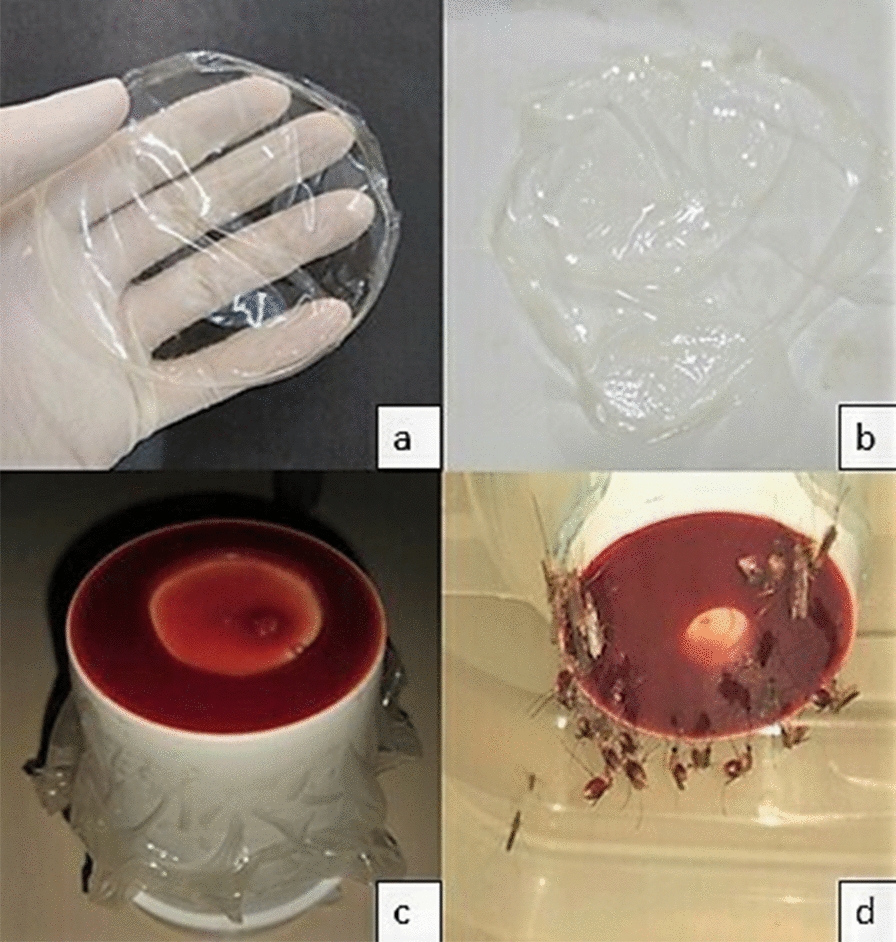 Figure 1
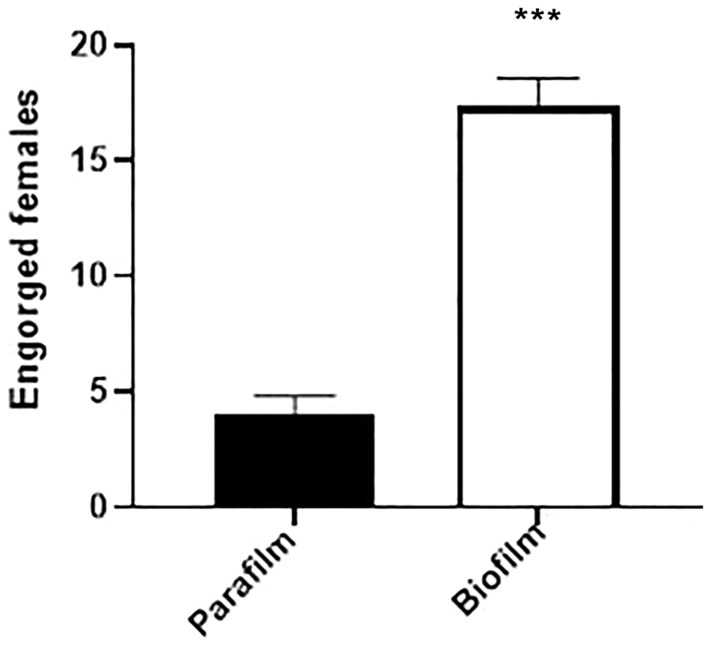 Figure 2
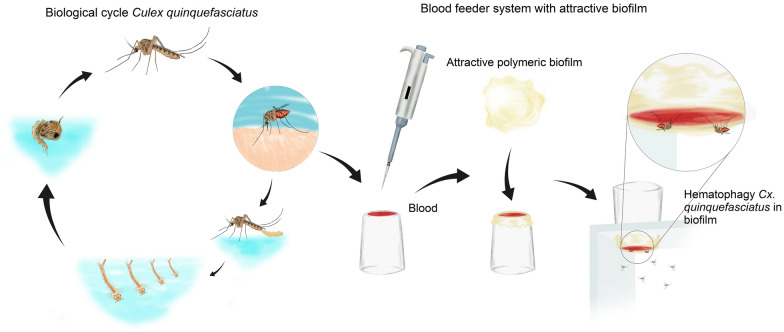 Figure 3
Peer Reviews
No public reviews on file for this paper yet. If you reviewed it on a platform where reviews are public (OpenReview, ICLR, NeurIPS, ICML), you can paste yours below so the community can read it here.
Videos
No videos yet. Explain this paper in a talk, walkthrough, or lecture? Add one.
Taxonomy
TopicsMosquito-borne diseases and control · Insect symbiosis and bacterial influences · Viral Infections and Vectors