Temporal trends in the incidence and outcomes of shock-refractory ventricular fibrillation out-of-hospital cardiac arrest
Abdulrahman Alhenaki, Zainab Alqudah, Brett Williams, Emily Nehme, Ziad Nehme

TL;DR
This study examines trends in refractory ventricular fibrillation during out-of-hospital cardiac arrests, finding a decline in incidence and improved survival rates over time.
Contribution
The study provides new insights into the temporal trends and outcomes of refractory ventricular fibrillation in out-of-hospital cardiac arrests.
Findings
The incidence of refractory ventricular fibrillation decreased from 7.7 to 5.6 per 100,000 population between 2010 and 2019.
Survival to hospital discharge improved for both refractory and non-refractory ventricular fibrillation cases during the study period.
Bystander CPR and defibrillation were associated with reduced refractory ventricular fibrillation and better survival outcomes.
Abstract
We aimed to describe trends in the incidence and outcomes of refractory ventricular fibrillation (RVF) compared to non-refractory ventricular fibrillation (non-RVF) in out-of-hospital cardiac arrest (OHCA). Between 2010 and 2019, we included all OHCA cases involving adults ≥ 16 years old with an initial shockable rhythm and who received an attempted resuscitation by Emergency Medical Services (EMS) or a bystander shock prior to EMS arrival in Victoria, Australia. Trends in incidence and survival outcomes over the study period were examined. Adjusted logistic regression analyses were conducted to examine factors associated with RVF, as well as the association of RVF on survival to hospital discharge. RVF refers to patients receiving three or more consecutive shocks without a return of spontaneous circulation (ROSC). Of the 57,749 OHCA attended by EMS, 7,267 met the inclusion criteria.…
Genes, proteins, chemicals, diseases, species, mutations and cell lines named across the full text — each resolved to its canonical identifier and authoritative record.
Click any figure to enlarge with its caption.
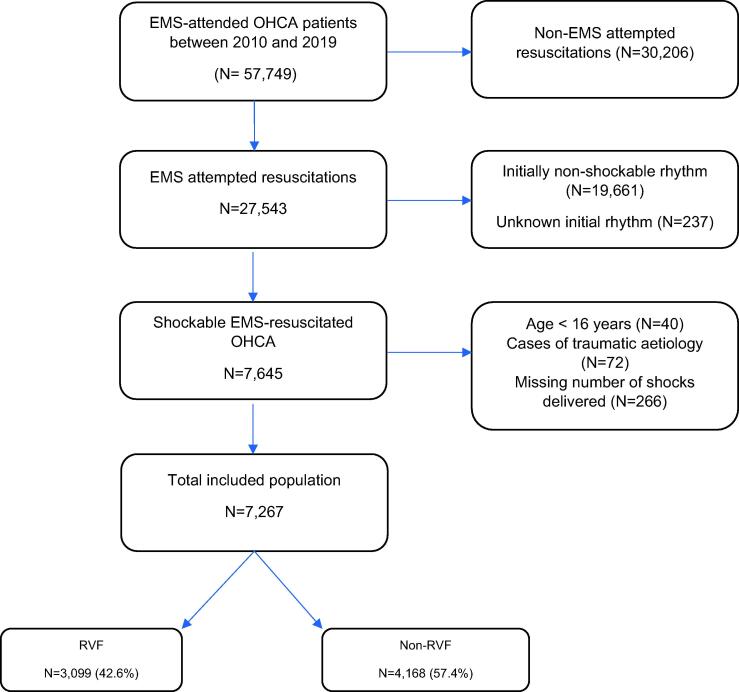 Figure 1
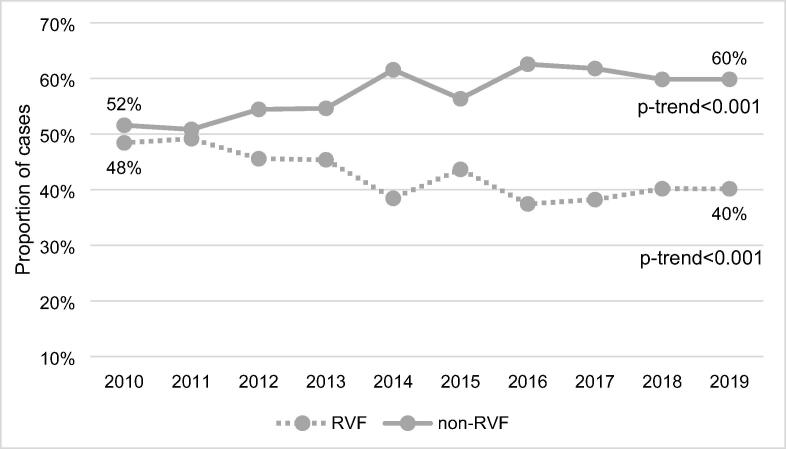 Figure 2
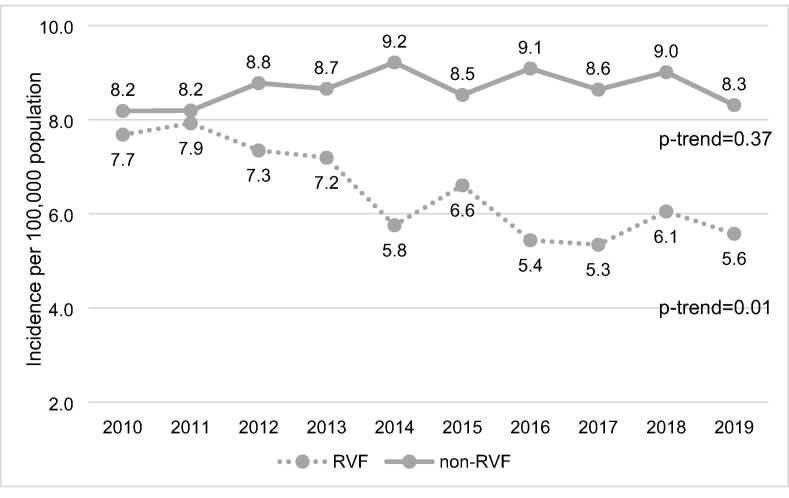 Figure 3
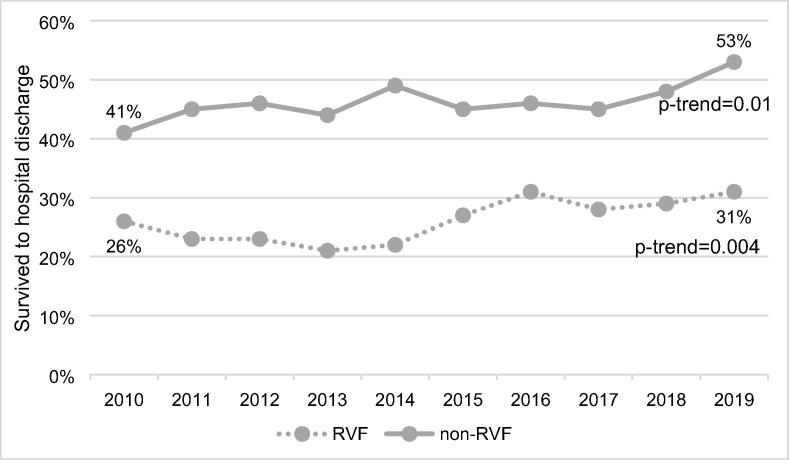 Figure 4
Peer Reviews
No public reviews on file for this paper yet. If you reviewed it on a platform where reviews are public (OpenReview, ICLR, NeurIPS, ICML), you can paste yours below so the community can read it here.
Videos
No videos yet. Explain this paper in a talk, walkthrough, or lecture? Add one.
Taxonomy
TopicsPolitical Economy and Marxism · Historical and Environmental Studies