Metagenomic insights into the wastewater resistome before and after purification at large‑scale wastewater treatment plants in the Moscow city
Shahjahon Begmatov, Alexey V. Beletsky, Alexander G. Dorofeev, Nikolai V. Pimenov, Andrey V. Mardanov, Nikolai V. Ravin

TL;DR
This study analyzed antibiotic resistance genes in wastewater before and after treatment in Moscow, finding that treatment reduces resistance genes, but some remain in the effluent.
Contribution
The study provides metagenomic insights into the resistome dynamics in large-scale wastewater treatment plants in Moscow.
Findings
Untreated wastewater contained hundreds of antibiotic resistance genes (ARGs) conferring resistance to common antibiotics.
Treatment reduced the resistome by 3–4 times, with higher removal efficiency for macrolide and tetracycline resistance genes compared to beta-lactamases.
Multidrug-resistant strains were detected in both influent and treated effluent, with resistome composition influenced by social and environmental factors.
Abstract
Wastewater treatment plants (WWTPs) are considered to be hotspots for the spread of antibiotic resistance genes (ARGs). We performed a metagenomic analysis of the raw wastewater, activated sludge and treated wastewater from two large WWTPs responsible for the treatment of urban wastewater in Moscow, Russia. In untreated wastewater, several hundred ARGs that could confer resistance to most commonly used classes of antibiotics were found. WWTPs employed a nitrification/denitrification or an anaerobic/anoxic/oxic process and enabled efficient removal of organic matter, nitrogen and phosphorus, as well as fecal microbiota. The resistome constituted about 0.05% of the whole metagenome, and after water treatment its share decreased by 3–4 times. The resistomes were dominated by ARGs encoding resistance to beta-lactams, macrolides, aminoglycosides, tetracyclines, quaternary ammonium compounds,…
Genes, proteins, chemicals, diseases, species, mutations and cell lines named across the full text — each resolved to its canonical identifier and authoritative record.
Click any figure to enlarge with its caption.
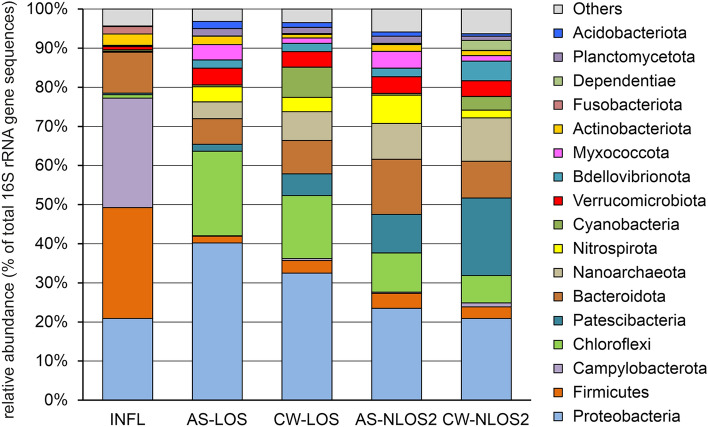 Figure 1
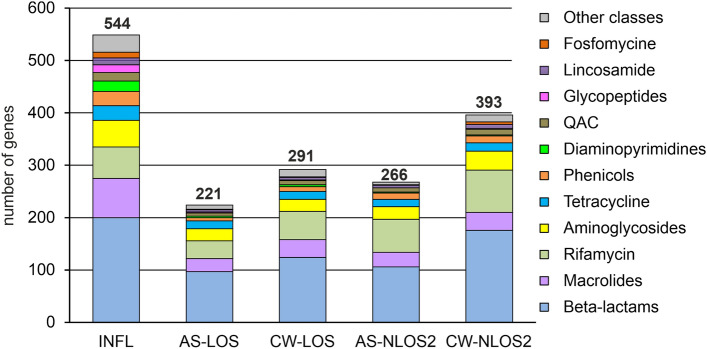 Figure 2
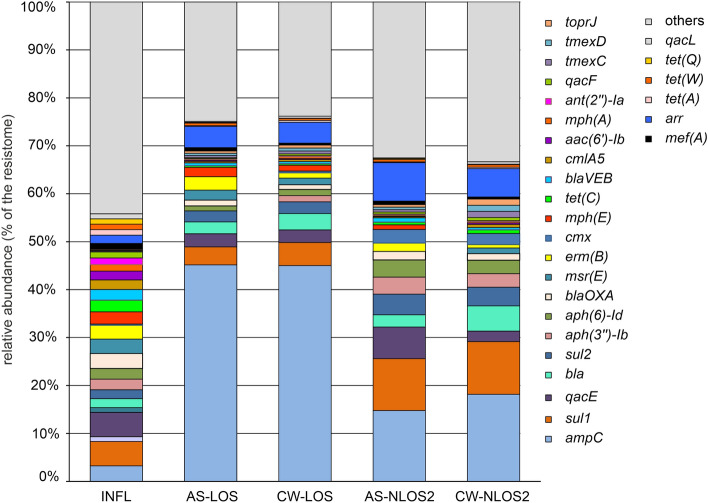 Figure 3
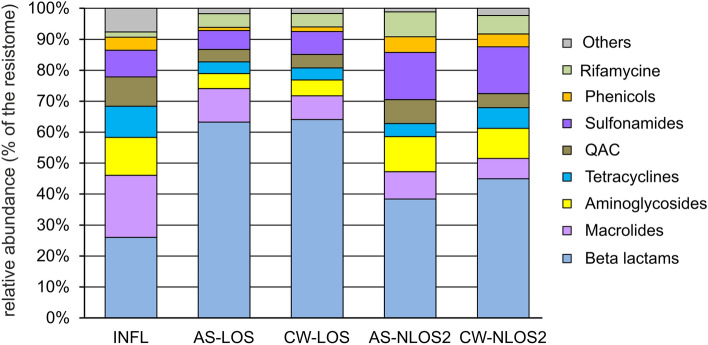 Figure 4
Peer Reviews
No public reviews on file for this paper yet. If you reviewed it on a platform where reviews are public (OpenReview, ICLR, NeurIPS, ICML), you can paste yours below so the community can read it here.
Videos
No videos yet. Explain this paper in a talk, walkthrough, or lecture? Add one.
Taxonomy
TopicsAtmospheric Ozone and Climate · Atmospheric chemistry and aerosols · Atmospheric and Environmental Gas Dynamics