Pregnancy-Associated Atypical Hemolytic Uremic Syndrome Successfully Treated with Ravulizumab: A Case Report
Yoshihiro Miyazaki, Masafumi Fukuda, Nobuhisa Hirayu, Masakazu Nabeta, Osamu Takasu

TL;DR
A 31-year-old woman with pregnancy-associated atypical hemolytic-uremic syndrome improved after treatment with ravulizumab, recovering kidney function and avoiding long-term dialysis.
Contribution
This case report demonstrates the successful use of ravulizumab in treating pregnancy-associated atypical hemolytic-uremic syndrome.
Findings
Ravulizumab treatment led to increased platelet count and improved kidney function in the patient.
The patient was discharged after 28 days of treatment and no longer required hemodialysis.
Early administration of ravulizumab may improve clinical outcomes in p-aHUS, similar to eculizumab.
Abstract
Pregnancy-associated atypical hemolytic-uremic syndrome (p-aHUS) refers to a pregnancy that leads to thrombotic microangiopathy (TMA). This disease is associated with adverse maternal outcomes. We encountered a case of p-aHUS, in which treatment with ravulizumab, a long-acting C5 inhibitor, resulted in a favorable clinical course and recovery of renal function. The patient was a 31-year-old woman with no apparent medical history. She developed TMA on the third postpartum day and was initially treated with steroids, plasma exchange, and hemodialysis (HD). On the seventh day of treatment initiation, she was diagnosed with p-aHUS, and treatment with ravulizumab was started. Following administration, her platelet count increased, and her acute kidney injury improved. Consequently, HD was discontinued after six sessions, and the patient was discharged on the 28th day of treatment initiation…
Genes, proteins, chemicals, diseases, species, mutations and cell lines named across the full text — each resolved to its canonical identifier and authoritative record.
Click any figure to enlarge with its caption.
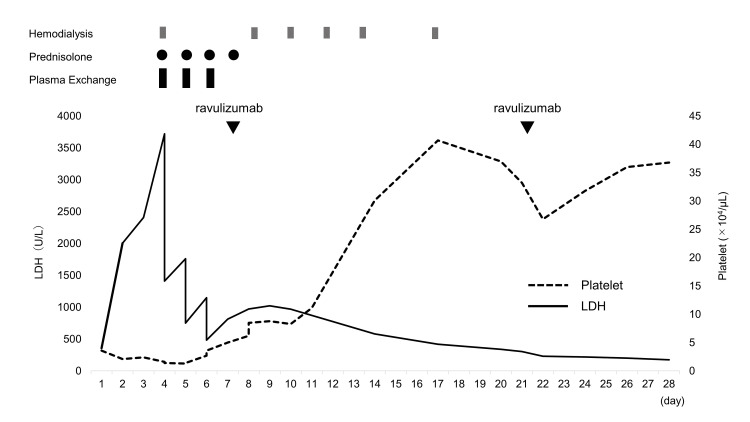 Figure 1
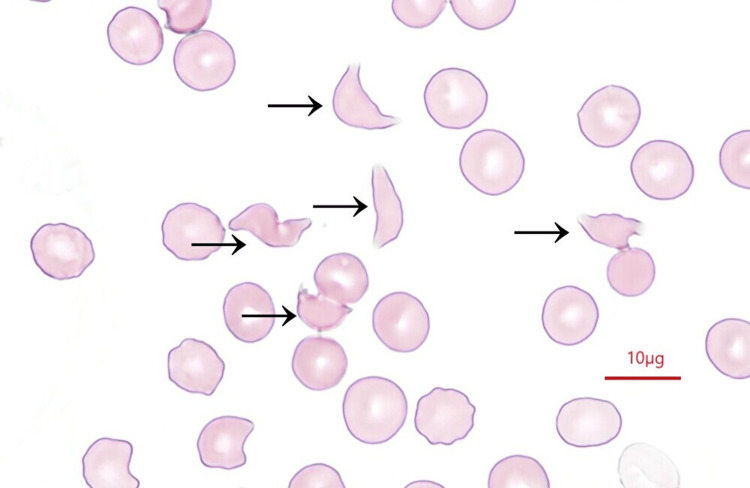 Figure 2
Peer Reviews
No public reviews on file for this paper yet. If you reviewed it on a platform where reviews are public (OpenReview, ICLR, NeurIPS, ICML), you can paste yours below so the community can read it here.
Videos
No videos yet. Explain this paper in a talk, walkthrough, or lecture? Add one.
Taxonomy
TopicsComplement system in diseases · Renal Diseases and Glomerulopathies · Adenosine and Purinergic Signaling