Contraceptive Risk Events among Family Planning Specialists: a Cross Sectional Study
Taylor N. Weckstein, Rebecca G. Simmons, Jami Baayd, Kathryn E. Fay

TL;DR
This study shows that even experts in family planning experience contraceptive risks, highlighting the need for better birth control and access to abortion.
Contribution
Quantifies contraceptive risk events among family planning specialists, challenging the narrative that contraception alone can eliminate the need for abortion.
Findings
69% of family planning specialists reported experiencing a contraceptive risk event since medical training.
Most participants found several contraceptive methods unacceptable due to difficulty, unreliability, or health limitations.
The study emphasizes the limitations of current contraceptive methods and the ongoing risk of unwanted pregnancy.
Abstract
Proponents of abortion restriction cite advancements in contraceptive technology as a reason against the need for abortion care today, most recently through oral arguments in the Supreme Court of the United States case, Dobbs v. Jackson Women’s Health. However, consistent and correct use of contraception requires reproductive health literacy. Our objectives were to quantify contraceptive risk events and assess contraceptive history and preferences among a population well-equipped to evade contraceptive risks, family planning specialists following initiation of their medical training. “Risk events” are defined as reported episodes of contraceptive failure, emergency contraception use and/or unprotected or underprotected intercourse. This was a cross-sectional study among current members of a professional organization of family planning specialists. Inclusion criteria included: status as…
Genes, proteins, chemicals, diseases, species, mutations and cell lines named across the full text — each resolved to its canonical identifier and authoritative record.
Click any figure to enlarge with its caption.
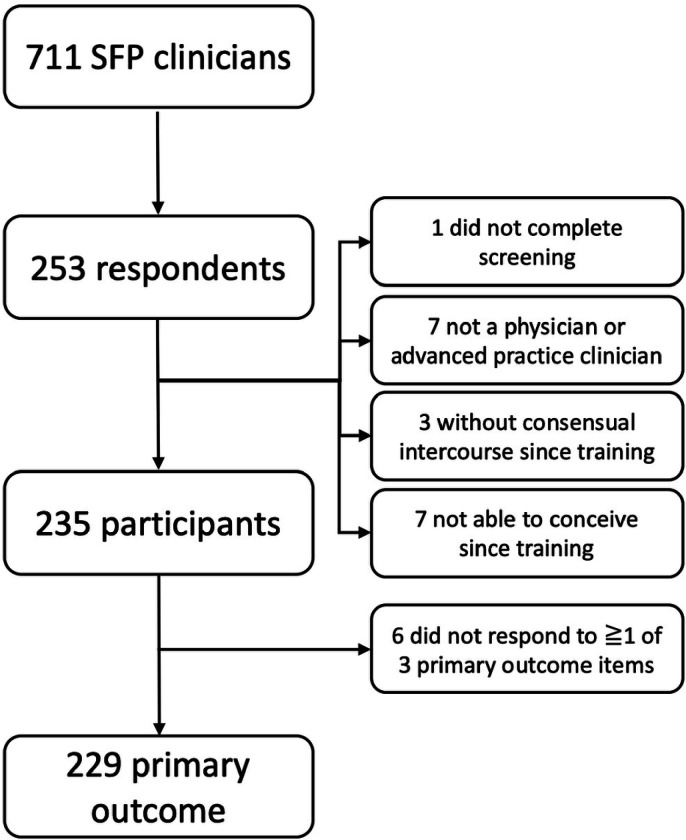 Figure 1
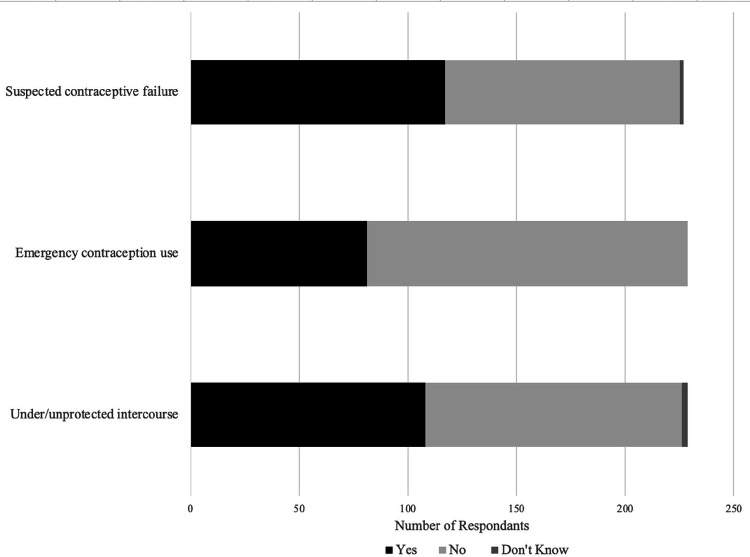 Figure 2
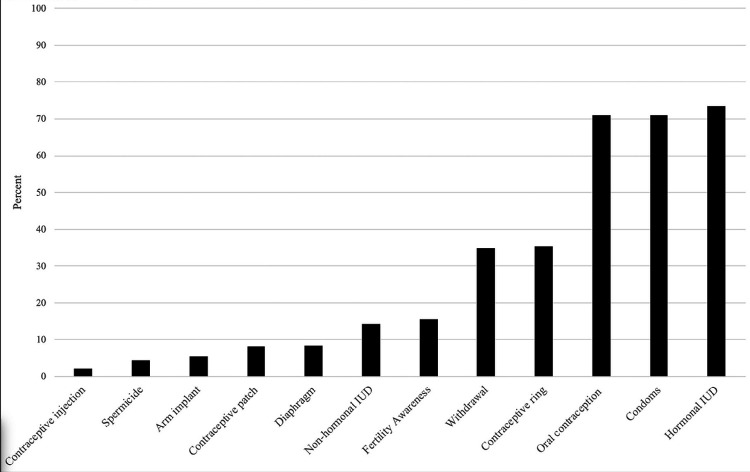 Figure 3
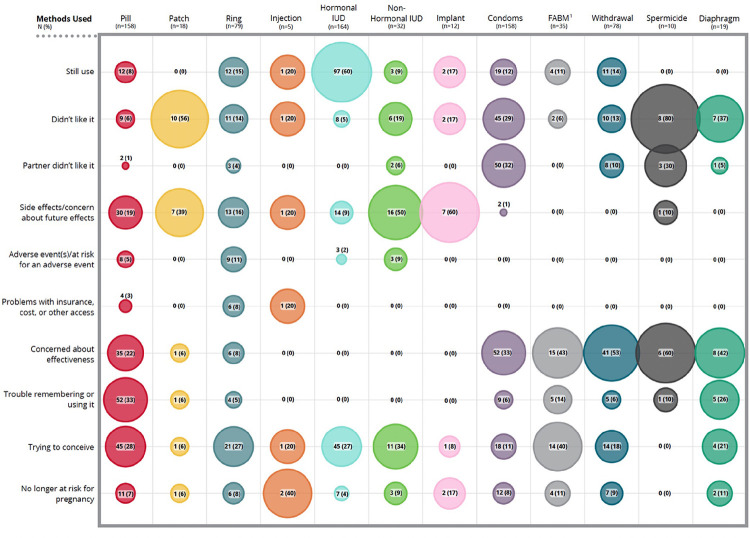 Figure 4
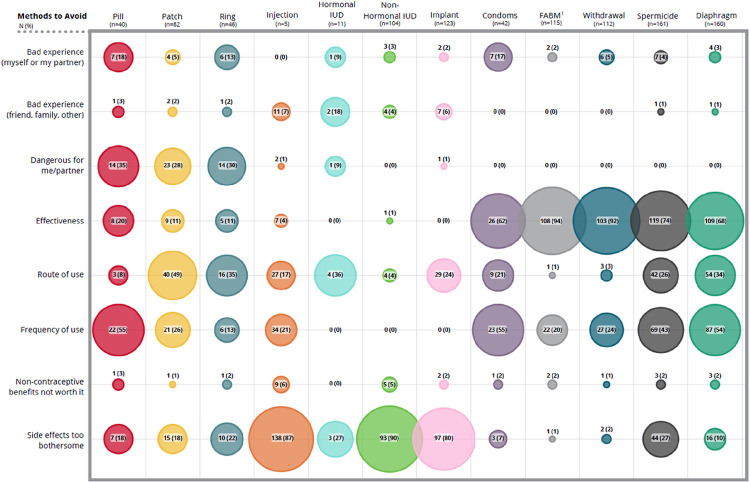 Figure 5
Peer Reviews
No public reviews on file for this paper yet. If you reviewed it on a platform where reviews are public (OpenReview, ICLR, NeurIPS, ICML), you can paste yours below so the community can read it here.
Videos
No videos yet. Explain this paper in a talk, walkthrough, or lecture? Add one.
Taxonomy
TopicsReproductive Health and Contraception · Reproductive Health and Technologies · Global Maternal and Child Health