Classification of Schizophrenia, Bipolar Disorder and Major Depressive Disorder with Comorbid Traits and Deep Learning Algorithms
Xiangning Chen, Yimei Liu, Joan Cue, Mira Han Vishwajit Nimgaonkar, Daniel Weinberger, Shizhong Han, Zhongming Zhao, Jingchun Chen

TL;DR
This study shows that shared genetic risks from comorbid traits can accurately classify schizophrenia, bipolar disorder, and major depressive disorder using deep learning and polygenic risk scores.
Contribution
The novel use of comorbid trait polygenic risk scores without target disorder data to classify psychiatric disorders.
Findings
Schizophrenia, bipolar disorder, and major depressive disorder can be classified with high accuracy using PRSs from comorbid traits alone.
Classification models using only comorbid trait PRSs achieved average categorical accuracy of 0.861 and average AUC of 0.961.
Results suggest shared genetic liabilities from comorbid traits may be sufficient for psychiatric disorder classification.
Abstract
Recent GWASs have demonstrated that comorbid disorders share genetic liabilities. But whether and how these shared liabilities can be used for the classification and differentiation of comorbid disorders remains unclear. In this study, we use polygenic risk scores (PRSs) estimated from 42 comorbid traits and the deep neural networks (DNN) architecture to classify and differentiate schizophrenia (SCZ), bipolar disorder (BIP) and major depressive disorder (MDD). Multiple PRSs were obtained for individuals from the schizophrenia (SCZ) (cases = 6,317, controls = 7,240), bipolar disorder (BIP) (cases = 2,634, controls 4,425) and major depressive disorder (MDD) (cases = 1,704, controls = 3,357) datasets, and classification models were constructed with and without the inclusion of PRSs of the target (SCZ, BIP or MDD). Models with the inclusion of target PRSs performed well as expected.…
Genes, proteins, chemicals, diseases, species, mutations and cell lines named across the full text — each resolved to its canonical identifier and authoritative record.
Click any figure to enlarge with its caption.
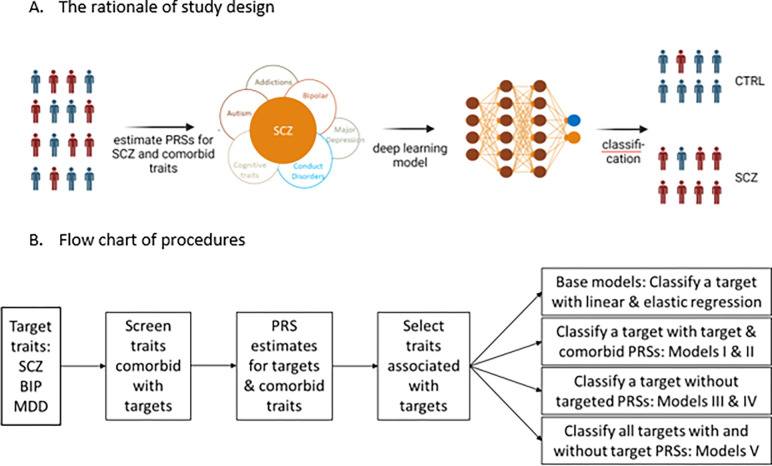 Figure 1
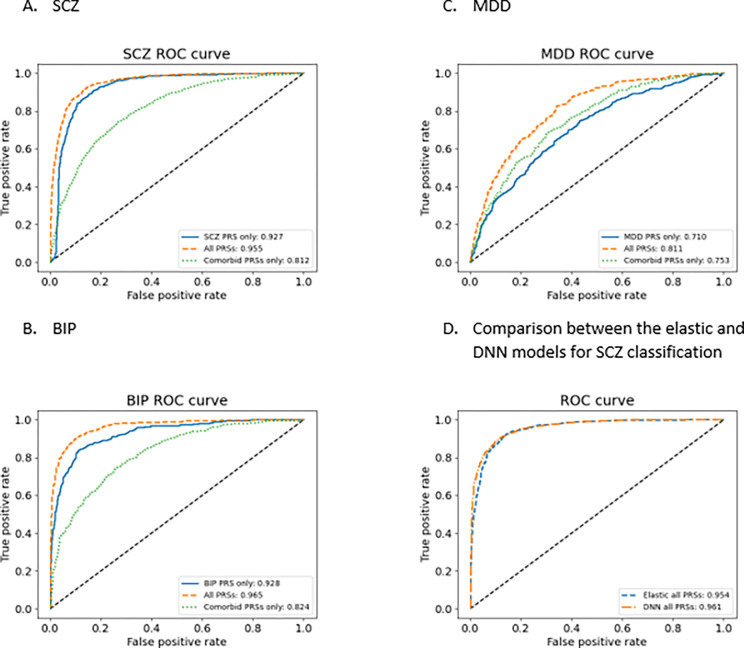 Figure 2
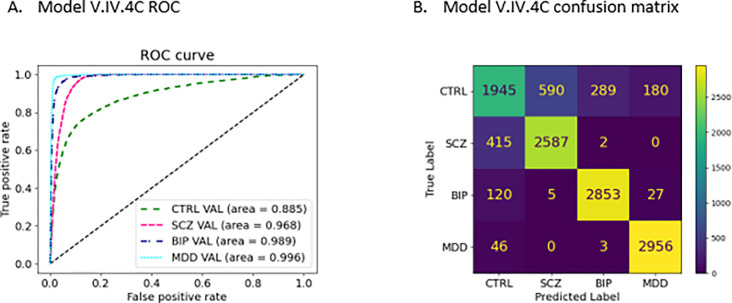 Figure 3
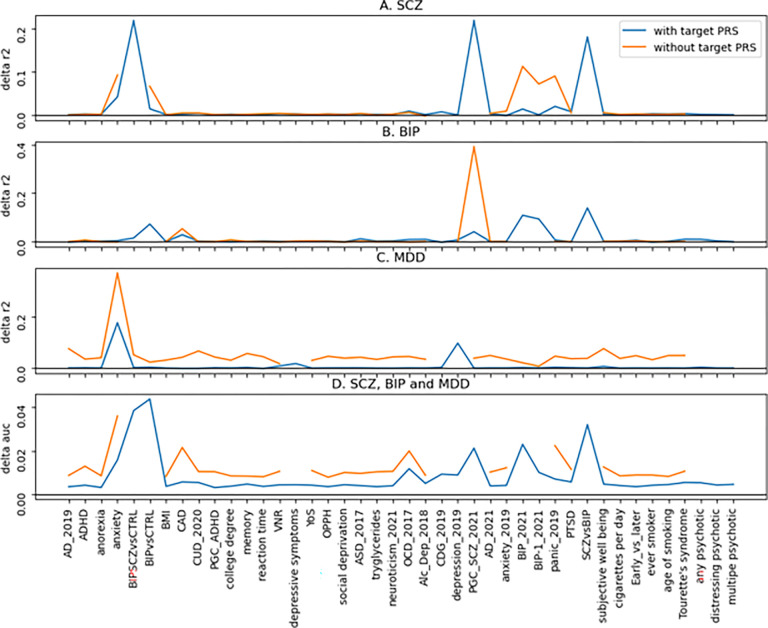 Figure 4
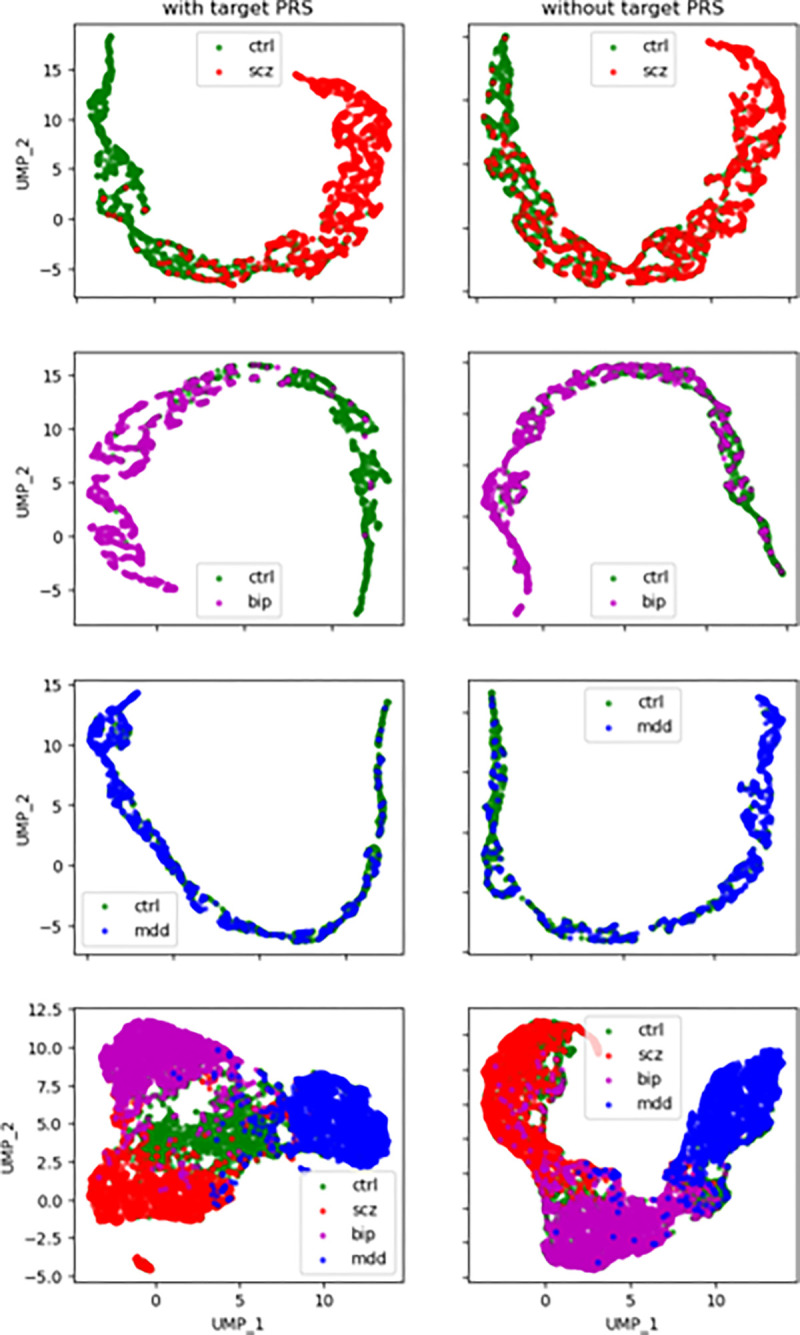 Figure 5
Peer Reviews
No public reviews on file for this paper yet. If you reviewed it on a platform where reviews are public (OpenReview, ICLR, NeurIPS, ICML), you can paste yours below so the community can read it here.
Videos
No videos yet. Explain this paper in a talk, walkthrough, or lecture? Add one.
Taxonomy
TopicsGenetic Associations and Epidemiology · Mental Health Research Topics · Bioinformatics and Genomic Networks