Soluble and insoluble lysates from the human A53T mutant α-synuclein transgenic mouse model induces α-synucleinopathy independent of injection site
Michael Lee, Justin Barnes, Scott Vermilyea, Joyce Meints, Hector Martinez

TL;DR
This study shows that injecting different forms of alpha-synuclein from a mouse model can cause Parkinson's-like brain changes regardless of where it's injected.
Contribution
Demonstrates that alpha-synuclein pathology spreads based on brain vulnerability, not injection site, and that both soluble and insoluble forms can initiate disease.
Findings
Inoculation of pathogenic alpha-synuclein in different brain regions or muscle leads to similar end-stage pathology patterns.
Both soluble and insoluble alpha-synuclein fractions can seed new pathology, with ER-enriched fractions being most pathogenic.
Inflammatory changes occur at later stages after alpha-synuclein inoculation in the brain stem.
Abstract
Pathological aggregation of a-synuclein (aS) is implicated in the pathogenesis of Parkinson’s disease (PD) and other a-synucleinopathies. The current view is that neuron-to-neuron spreading of aS pathology contributes to the progression of a-synucleinopathy. We used an A53T mutant human aS transgenic mouse model (TgA53T) to examine whether the site of pathogenic aS inoculation affects the pattern of neuropathology and whether soluble and insoluble fractions derived from crude pathogenic tissue lysates exhibit differential capacities to initiate aS pathology. To test whether the inoculation site impacts the ultimate spatial/temporal patterns of aS pathology, aS preformed fibrils (PFF), or brain homogenates from TgA53T mice with a-synucleinopathy, were injected into the cortex/striatum, brain stem, or skeletal muscle. In all cases, inoculation of pathogenic aS induced end-stage motor…
Genes, proteins, chemicals, diseases, species, mutations and cell lines named across the full text — each resolved to its canonical identifier and authoritative record.
Click any figure to enlarge with its caption.
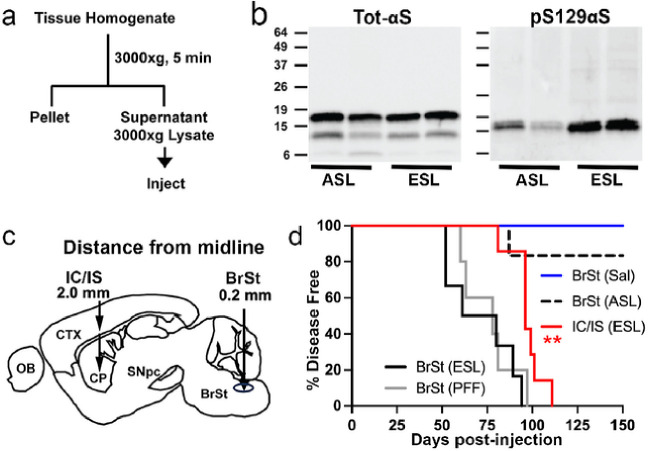 Figure 1
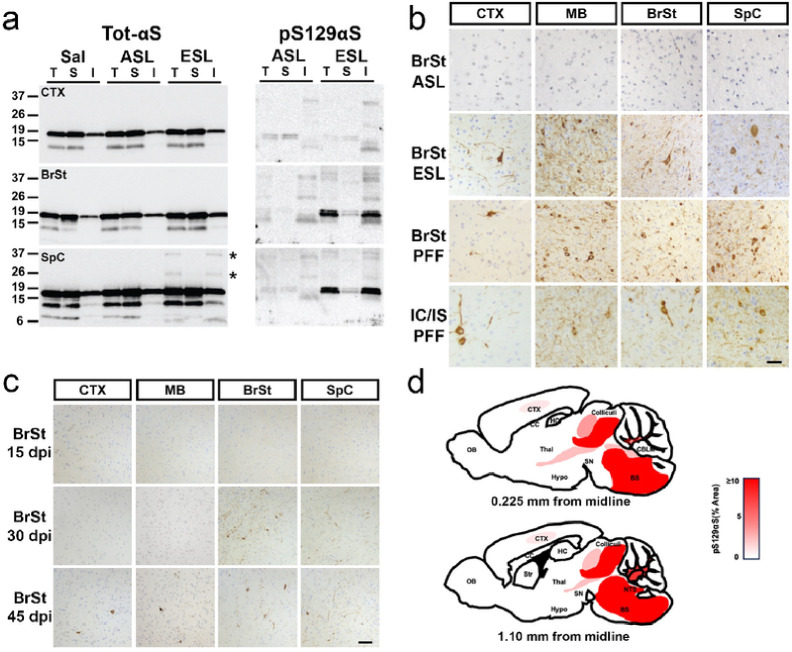 Figure 2
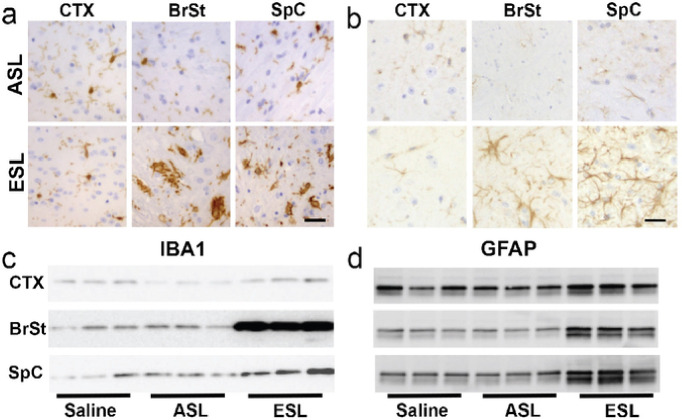 Figure 3
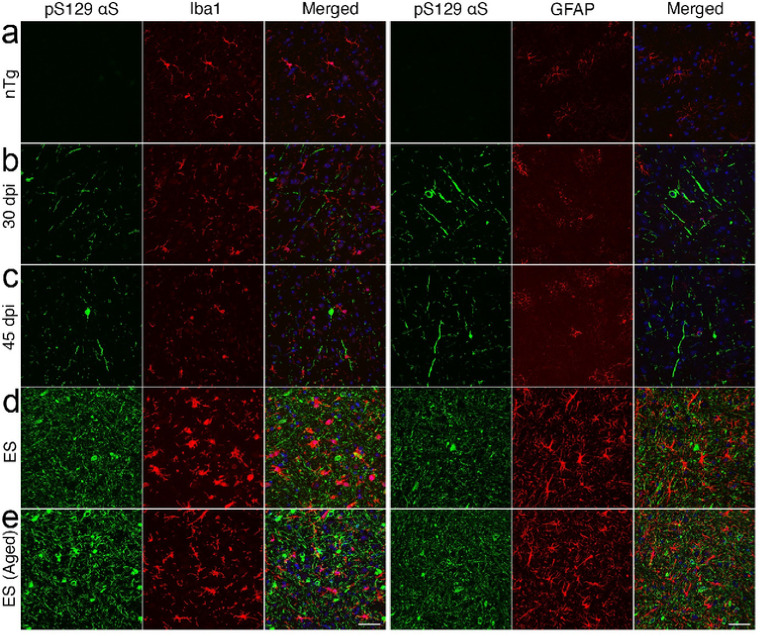 Figure 4
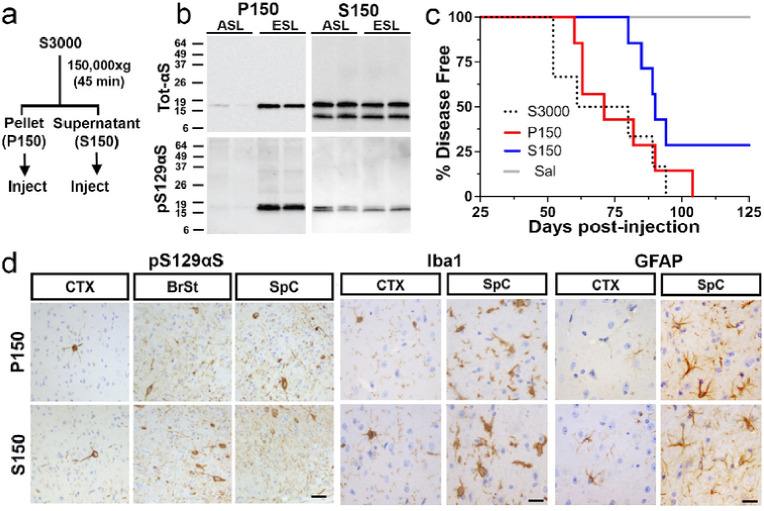 Figure 5
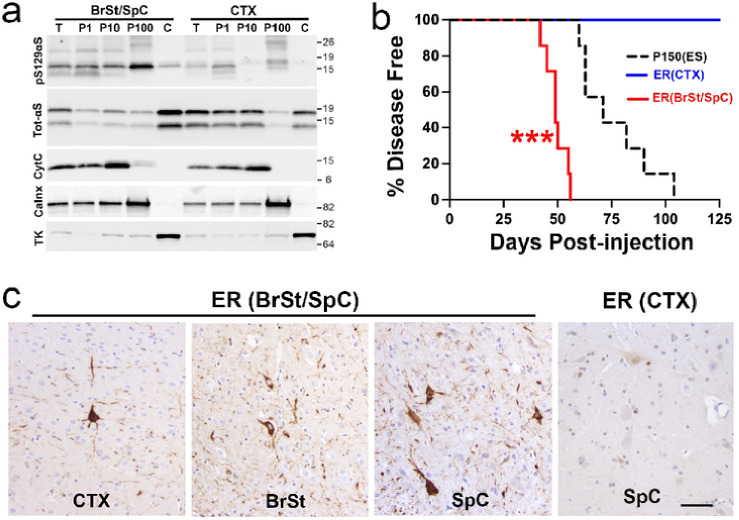 Figure 6
Peer Reviews
No public reviews on file for this paper yet. If you reviewed it on a platform where reviews are public (OpenReview, ICLR, NeurIPS, ICML), you can paste yours below so the community can read it here.
Videos
No videos yet. Explain this paper in a talk, walkthrough, or lecture? Add one.
Taxonomy
TopicsParkinson's Disease Mechanisms and Treatments · Botulinum Toxin and Related Neurological Disorders · Neurological disorders and treatments