Pathological changes in oral epithelium and the expression of SARS-CoV-2 entry receptors, ACE2 and furin
Osnat Grinstein-Koren, Michal Lusthaus, Hilla Tabibian-Keissar, Ilana Kaplan, Amos Buchner, Ron Ilatov, Marilena Vered, Ayelet Zlotogorski-Hurvitz, Cheorl-Ho Kim, Cheorl-Ho Kim, Cheorl-Ho Kim

TL;DR
This study found that oral tissues, even with pre-cancerous or cancerous changes, do not express ACE2, a key receptor for SARS-CoV-2, suggesting they are unlikely to be major entry points for the virus.
Contribution
The study provides new evidence that oral epithelial pathologies do not increase susceptibility to SARS-CoV-2 infection due to lack of ACE2 expression.
Findings
All oral mucosa samples, including normal and pathological tissues, showed no ACE2 immuno-expression or RNA transcripts.
Furin expression was weak and mainly observed in dysplastic lesions but not in SCC.
Patients with oral epithelial pathologies do not appear to be at higher risk for SARS-CoV-2 infection.
Abstract
Expression of angiotensin-converting enzyme (ACE)-2 and co-factors like furin, play key-roles in entry of SARS-CoV-2 into host cells. Furin is also involved in oral carcinogenesis. We investigated their expression in oral pre-malignant/malignant epithelial pathologies to evaluate whether ACE2 and furin expression might increase susceptibility of patients with these lesions for SARS-CoV-2 infection. Study included normal oral mucosa (N = 14), epithelial hyperplasia-mild dysplasia (N = 27), moderate-to-severe dysplasia (N = 24), squamous cell carcinoma (SCC, N = 34) and oral lichen planus (N = 51). Evaluation of ACE2/furin membranous/membranous-cytoplasmic immunohistochemical expression was divided by epithelial thirds (basal/middle/upper), on a 5-tier scale (0, 1—weak, 1.5 –weak-to-moderate, 2—moderate, 3—strong). Total score per case was the sum of all epithelial thirds, and the mean…
Genes, proteins, chemicals, diseases, species, mutations and cell lines named across the full text — each resolved to its canonical identifier and authoritative record.
Click any figure to enlarge with its caption.
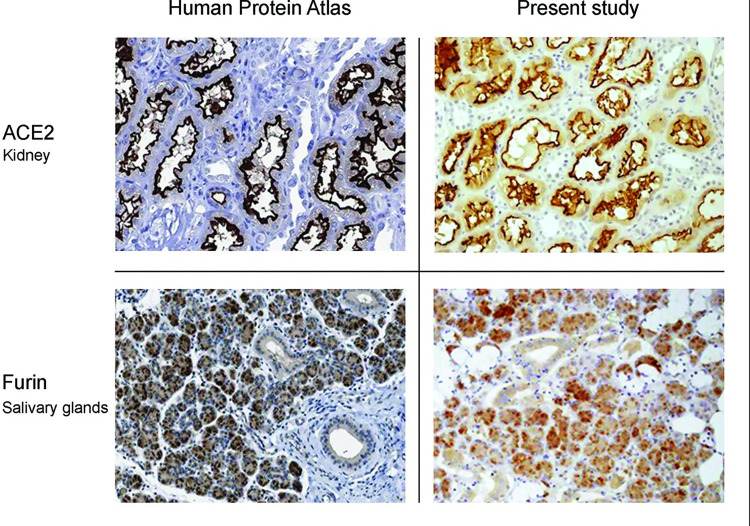 Figure 1
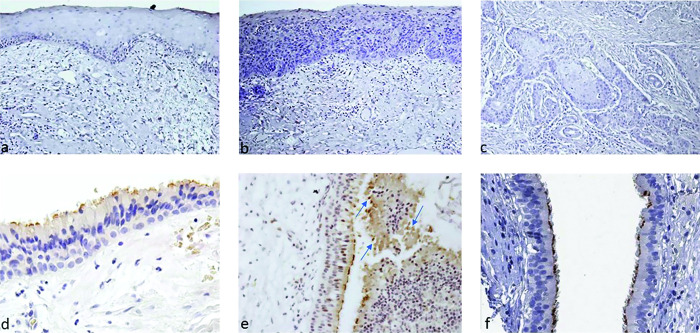 Figure 2
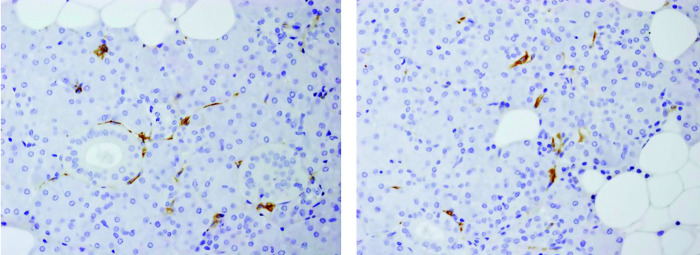 Figure 3
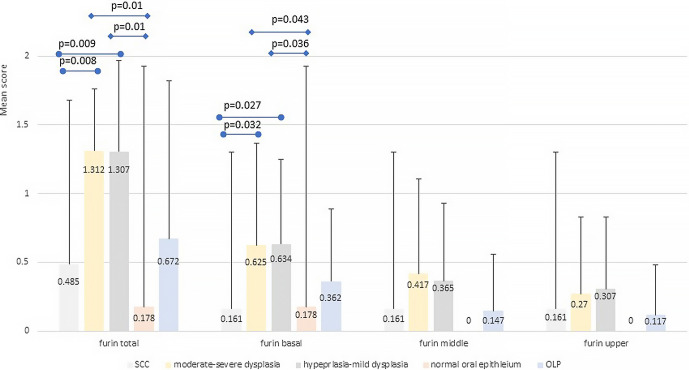 Figure 4
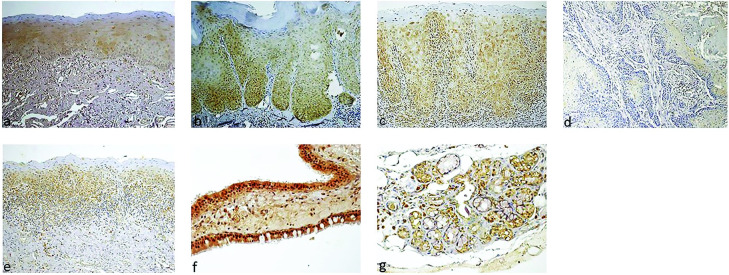 Figure 5
Peer Reviews
No public reviews on file for this paper yet. If you reviewed it on a platform where reviews are public (OpenReview, ICLR, NeurIPS, ICML), you can paste yours below so the community can read it here.
Videos
No videos yet. Explain this paper in a talk, walkthrough, or lecture? Add one.
Taxonomy
TopicsDermatological and COVID-19 studies · COVID-19 Clinical Research Studies · SARS-CoV-2 and COVID-19 Research