Clinical decision support system supported interventions in hospitalized older patients: a matter of natural course and adequate timing
NA Zwietering, AEMJH Linkens, D Kurstjens, PHM van der Kuy, N van Nie-Visser, BPA van de Loo, KPGM Hurkens, B Spaetgens

TL;DR
This study examines how Clinical Decision Support Systems (CDSS) are used in hospitals to improve medication safety for older patients and finds that most alerts are resolved around day 4 or 5 of hospitalization.
Contribution
The study identifies optimal timing for CDSS alerts and suggests ways to reduce alert fatigue by adjusting alert frequency and timing.
Findings
Most CDSS alerts for hospitalized older patients are resolved between day 4 and 5 of hospitalization.
The level of resolved alerts varies significantly between clinical rules, ranging from over 50% to less than 25%.
Adjusting the timing and frequency of CDSS alerts could reduce alert fatigue and improve system effectiveness.
Abstract
Drug-related problems (DRPs) and potentially inappropriate prescribing (PIP) are associated with adverse patient and health care outcomes. In the setting of hospitalized older patients, Clinical Decision Support Systems (CDSSs) could reduce PIP and therefore improve clinical outcomes. However, prior research showed a low proportion of adherence to CDSS recommendations by clinicians with possible explanatory factors such as little clinical relevance and alert fatigue. To investigate the use of a CDSS in a real-life setting of hospitalized older patients. We aim to (I) report the natural course and interventions based on the top 20 rule alerts (the 20 most frequently generated alerts per clinical rule) of generated red CDSS alerts (those requiring action) over time from day 1 to 7 of hospitalization; and (II) to explore whether an optimal timing can be defined (in terms of day per rule).…
Genes, proteins, chemicals, diseases, species, mutations and cell lines named across the full text — each resolved to its canonical identifier and authoritative record.
Click any figure to enlarge with its caption.
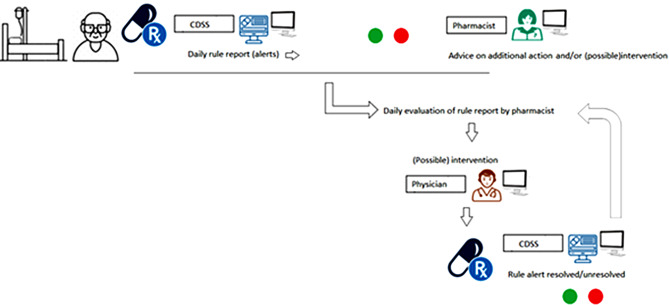 Figure 1
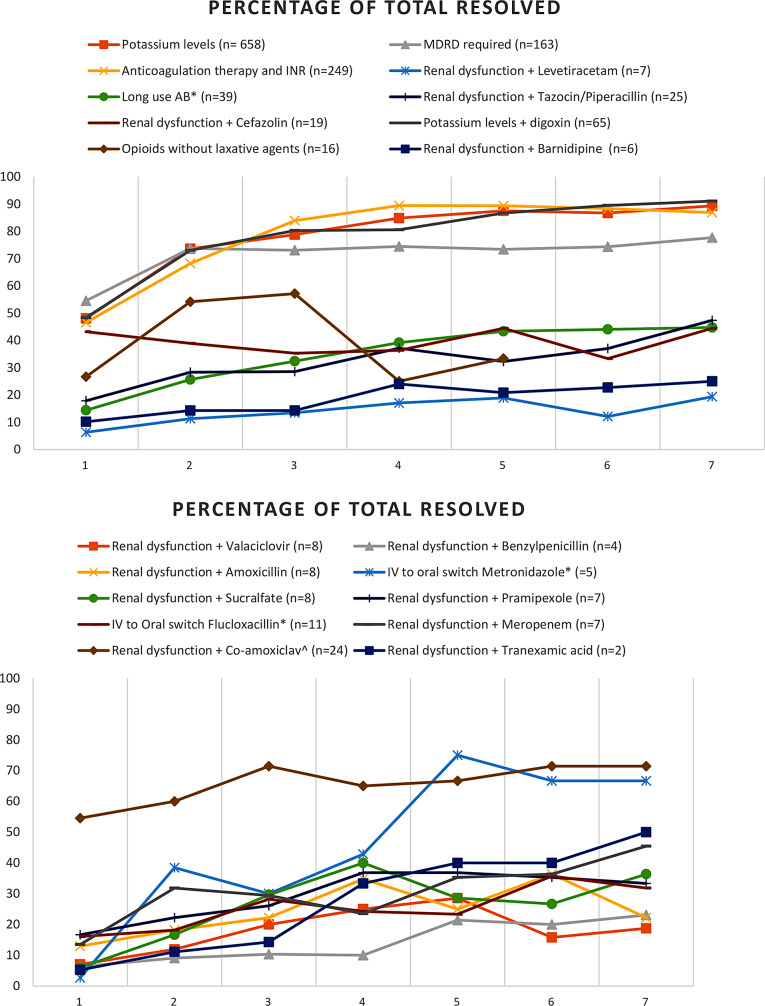 Figure 2
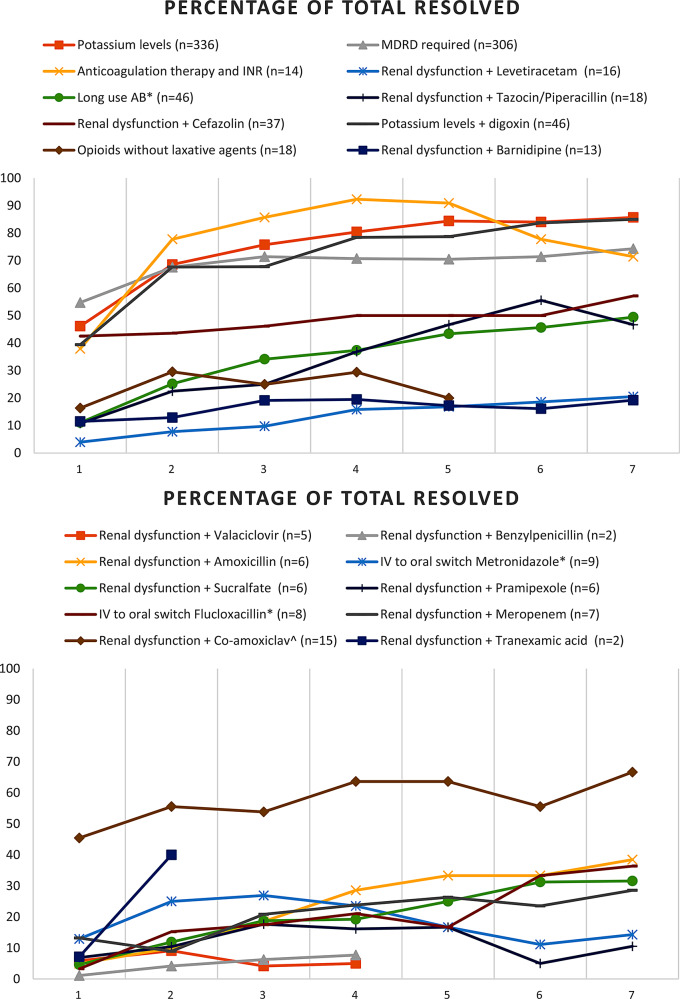 Figure 3
Peer Reviews
No public reviews on file for this paper yet. If you reviewed it on a platform where reviews are public (OpenReview, ICLR, NeurIPS, ICML), you can paste yours below so the community can read it here.
Videos
No videos yet. Explain this paper in a talk, walkthrough, or lecture? Add one.
Taxonomy
TopicsPharmaceutical Practices and Patient Outcomes · Blood Pressure and Hypertension Studies · Healthcare Technology and Patient Monitoring