Midline non-ictal rhythmic waveforms as possible electroencephalographic biomarkers of Smith-Klingsmore syndrome in children
Valerio Simonelli, Anna Rita Ferrari, Roberta Battini, Paola Brovedani, Emanuele Bartolini

TL;DR
This paper suggests that specific EEG patterns could help diagnose Smith-Klingsmore syndrome in children with incomplete symptoms.
Contribution
The study identifies midline rhythmic waveforms as potential EEG biomarkers for Smith-Klingsmore syndrome.
Findings
Two children with the same MTOR mutation showed unique EEG patterns including midline rhythmic waveforms.
These EEG features may help identify Smith-Klingsmore syndrome even when clinical symptoms are incomplete.
The findings suggest EEG traits could serve as endophenotypes for early diagnosis of the syndrome.
Abstract
•The SKS results from heterozygous MTOR mutations yielding dysmorphic traits/macrocephaly, seizures, intellectual disability.•Phenotype is variably expressed hampering an expedite diagnosis.•Specific electroencephalographic traits can represent endophenotypes useful to suspect SKS. The SKS results from heterozygous MTOR mutations yielding dysmorphic traits/macrocephaly, seizures, intellectual disability. Phenotype is variably expressed hampering an expedite diagnosis. Specific electroencephalographic traits can represent endophenotypes useful to suspect SKS. Pathogenic variants of the MTOR gene result in the Smith-Kingsmore syndrome, whose phenotypical spectrum includes facial dysmorphisms and neurological features. Expressivity is variable, patients exhibit a combination of intellectual disability, macrocephaly and epilepsy. The diagnosis can be missed, failing to detect the…
Genes, proteins, chemicals, diseases, species, mutations and cell lines named across the full text — each resolved to its canonical identifier and authoritative record.
Click any figure to enlarge with its caption.
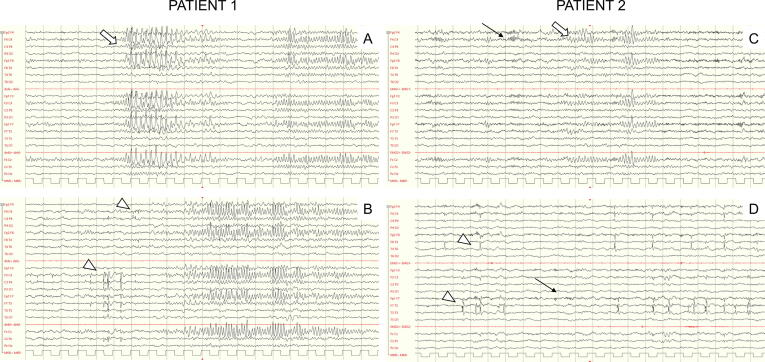 Figure 1
Peer Reviews
No public reviews on file for this paper yet. If you reviewed it on a platform where reviews are public (OpenReview, ICLR, NeurIPS, ICML), you can paste yours below so the community can read it here.
Videos
No videos yet. Explain this paper in a talk, walkthrough, or lecture? Add one.
Taxonomy
TopicsCRISPR and Genetic Engineering · Renal and related cancers · Genomics and Rare Diseases