Pharmacokinetics, Safety, and Tolerability of Tenapanor in Healthy Chinese and Caucasian Volunteers: A Randomized, Open-Label, Single-Center, Placebo-Controlled Phase 1 Study
Gang Yuan, Yili Chen, Li Li, Xin Wang, Gang Wei, Jiawei Zeng, Ai-Min Hui, Yueyun Jiang, Han Zhao, Lei Diao, Yongchun Zhou, Yinglian Xiao, Minhu Chen

TL;DR
This study tested how the drug tenapanor behaves in the body and its safety in Chinese and Caucasian volunteers, finding similar results between the groups.
Contribution
The study provides new pharmacokinetic and safety data for tenapanor in both Chinese and Caucasian populations.
Findings
Tenapanor plasma concentrations remained below detection levels, while its metabolite tenapanor-M1 increased proportionally with dose.
Tenapanor was well-tolerated with no serious adverse events in either Chinese or Caucasian volunteers.
Pharmacokinetics and safety profiles were similar between Chinese and Caucasian subjects.
Abstract
Tenapanor is a locally acting selective sodium-hydrogen exchanger 3 inhibitor with the potential to treat sodium/phosphorus and fluid overload in various cardiac-renal diseases, which has been approved for constipation-predominant irritable bowel syndrome in the US. The pharmacokinetics (PK) of tenapanor and its metabolite tenapanor-M1 (AZ13792925), as well as the safety and tolerability of tenapanor, were investigated in healthy Chinese and Caucasian subjects. This randomized, open-label, single-center, placebo-controlled phase 1 study (https://www.chinadrugtrials.org.cn; CTR20201783) enrolled Chinese and Caucasian healthy volunteers into 4 parallel cohorts (3 cohorts for Chinese subjects, 1 cohort for Caucasian subjects). In each cohort, 15 subjects were expected to be included and received oral tenapanor (10 or 30 mg as single dose, or 50 mg as a single dose followed by a…
Genes, proteins, chemicals, diseases, species, mutations and cell lines named across the full text — each resolved to its canonical identifier and authoritative record.
Click any figure to enlarge with its caption.
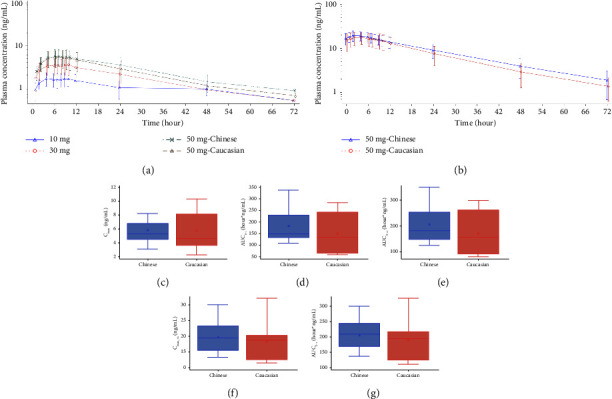 Figure 1
Peer Reviews
No public reviews on file for this paper yet. If you reviewed it on a platform where reviews are public (OpenReview, ICLR, NeurIPS, ICML), you can paste yours below so the community can read it here.
Videos
No videos yet. Explain this paper in a talk, walkthrough, or lecture? Add one.
Taxonomy
TopicsIon Transport and Channel Regulation · Gastrointestinal motility and disorders · Gastroesophageal reflux and treatments