Application of artificial neural networks to evaluate femur development in the human fetus
Anna Badura, Mariusz Baumgart, Magdalena Grzonkowska, Mateusz Badura, Piotr Janiewicz, Michał Szpinda, Adam Buciński

TL;DR
This study uses artificial neural networks to accurately assess femur development in human fetuses, offering a potential tool for prenatal testing.
Contribution
The study introduces a novel MLP 2-3-2-5 neural network model for predicting femur development parameters in fetuses.
Findings
The MLP 2-3-2-5 model showed strong predictive accuracy with correlation coefficients above 0.94 across training, validation, and testing datasets.
The model can estimate five femoral shaft parameters simultaneously using gestational age and femur length as inputs.
The approach may help detect fetal femur abnormalities during prenatal tests.
Abstract
The present article concentrates on an innovative analysis that was performed to assess the development of the femur in human fetuses using artificial intelligence. As a prerequisite, linear dimensions, cross-sectional surface areas and volumes of the femoral shaft primary ossification center in 47 human fetuses aged 17–30 weeks, originating from spontaneous miscarriages and preterm deliveries, were evaluated with the use of advanced imaging techniques such as computed tomography and digital image analysis. In order to ensure the data representativeness and to avoid introducing any hidden structures that may exist in the data, the entire dataset was randomized and separated into three subsets: training (50% of cases), testing (25% of cases), and validation (25% of cases). Based on the collected numerical data, an artificial neural network was devised, trained, and subject to testing in…
Genes, proteins, chemicals, diseases, species, mutations and cell lines named across the full text — each resolved to its canonical identifier and authoritative record.
Click any figure to enlarge with its caption.
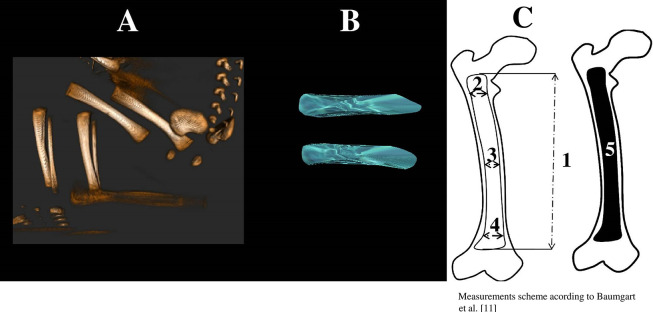 Figure 1
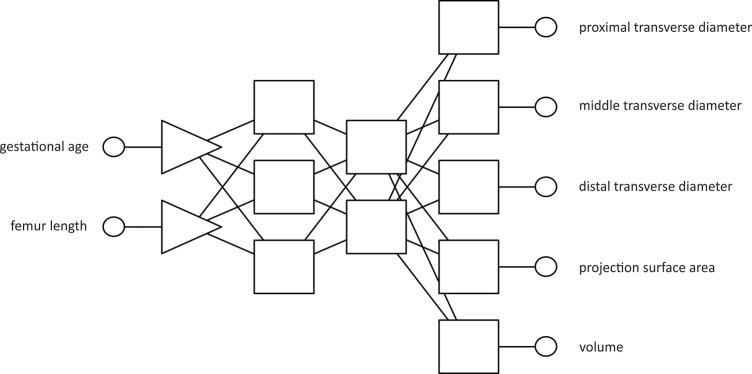 Figure 2
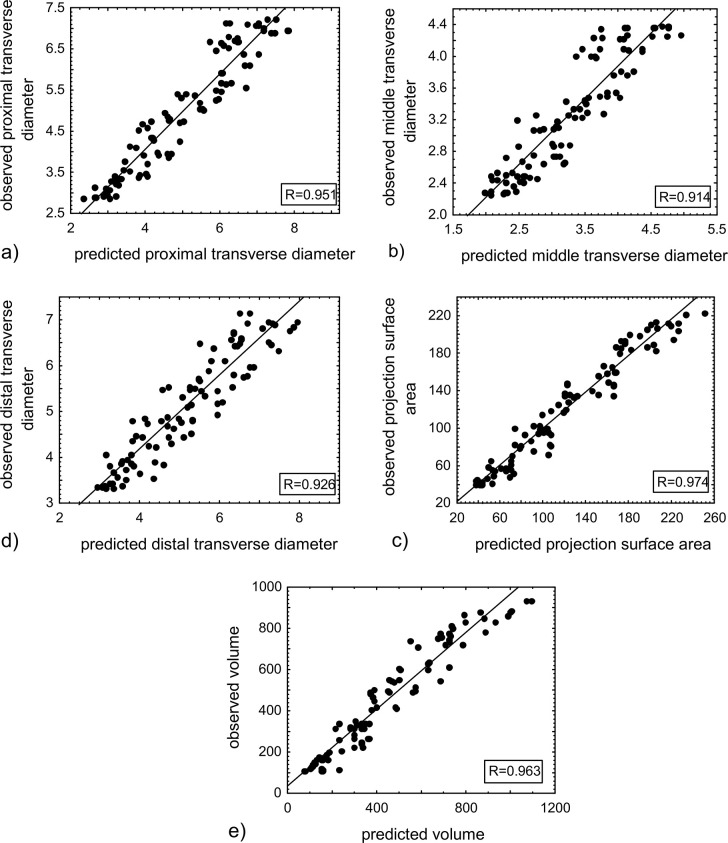 Figure 3
 Figure 4
 Figure 5
 Figure 6
 Figure 7
Peer Reviews
No public reviews on file for this paper yet. If you reviewed it on a platform where reviews are public (OpenReview, ICLR, NeurIPS, ICML), you can paste yours below so the community can read it here.
Videos
No videos yet. Explain this paper in a talk, walkthrough, or lecture? Add one.
Taxonomy
TopicsStatistical Methods in Epidemiology · Congenital Diaphragmatic Hernia Studies