Influence of perceived social support on detection of social norm violation: evidence from N1 and N400
Bing Liang, Bingbing Li, Xiaoyue Fan, Yan Mu, Juan Wang

TL;DR
This study explores how perceived social support affects how people detect when others break social norms, using brain activity measurements.
Contribution
The study reveals how low perceived social support increases neural responses to social norm violations.
Findings
Low perceived social support leads to stronger N1 and N400 brain responses during social norm violation detection.
High perceived social support shows no significant neural differences between norm conformity and violation.
Perceived social support influences cognitive processing of social norm violations.
Abstract
The perceived social support individuals receive from their others plays a crucial role in shaping conformity with social norms. However, the specific mechanism underlying perceived social support and the detection of social norms remains unclear. In this study, college students with high and low levels of perceived social support were asked to judge the appropriateness of stranger’s behaviors (e.g., singing) in different situations (e.g., library). The participants’ electroencephalography activities were analyzed aiming to uncover the neural mechanism underlying how perceived social support influences the detection of others’ normative behavior. The ERP results indicate that, for individuals with a lower level of perceived social support, larger amplitudes of the N1 component (related to primary processing) and the N400 component (related to cognitive conflict) were observed when…
Genes, proteins, chemicals, diseases, species, mutations and cell lines named across the full text — each resolved to its canonical identifier and authoritative record.
Click any figure to enlarge with its caption.
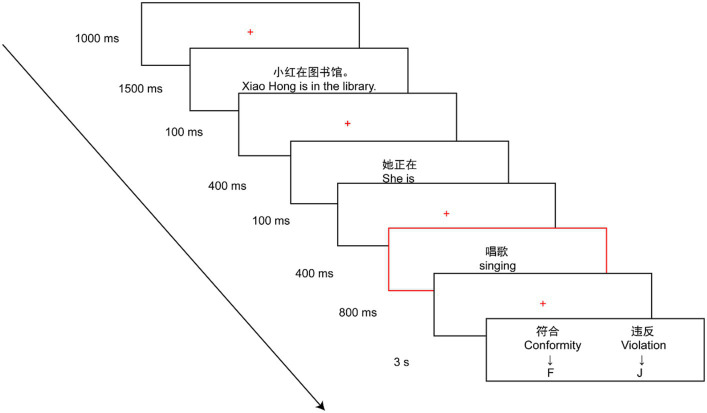 Figure 1
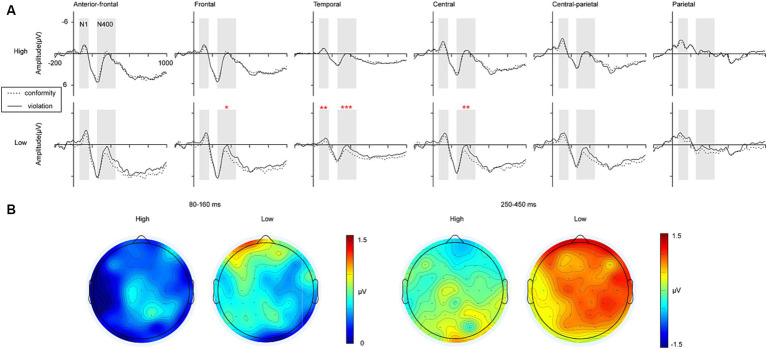 Figure 2
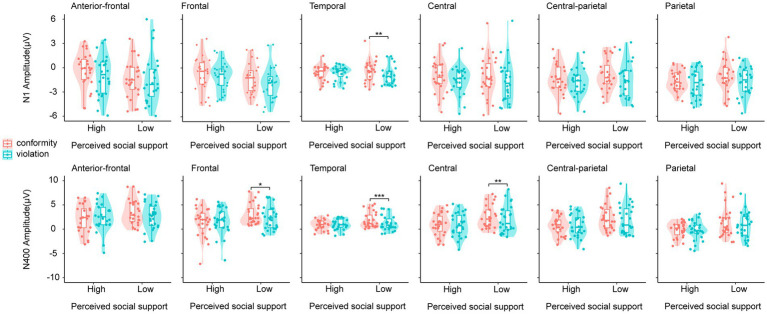 Figure 3
Peer Reviews
No public reviews on file for this paper yet. If you reviewed it on a platform where reviews are public (OpenReview, ICLR, NeurIPS, ICML), you can paste yours below so the community can read it here.
Videos
No videos yet. Explain this paper in a talk, walkthrough, or lecture? Add one.
Taxonomy
TopicsPsychology of Moral and Emotional Judgment · Social and Intergroup Psychology · Deception detection and forensic psychology