The significance of shooting angle in seal shooting
Kathrine A Ryeng, Stig E Larsen

TL;DR
This study found that shooting young harp seals from an oblique front angle leads to the highest immediate death rate, improving animal welfare during hunts.
Contribution
The study identifies the optimal shooting angle for minimizing suffering in young harp seal hunts based on empirical data.
Findings
Shooting obliquely from the front resulted in the highest instantaneous death rate (96.8%).
Shooting directly from the side had the lowest instantaneous death rate (66.7%).
Time to death was shortest for seals shot directly from the front (16 seconds).
Abstract
The present study aimed to investigate the relationship between shooting angle to the head and animal welfare outcomes in the hunt of young harp seals (Pagophilus groenlandicus). The study population consisted of young harp seals belonging to the Greenland Sea harp seal population. A sample of 171, 2–7 weeks old, weaned harp seals of both sexes were included. The study was conducted as an open, randomised parallel group designed trial during the regular hunt. The animals were allocated into four groups, A–D, according to the observed shooting angle to the head, defined as the angle between the direction of the shot and the longitudinal axis of the animal’s head: (A) directly from the front; (B) obliquely from the front; (C) directly from the side; and (D) obliquely or directly from behind. Instantaneous death rate (IDR) and time to death (TTD) were the main variables. The mean IDR…
Genes, proteins, chemicals, diseases, species, mutations and cell lines named across the full text — each resolved to its canonical identifier and authoritative record.
Click any figure to enlarge with its caption.
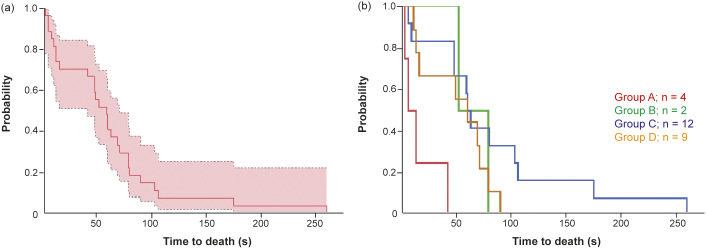 Figure 1
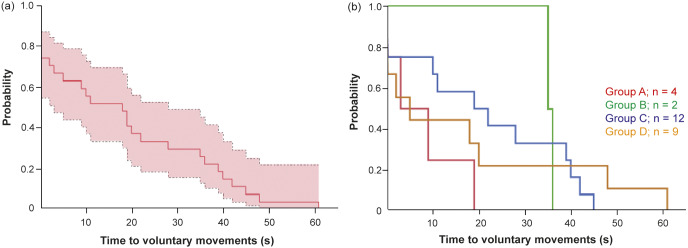 Figure 2
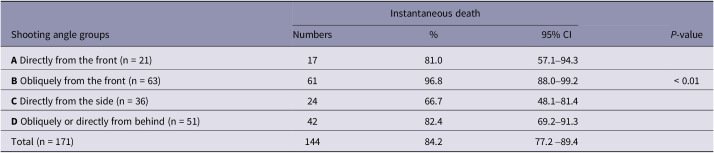 Figure 3
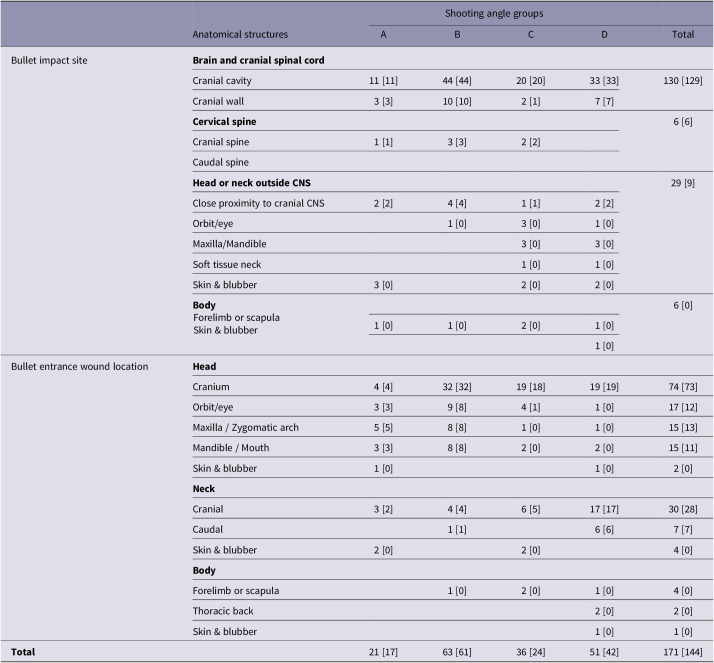 Figure 4
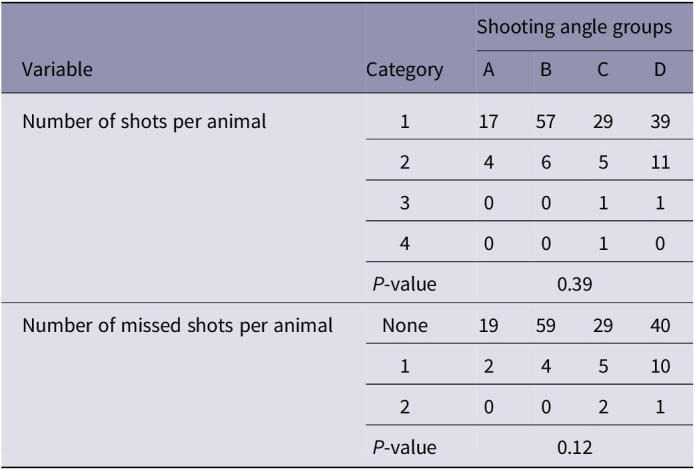 Figure 5
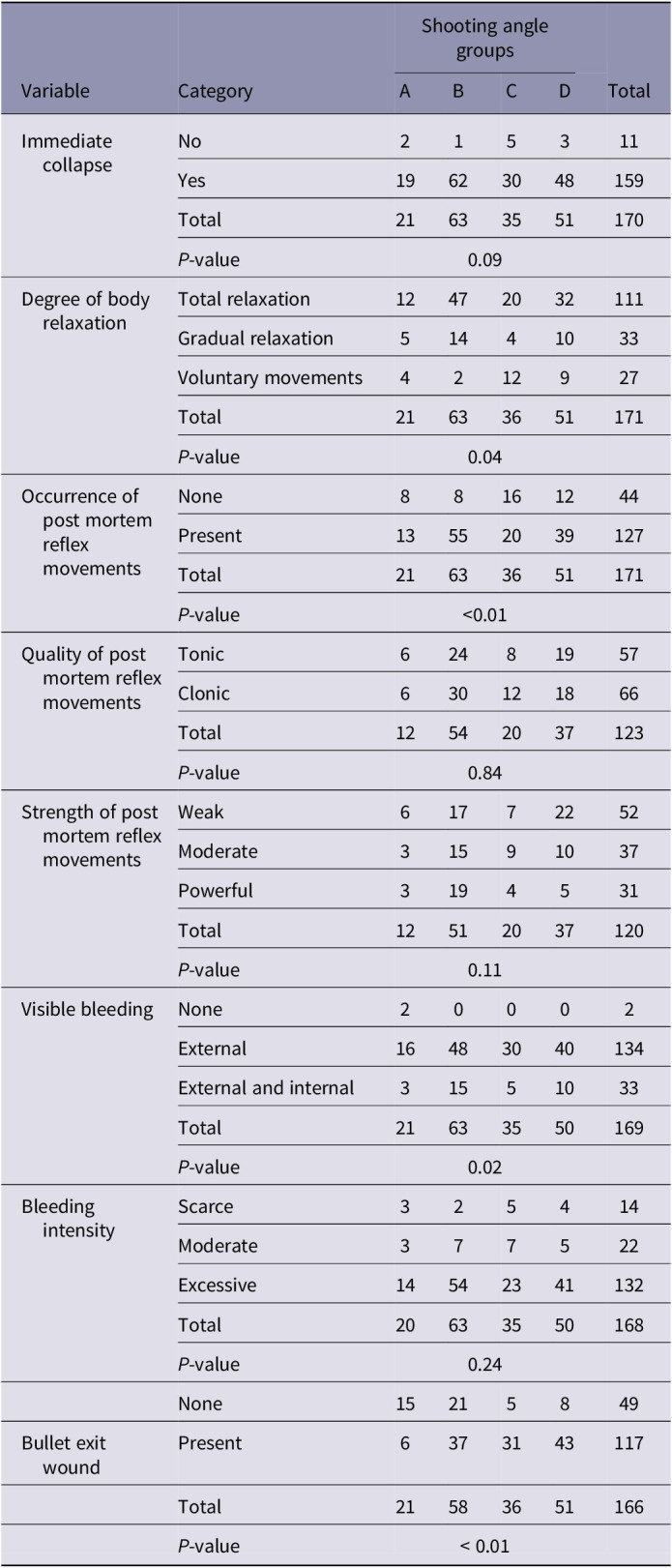 Figure 6
Peer Reviews
No public reviews on file for this paper yet. If you reviewed it on a platform where reviews are public (OpenReview, ICLR, NeurIPS, ICML), you can paste yours below so the community can read it here.
Videos
No videos yet. Explain this paper in a talk, walkthrough, or lecture? Add one.
Taxonomy
TopicsMarine animal studies overview · Injury Epidemiology and Prevention · Automotive and Human Injury Biomechanics