Relationship between sacral-abdominal wall distance, movement performance, and spinal alignment in osteoporosis: a retrospective study
Takashi Nagai, Makoto Miyagami, Shota Nakamura, Keizo Sakamoto, Koji Ishikawa, Ichiro Okano, Fumihito Kasai, Yoshifumi Kudo, Nobuyuki Kawate

TL;DR
This study explores how the distance between the sacrum and abdominal wall relates to movement performance and spinal alignment in older women with osteoporosis.
Contribution
The study introduces the sacral vertebra–abdominal wall distance (SAD) as a new assessment method for evaluating movement performance in older adults with osteoporosis.
Findings
A shorter SAD was associated with better movement performance and improved spinal alignment in older women with osteoporosis.
Spinal alignment parameters like sagittal vertical axis and pelvic tilt were significantly better in the shorter SAD group.
This is the first study to investigate the relationship between SAD, age, and movement performance in older adults.
Abstract
Aging is associated with muscle atrophy, as typified by sarcopenia. Loss of abdominal muscle strength can cause abdominal wall laxity. The purpose of this study was to investigate the relationship between the sacral vertebra–abdominal wall distance (SAD) and movement performance using a simple lateral spine X-ray image for measuring the SAD. In this retrospective study, we included women aged ≥ 65 years who were attending the outpatient clinic for osteoporosis at our hospital. A total of 287 patients (mean age ± SD, 76.8 ± 7.1 years) with measured SAD were included in the analysis. Patients were divided into two groups based on SAD cutoff (160 mm) and age (75 years), respectively. The patients were examined using the two-foot 20 cm rise test, 3 m Timed Up and Go (TUG) test, two-step test, open-eyed one-leg standing time, and spinal alignment. Normally distributed data are expressed as…
Genes, proteins, chemicals, diseases, species, mutations and cell lines named across the full text — each resolved to its canonical identifier and authoritative record.
Click any figure to enlarge with its caption.
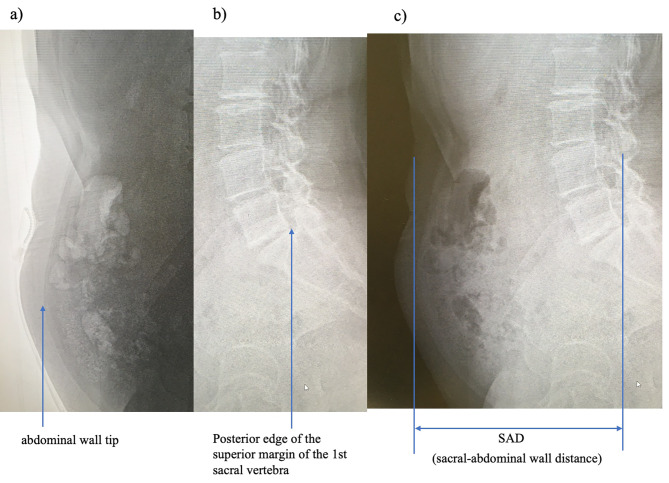 Figure 1
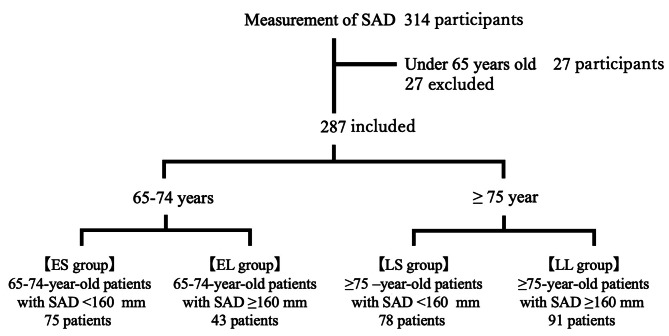 Figure 2
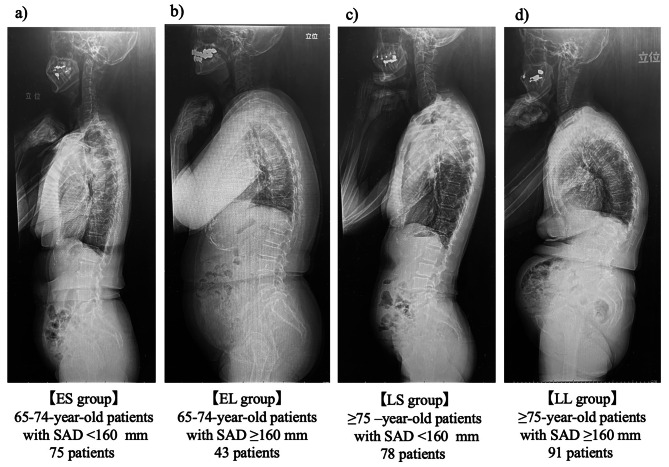 Figure 3
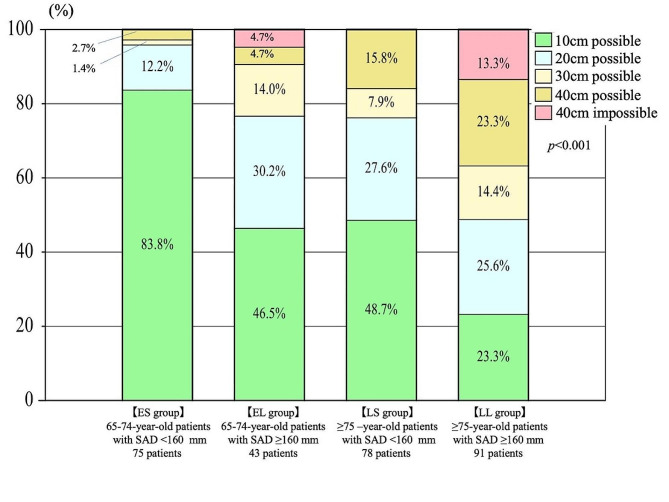 Figure 4
Peer Reviews
No public reviews on file for this paper yet. If you reviewed it on a platform where reviews are public (OpenReview, ICLR, NeurIPS, ICML), you can paste yours below so the community can read it here.
Videos
No videos yet. Explain this paper in a talk, walkthrough, or lecture? Add one.
Taxonomy
TopicsScoliosis diagnosis and treatment · Pelvic and Acetabular Injuries · Bone health and osteoporosis research