Survival analysis under imperfect record linkage using historic census data
Arielle K. Marks-Anglin, Frances K. Barg, Michelle Ross, Douglas J. Wiebe, Wei-Ting Hwang

TL;DR
This paper explores how to handle missing survival data from imperfectly linked census records and finds that imputation based on conditional survival is more effective for analyzing mortality risks.
Contribution
The paper introduces and evaluates modified imputation methods for handling missing survival times due to imperfect record linkage in historical cohorts.
Findings
Conditional survival-based imputation reduces bias and increases efficiency in estimating hazard ratios and median survival times.
Occupational asbestos exposure is significantly linked to higher mortality, especially among Black individuals and males.
Imputation methods' performance depends on the missingness mechanism and the parameter being estimated.
Abstract
Advancements in linking publicly available census records with vital and administrative records have enabled novel investigations in epidemiology and social history. However, in the absence of unique identifiers, the linkage of the records may be uncertain or only be successful for a subset of the census cohort, resulting in missing data. For survival analysis, differential ascertainment of event times can impact inference on risk associations and median survival. We modify some existing approaches that are commonly used to handle missing survival times to accommodate this imperfect linkage situation including complete case analysis, censoring, weighting, and several multiple imputation methods. We then conduct simulation studies to compare the performance of the proposed approaches in estimating the associations of a risk factor or exposure in terms of hazard ratio (HR) and median…
Genes, proteins, chemicals, diseases, species, mutations and cell lines named across the full text — each resolved to its canonical identifier and authoritative record.
Click any figure to enlarge with its caption.
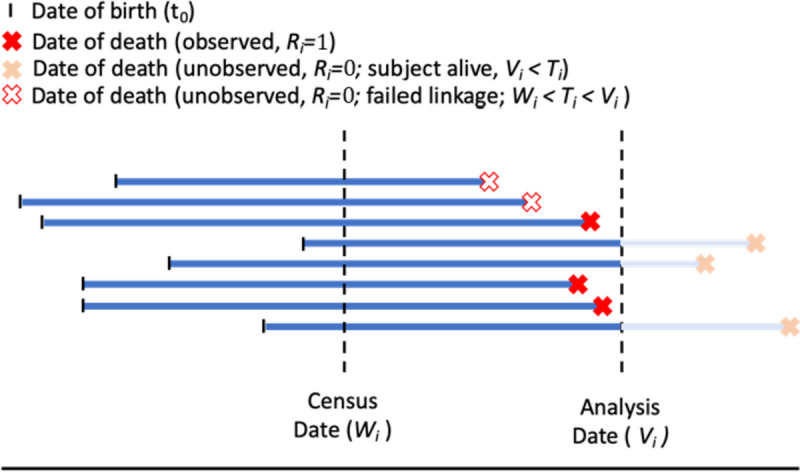 Figure 1
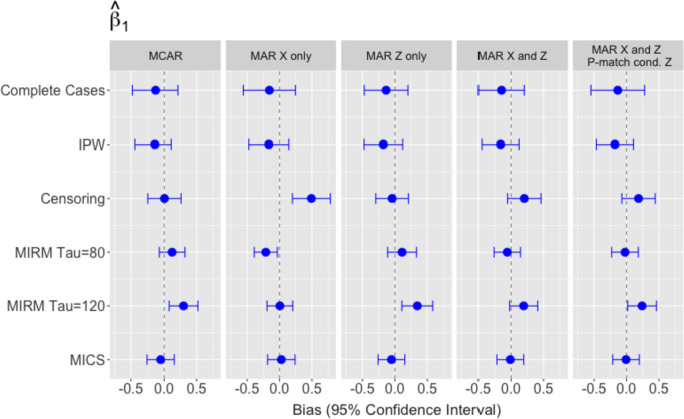 Figure 2
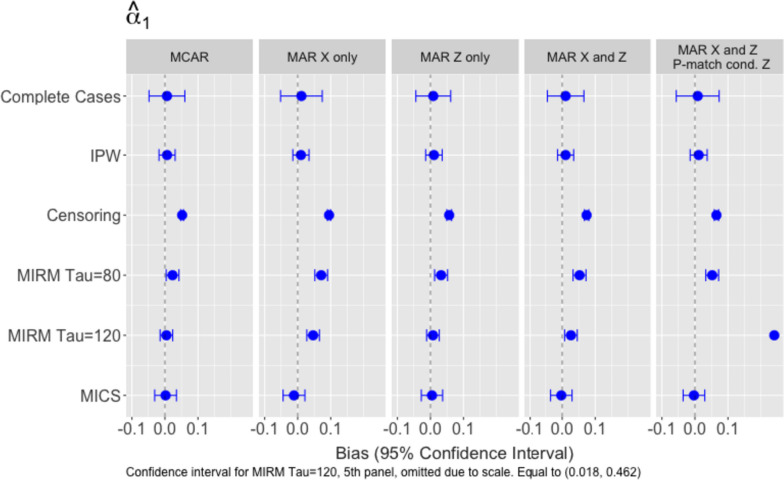 Figure 3
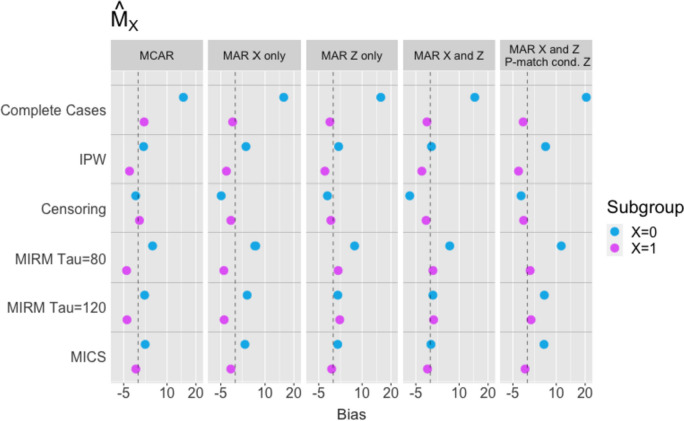 Figure 4
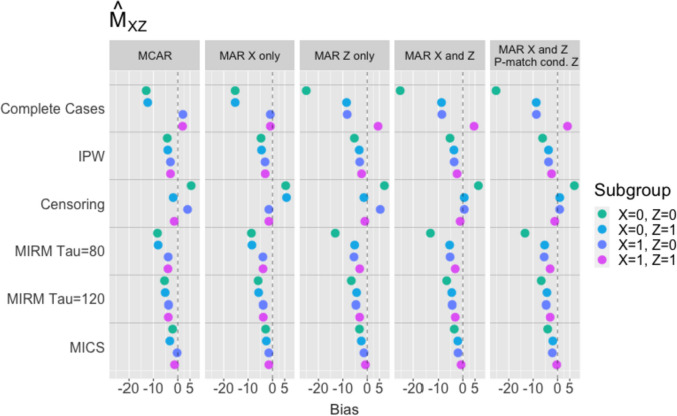 Figure 5
Peer Reviews
No public reviews on file for this paper yet. If you reviewed it on a platform where reviews are public (OpenReview, ICLR, NeurIPS, ICML), you can paste yours below so the community can read it here.
Videos
No videos yet. Explain this paper in a talk, walkthrough, or lecture? Add one.
Taxonomy
TopicsHealth disparities and outcomes · Healthcare Policy and Management · Statistical Methods and Bayesian Inference