Case Report: Enhancing lead extraction techniques: a novel approach using a loop formed by an ablation catheter and a gooseneck snare
Jun Li, Lei Wang, Xiaofang Li, Na Li, Xin Shao, Anxin Zhang, Yan Shu, Haixiong Wang

TL;DR
A new technique using a catheter and snare loop successfully extracted a very old medical lead that had been implanted for over 30 years.
Contribution
A novel loop-based technique combining an ablation catheter and gooseneck snare is introduced for challenging lead extractions.
Findings
A 30+ year-old lead was successfully extracted using a loop formed by an ablation catheter and gooseneck snare.
The catheter was rotated to remove lead-bound sites during extraction.
The Needle's Eye Snare was used to complete the retrieval process.
Abstract
The difficulty and complexity of lead extraction procedures increase with the age of the lead to be extracted. The extraction of old (>20 years) leads is more time-consuming and requires advanced tools and a complex technique. In this case, we retrieved a very old (>30 years) lead using a loop formed by a catheter and a gooseneck snare. The catheter was rotated to remove the lead-bound sites. The lead was successfully retrieved using a Needle's Eye Snare.
Genes, proteins, chemicals, diseases, species, mutations and cell lines named across the full text — each resolved to its canonical identifier and authoritative record.
Click any figure to enlarge with its caption.
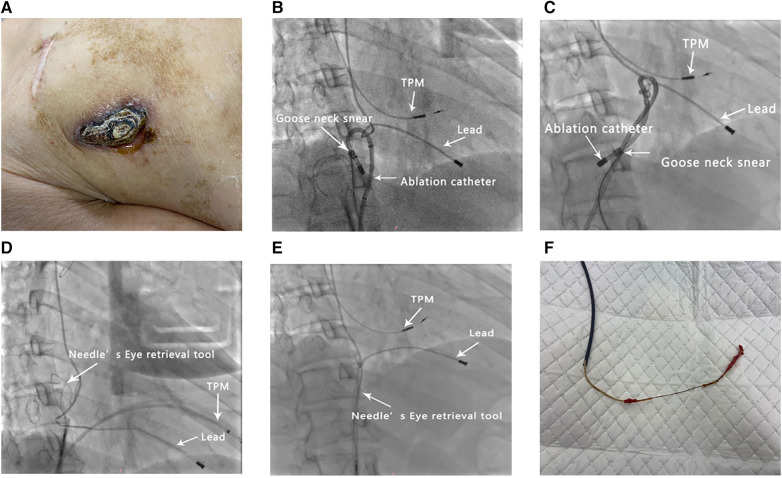 Figure 1
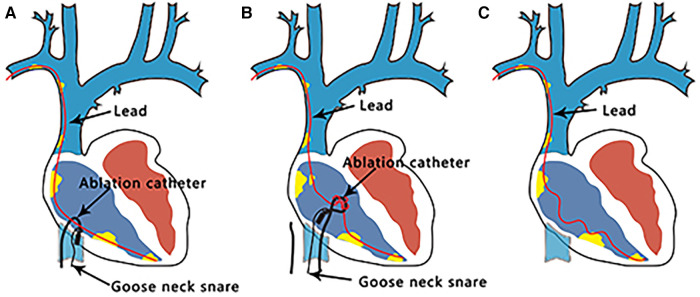 Figure 2
Peer Reviews
No public reviews on file for this paper yet. If you reviewed it on a platform where reviews are public (OpenReview, ICLR, NeurIPS, ICML), you can paste yours below so the community can read it here.
Videos
No videos yet. Explain this paper in a talk, walkthrough, or lecture? Add one.
Taxonomy
TopicsCardiac pacing and defibrillation studies · Cardiac electrophysiology and arrhythmias · Cardiac Arrhythmias and Treatments