De novo genome assembly of a probiotic Lacticaseibacillus rhamnosus ISO20, isolated from raw milk in South Africa
Goitsemang Makete, Tshifhiwa Paris Mamphogoro

TL;DR
This paper presents the genome sequence of a probiotic Lacticaseibacillus rhamnosus strain from South African raw milk.
Contribution
The study provides a de novo draft genome of Lacticaseibacillus rhamnosus ISO20 for probiotic research.
Findings
The genome sequence offers insights into the probiotic mechanisms of Lacticaseibacillus rhamnosus ISO20.
The strain was isolated from raw goat’s milk in South Africa.
Abstract
Lactic acid bacteria are known to exhibit probiotic properties through various mechanisms including production of antimicrobial substances and bile salts tolerance. Here, we report a draft genome sequence of Lacticaseibacillus rhamnosus ISO20, a lactic acid bacterium isolated from raw goat’s milk to provide genomic insight into its strategies as probiotic strain.
Genes, proteins, chemicals, diseases, species, mutations and cell lines named across the full text — each resolved to its canonical identifier and authoritative record.
Click any figure to enlarge with its caption.
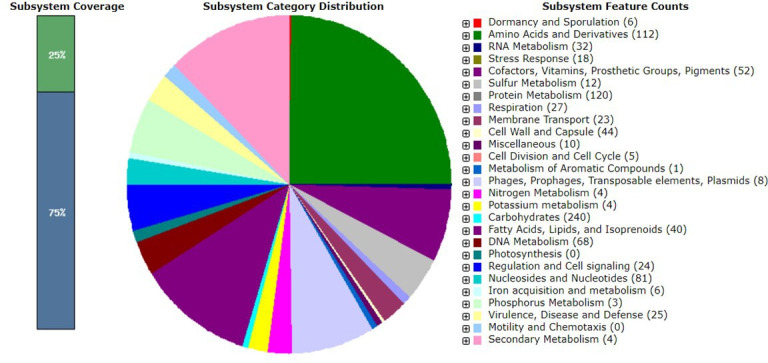 Fig 1
Fig 1| Assembly | SPAdes—v3.15.3 |
|---|---|
| No. of contigs | 30 |
| Largest contig | 831,503 |
| Total length | 2,957,989 |
| GC (%) | 46.5 |
|
| 251,390 |
|
| 141,836 |
|
| 4 |
|
| 6 |
| # Ns per 100 kbp | 13.15 |
- —Agricultural Research Council (ARC)
Peer Reviews
No public reviews on file for this paper yet. If you reviewed it on a platform where reviews are public (OpenReview, ICLR, NeurIPS, ICML), you can paste yours below so the community can read it here.
Videos
No videos yet. Explain this paper in a talk, walkthrough, or lecture? Add one.
Taxonomy
TopicsProbiotics and Fermented Foods · Genomics and Phylogenetic Studies · Bacteriophages and microbial interactions
ANNOUNCEMENT
Lacticaseibacillus rhamnosus is a facultative anaerobic heterofermentative rod-shaped bacterium isolated from different ecological niches, such as gastrointestinal tract, fermented dairy products, and plant-associated environment (1–3). L. rhamnosus has a long safety history of applications where health and industrial benefits are associated with different strains (4).
L. rhamnosus ISO20 was isolated from goat’s milk sourced at the small-stock Division of the Agricultural Research Council, Animal Production (Irene, South Africa; 25° 53*'* 59.6*"S 28° 12'* 51.6*"*E). Forty raw milk samples were collected and enclosed in sterile plastic containers and transported on ice to the laboratory. One milliliter of each milk sample was suspended in 9 mL of sterile saline solution (0.85% wt/vol NaCl), and the mixture was serially diluted up to 10^−5^. The sample suspension was then inoculated onto De Man, Rogosa, and Sharpe (MRS) agar supplemented with 0.05 g/L cysteine-HCL (MRS-cysHCL) and incubated for 24–48 hours at 37°C under anaerobic conditions. Distinct colonies formed on the plates were selected. Pure strain was obtained by subculturing onto sterile MRS-cysHCL (5).
The genome of ISO20 was extracted from overnight liquid culture using the Quick-DNA Fungal/bacterial Miniprep Kit (Zymo Research, Irvine, CA) following the manufacturer’s instructions. The DNA concentration was measured using a NanoDrop (ThermoFisher Scientific, Carlsbad, CA, USA), and DNA quality was evaluated on 2% agarose gel. The paired-end (2 × 150 bp) libraries were generated using the EBNext Ultra II FS DNA Library Prepkit (New England Biolabs, Ipswich, MA) and sequenced on an Illumina NextSeq platform at Inqaba Biotechnical Industries (Pty) Ltd. (Pretoria, South Africa), yielding a total of 1,519,878 paired-end reads. The reads quality was evaluated using FastQC v0.11.5 (6) via KBase (7); the raw reads were then trimmed to remove low-quality reads and sequence adaptors using Trimmomatic v0.36 (8). The trimmed reads were de novo assembled using SPAdes v3.15.3 (9). Assembly quality was assessed using QUAST v5.0.2 (Table 1) (10). While the genome completeness and contamination were evaluated using CheckM v1.0.18 (11).
Identification of ISO20 was conducted using Kaiju v1.7.3 (12), and the results were visualized using Krona v2.7.1 (13). The assembly yielded a genome sequence of 2,957,989 bp long, a G + C content of 46.5%, and a coverage of 154×. Genome completeness was estimated at 98.56%, comprising 30 contigs, with N50 and L50 values of 251,390 bp and 4, respectively. Gene annotation was performed using the RASTtk v1.073 and the NCBI Prokaryotic Genome Annotation Pipeline v6.5 (14, 15). All software programs were run with default parameters. Furthermore, genome analysis revealed 2,751 total genes and 62 RNAs. The subsystem statistics showed 27 subsystem feature counts of the coding protein into functional groups with a total of 2,646 Polycomb-group (PCG). The 969 genes were grouped into biological processes, cellular components, and molecular function. The topmost three groups were protein metabolism (n = 120), carbohydrates (n = 240), and amino acids and derivatives (n = 112) (Fig. 1). The RASTtk revealed the presence of genes encoding for acid tolerance, antioxidant, bile salt tolerance, adhesion, and bacteriocin production, all of which are essential characteristics for potential probiotic strains (16).
Subsystem category distribution of key PCG of L. rhamnosus strain ISO20 annotated in the RAST SEED viewer annotation online server. The green/blue bar represents the subsystem coverage in percentage. Blue bar correlates with the percentage (%) of proteins present.
The reference list from the paper itself. Each links out to its DOI / PubMed record.
- 1Lukjancenko O, Ussery DW, Wassenaar TM. 2012. Comparative genomics of Bifidobacterium, Lactobacillus and related probiotic genera. Microb Ecol 63:651–673. doi:10.1007/s 00248-011-9948-y 22031452 PMC 3324989 · doi ↗ · pubmed ↗
- 2Broadbent JR, Neeno-Eckwall EC, Stahl B, Tandee K, Cai H, Morovic W, Horvath P, Heidenreich J, Perna NT, Barrangou R, Steele JL. 2012. Analysis of the Lactobacillus casei supragenome and its influence in species evolution and lifestyle adaptation. BMC Genomics 13:533. doi:10.1186/1471-2164-13-53323035691 PMC 3496567 · doi ↗ · pubmed ↗
- 3Mahony J, Ainsworth S, Stockdale S, van Sinderen D. 2012. Phages of lactic acid bacteria: the role of genetics in understanding phage-host interactions and their co-evolutionary processes. Virology 434:143–150. doi:10.1016/j.virol.2012.10.00823089252 · doi ↗ · pubmed ↗
- 4Ceapa C, Davids M, Ritari J, Lambert J, Wels M, Douillard FP, Smokvina T, de Vos WM, Knol J, Kleerebezem M. 2016. The variable regions of Lactobacillus rhamnosus genomes reveal the dynamic evolution of metabolic and host-adaptation repertoires. Genome Biol Evol 8:1889–1905. doi:10.1093/gbe/evw 12327358423 PMC 4943194 · doi ↗ · pubmed ↗
- 5Makete G, Aiyegoro OA, Thantsha MS. 2017. Isolation, identification and screening of potential probiotic bacteria in milk from South African Saanen goats. Probiotics Antimicrob Proteins 9:246–254. doi:10.1007/s 12602-016-9247-527981504 · doi ↗ · pubmed ↗
- 6Andrews S. 2010. Fast QC: a quality control tool for high throughput sequence data. Babraham Institute, Cambridge, United Kingdom. Available from: http://www.bioinformatics.babraham.ac.uk/projects/fastqc
- 7Arkin AP, Cottingham RW, Henry CS, Harris NL, Stevens RL, Maslov S, Dehal P, Ware D, Perez F, Canon S, et al.. 2018. K Base: the United States Department of energy systems biology knowledgebase. Nat Biotechnol 36:566–569. doi:10.1038/nbt.416329979655 PMC 6870991 · doi ↗ · pubmed ↗
- 8Bolger AM, Lohse M, Usadel B. 2014. Trimmomatic: a flexible trimmer for Illumina sequence data. Bioinformatics 30:2114–2120. doi:10.1093/bioinformatics/btu 17024695404 PMC 4103590 · doi ↗ · pubmed ↗