Placental efflux transporters and antiseizure or antidepressant medication use impact birth weight in MoBa cohort
Marta H. Hernandez, Jacqueline M. Cohen, Karoline H. Skåra, Thea K. Grindstad, Yunsung Lee, Per Magnus, Pål R. Njølstad, Ole A. Andreassen, Elizabeth C. Corfield, Alexandra Havdahl, Espen Molden, Kari Furu, Maria C. Magnus, Alvaro Hernaez

TL;DR
This study finds that genetic variants in placental transporters may influence how antiseizure medications affect birth weight, but not antidepressants.
Contribution
The study identifies specific genetic variants in placental efflux transporters that interact with antiseizure medication use to influence birth weight.
Findings
Genetic variants in MRP2-ABCC2 and MDR1-ABCB1 may modulate the effect of antiseizure drugs on birth weight.
Antidepressant use was associated with low birth weight, but no gene-drug interactions were found.
More research is needed to ensure safe drug use during pregnancy.
Abstract
Low birth weight raises neonatal risks and lifelong health issues and is linked to maternal medication use during pregnancy. We examined data from the Norwegian Mother, Father, and Child Cohort Study and the Medical Birth Registry of Norway, including 69,828 offspring with genotype data and 81,189 with maternal genotype data. We identified genetic risk variants in placental efflux transporters, calculated genetic scores based on alleles related to transporter activity, and assessed their interaction with prenatal use of antiseizure or antidepressant medication on offspring birth weight. Our study uncovered possible genetic variants in both offspring (rs3740066) and mothers (rs10248420; rs2235015) in placental efflux transporters (MRP2-ABCC2 and MDR1-ABCB1) that modulated the association between prenatal exposure to antiseizure medication and low birth weight in the offspring.…
Genes, proteins, chemicals, diseases, species, mutations and cell lines named across the full text — each resolved to its canonical identifier and authoritative record.
Click any figure to enlarge with its caption.
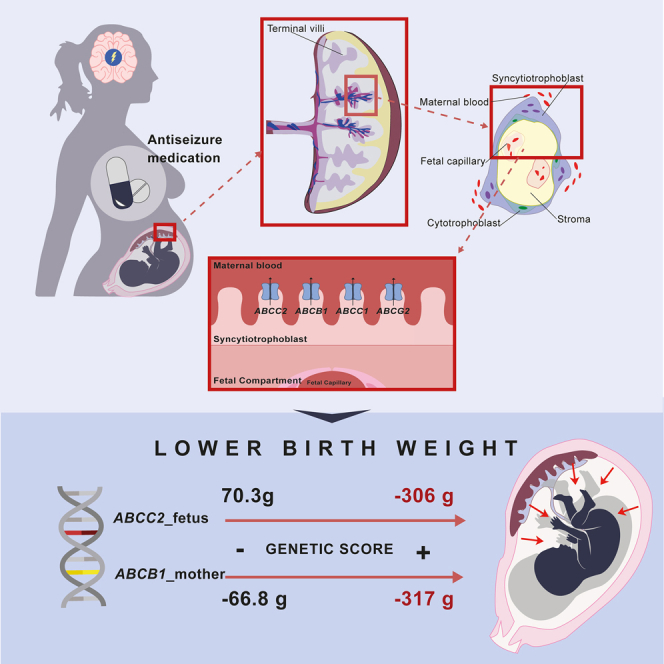 Figure 1
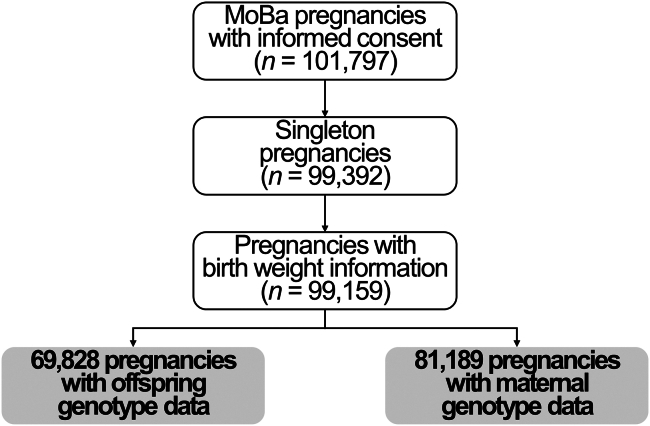 Figure 2
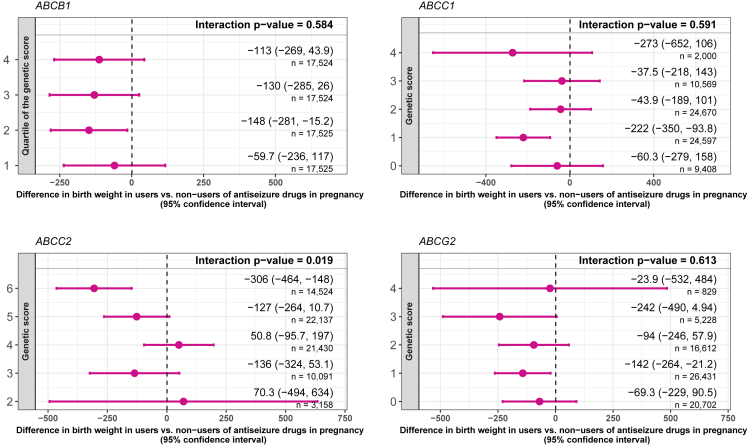 Figure 3
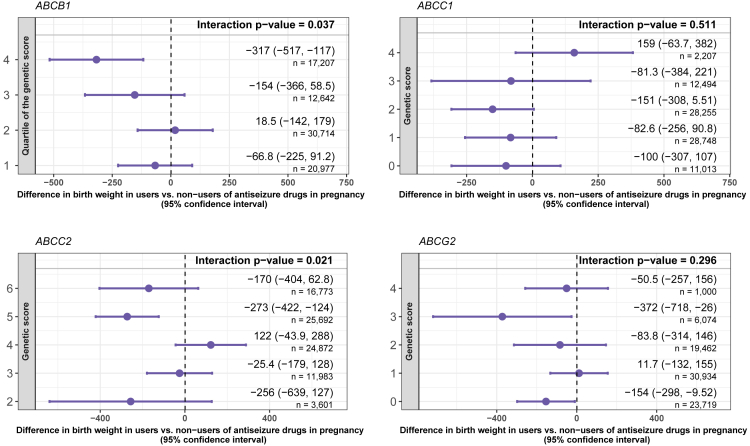 Figure 4
Peer Reviews
No public reviews on file for this paper yet. If you reviewed it on a platform where reviews are public (OpenReview, ICLR, NeurIPS, ICML), you can paste yours below so the community can read it here.
Videos
No videos yet. Explain this paper in a talk, walkthrough, or lecture? Add one.
Taxonomy
TopicsPregnancy and preeclampsia studies · Birth, Development, and Health · Prenatal Substance Exposure Effects