Sample size determination for time-to-event endpoints in randomized selection trials with generalized exponential distribution
Muhammad Hamza Akbar, Sajid Ali, Ismail Shah, Hana N. Alqifari

TL;DR
This paper introduces a new method for calculating sample sizes in clinical trials using a generalized exponential distribution for time-to-event endpoints.
Contribution
The novelty is proposing a sample size calculation method based on the generalized exponential distribution to improve trial design.
Findings
Using the generalized exponential distribution can result in smaller required sample sizes compared to the Weibull distribution.
Traditional methods using exponential or Weibull distributions may not accurately reflect real-world time-to-event data.
The proposed method aims to achieve desired statistical power more effectively.
Abstract
Randomized selection trials are frequently used to compare experimental treatments that have the potential to be beneficial, but they often do not include a control group. While time-to-event endpoints are commonly applied in clinical investigations, methodologies for determining the required sample size for such endpoints, except exponential distribution, are lacking. In recent times, there has been a shift in clinical trials, with a growing emphasis on progression-free survival as a primary endpoint. However, the utilization of this measure has typically been restricted to specific time points for both sample size determination and analysis. This alteration in approach could wield a substantial influence on the clinical trial process, potentially diminishing the capacity to discern variances between treatment groups. In the calculation of sample sizes for randomized trials, this…
Genes, proteins, chemicals, diseases, species, mutations and cell lines named across the full text — each resolved to its canonical identifier and authoritative record.
Click any figure to enlarge with its caption.
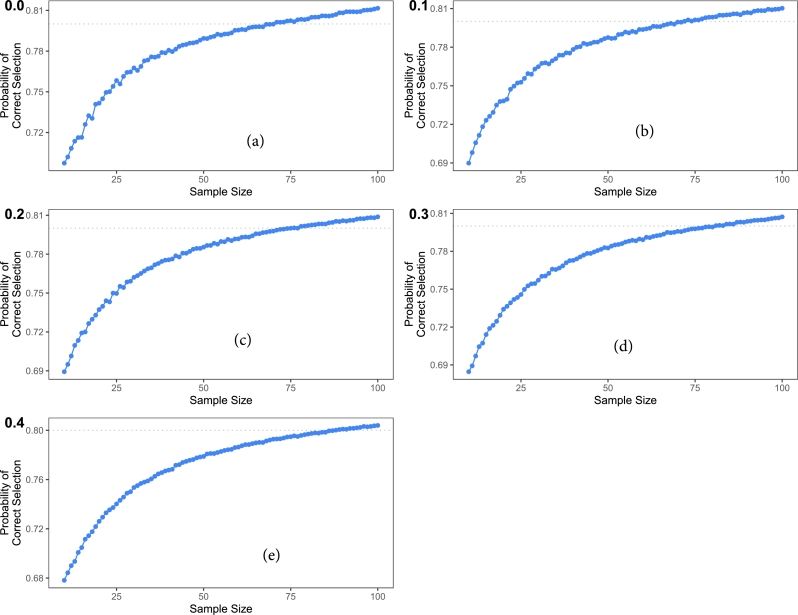 Figure 1
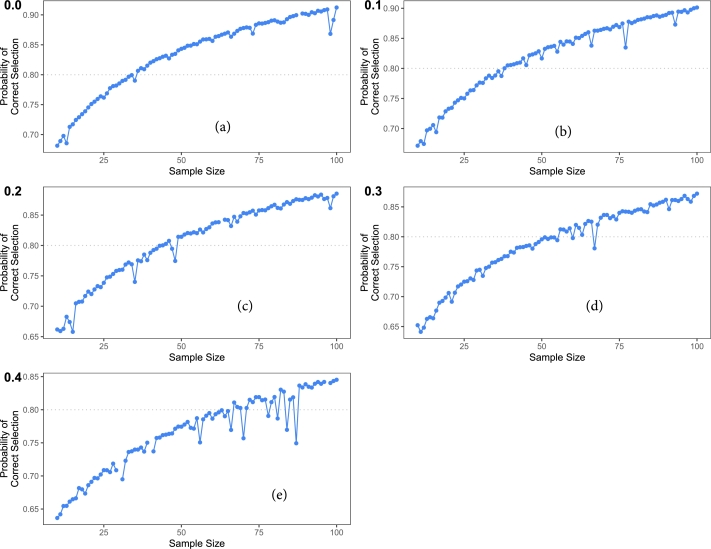 Figure 2
Peer Reviews
No public reviews on file for this paper yet. If you reviewed it on a platform where reviews are public (OpenReview, ICLR, NeurIPS, ICML), you can paste yours below so the community can read it here.
Videos
No videos yet. Explain this paper in a talk, walkthrough, or lecture? Add one.
Taxonomy
TopicsStatistical Methods in Clinical Trials · Optimal Experimental Design Methods · Statistical Distribution Estimation and Applications