Lithuanian polyphonic songs sutartinės: the archaic nature of their musical language in the context of global music
Eirimas Velička

TL;DR
Lithuanian polyphonic songs called sutartinės have a unique musical style that may date back to ancient Europe, offering insights into the origins of traditional vocal polyphony.
Contribution
The study reveals the archaic nature of sutartinės through their musical language, poetry, and performance traditions, suggesting origins in Old Europe.
Findings
Sutartinės exhibit a unique musical language with features that collectively suggest ancient origins.
The songs' archaic nature is supported by their poetics and performance traditions, not just individual musical traits.
Comparisons with other archaic vocal polyphony support the possibility of origins in Old Europe (c. 3 millennium BC).
Abstract
Lithuanian traditional polyphonic songs, known as sutartinės, are characterized by a distinctive musical language and have almost no analogues in world music. The aim of this article is to explore the peculiarities of their musical language and the socio-cultural context of their performance tradition in order to reveal their archaic origins. The archaic nature of sutartinės songs is shown not by individual features of their musical language, but by the totality of these features, the peculiarities of their poetics, and performance traditions. An examination of the musical elements and poetry of these songs, and their juxtaposition against examples of archaic vocal polyphony from other cultures, leads to the convergence of arguments in favour of the very ancient origins of these songs, possibly dating back to Old Europe (c. 3 millennium BC). A deeper insight into sutartinės songs…
Genes, proteins, chemicals, diseases, species, mutations and cell lines named across the full text — each resolved to its canonical identifier and authoritative record.
Click any figure to enlarge with its caption.
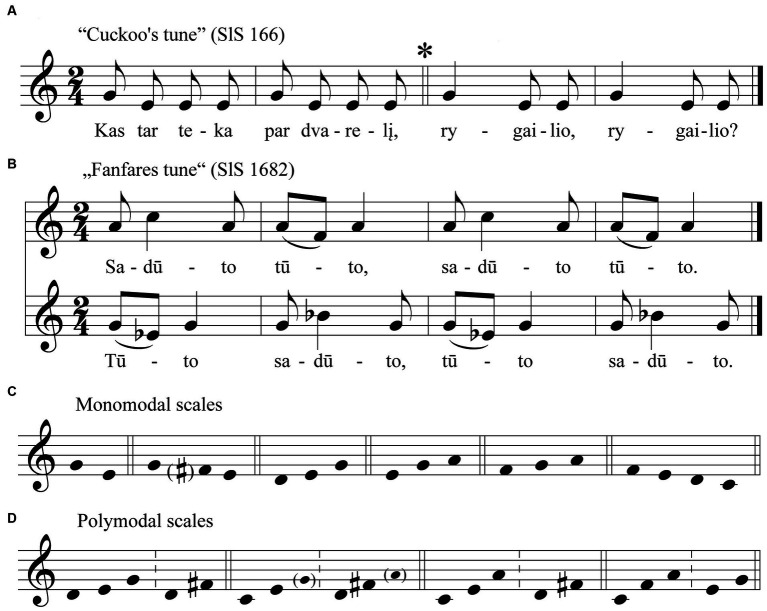 Figure 1
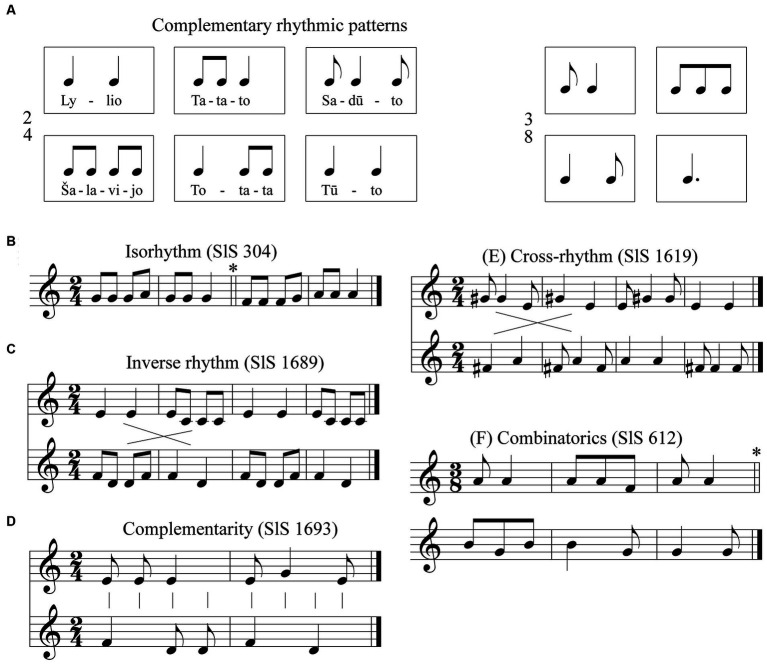 Figure 2
Peer Reviews
No public reviews on file for this paper yet. If you reviewed it on a platform where reviews are public (OpenReview, ICLR, NeurIPS, ICML), you can paste yours below so the community can read it here.
Videos
No videos yet. Explain this paper in a talk, walkthrough, or lecture? Add one.
Taxonomy
TopicsMusicology and Musical Analysis · Phonetics and Phonology Research · Media, Communication, and Education