Local gradient analysis of human brain function using the Vogt-Bailey Index
Christine Farrugia, Paola Galdi, Irati Arenzana Irazu, Kenneth Scerri, Claude J. Bajada

TL;DR
This paper explores the Vogt-Bailey index to study local brain function and finds it better at detecting sharp changes in brain activity than other methods.
Contribution
The paper provides a novel interpretation of the Vogt-Bailey index using minimum ratio cut theory for analyzing local brain function.
Findings
The Vogt-Bailey index effectively detects sharp changes in local cortical functional organization.
It outperforms ReHo in capturing small-scale similarity in brain activity patterns.
The VB index is interpreted through the lens of network disconnection and edge weights.
Abstract
In this work, we take a closer look at the Vogt-Bailey (VB) index, proposed in Bajada et al. (NeuroImage 221:117140, 2020) as a tool for studying local functional homogeneity in the human cortex. We interpret the VB index in terms of the minimum ratio cut, a scaled cut-set weight that indicates whether a network can easily be disconnected into two parts having a comparable number of nodes. In our case, the nodes of the network consist of a brain vertex/voxel and its neighbours, and a given edge is weighted according to the affinity of the nodes it connects (as reflected by the modified Pearson correlation between their fMRI time series). Consequently, the minimum ratio cut quantifies the degree of small-scale similarity in brain activity: the greater the similarity, the ‘heavier’ the edges and the more difficult it is to disconnect the network, hence the higher the value of the minimum…
Genes, proteins, chemicals, diseases, species, mutations and cell lines named across the full text — each resolved to its canonical identifier and authoritative record.
Click any figure to enlarge with its caption.
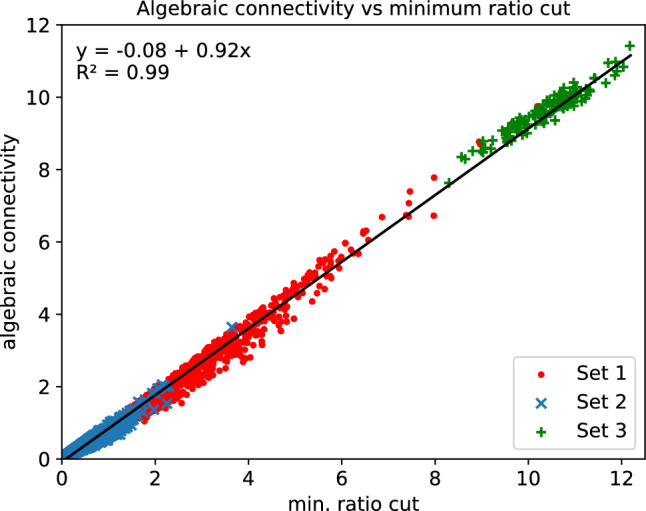 Figure 1
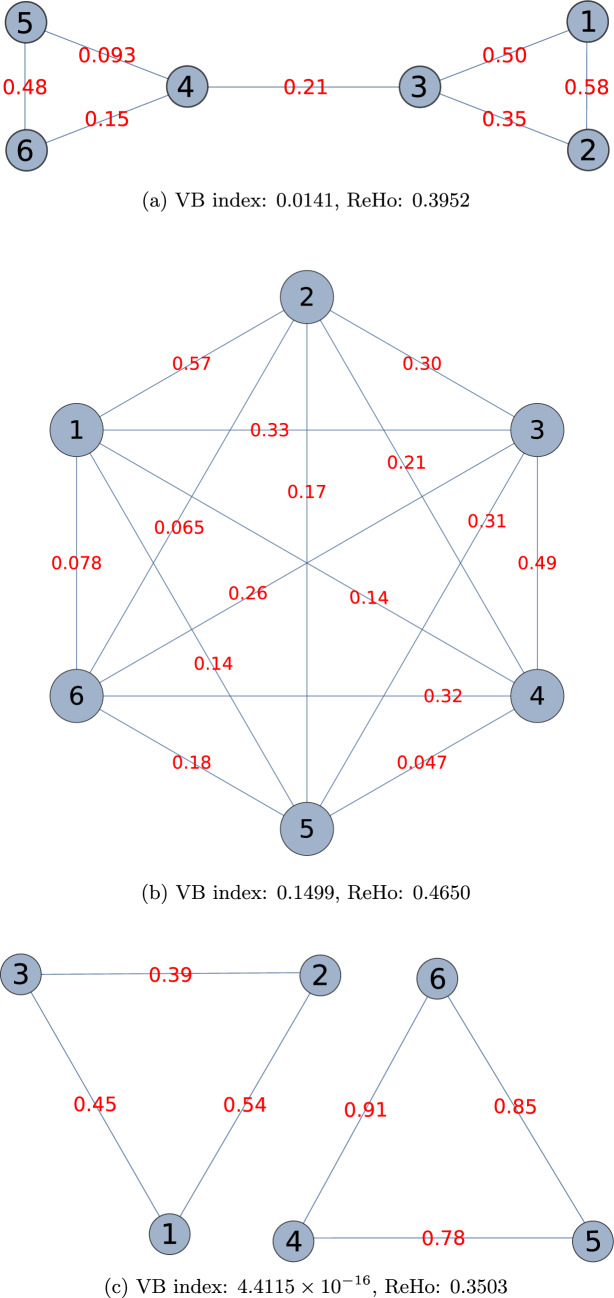 Figure 2
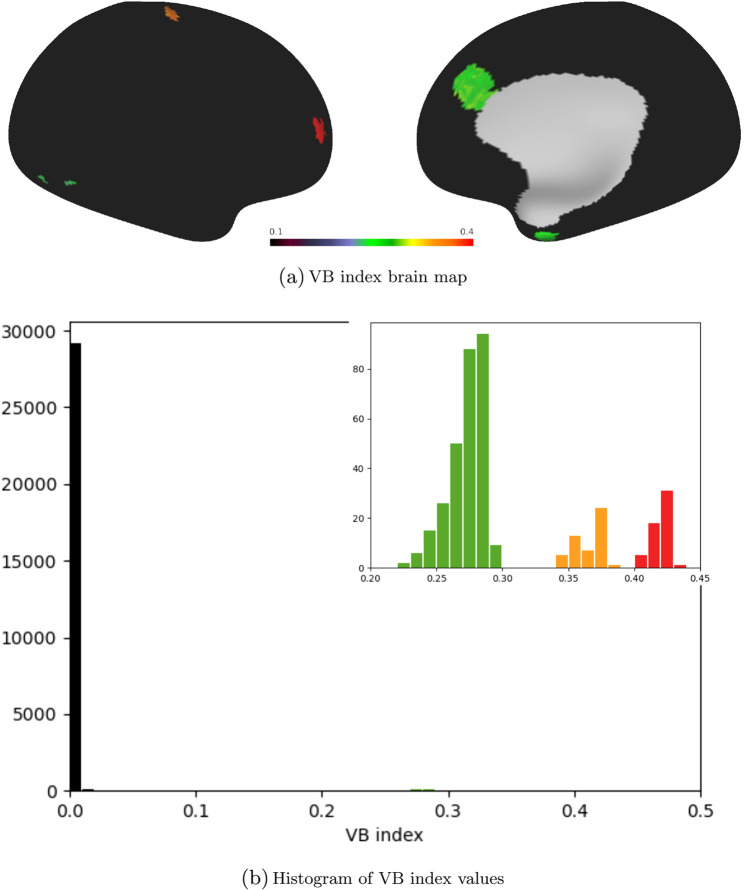 Figure 3
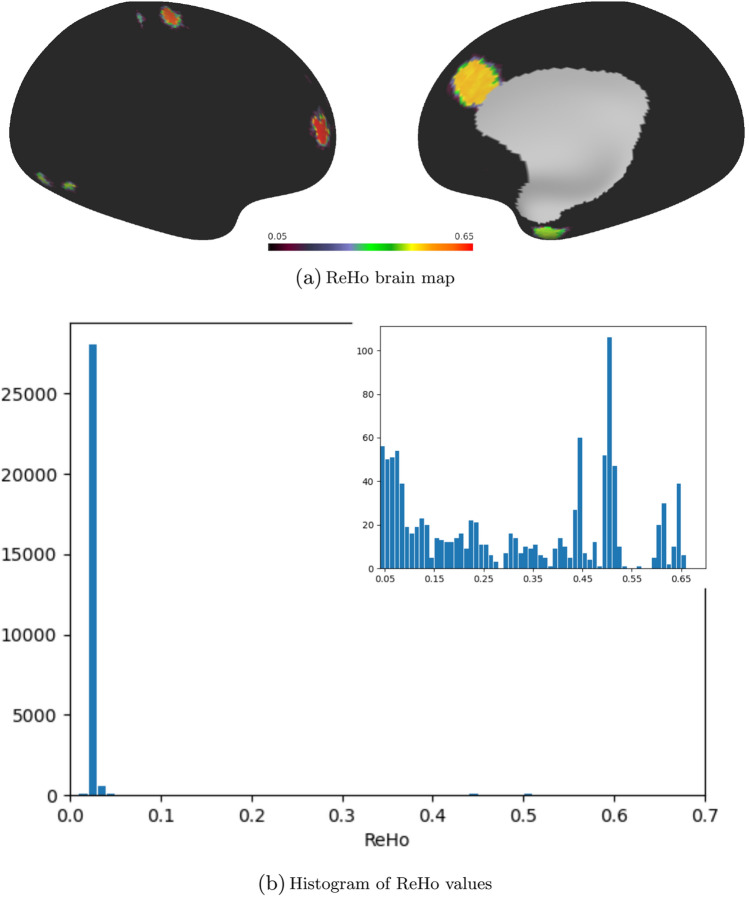 Figure 4
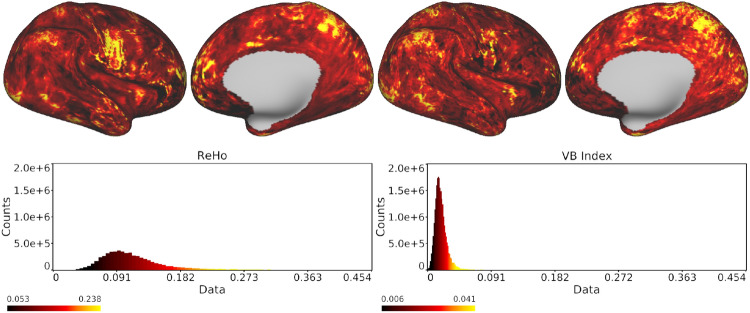 Figure 5
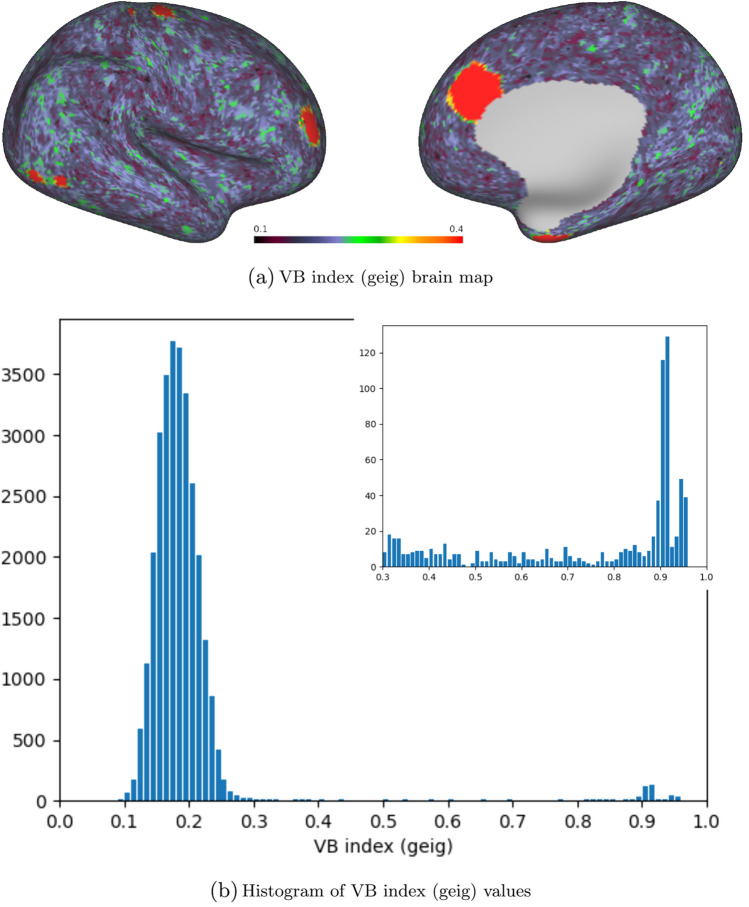 Figure 6
Peer Reviews
No public reviews on file for this paper yet. If you reviewed it on a platform where reviews are public (OpenReview, ICLR, NeurIPS, ICML), you can paste yours below so the community can read it here.
Videos
No videos yet. Explain this paper in a talk, walkthrough, or lecture? Add one.
Taxonomy
TopicsLinguistics and language evolution