Amygdala structure and function and its associations with social-emotional outcomes in a low-risk preterm sample
L. Fernández de Gamarra-Oca, O. Lucas-Jiménez, J. M. Ontañón, B. Loureiro-Gonzalez, J. Peña, N. Ibarretxe-Bilbao, M. A. García-Guerrero, N. Ojeda, L. Zubiaurre-Elorza

TL;DR
This study finds that low-risk preterm birth does not affect social-emotional outcomes or amygdala volume in young adults, but it does increase amygdala connectivity with the medial frontal cortex.
Contribution
The study reveals increased amygdala-medial frontal cortex connectivity in low-risk preterm individuals without structural or outcome differences.
Findings
No differences in social-emotional outcomes or amygdala volumes were found between low-risk preterm and full-term groups.
Low-risk preterm individuals showed increased amygdala-medial frontal cortex connectivity at the cluster level.
Increased connectivity was associated with better social-emotional outcomes only in low-risk preterm individuals.
Abstract
Amygdala atypical volume development and functional connectivity (FC) at small gestational ages (GA) have been found across childhood. This adult-oriented study assesses whether altered amygdala structure and function is present following low-risk preterm birth. T1-weighted and resting-state functional MRI images of 33 low-risk preterm (30–36 weeks’ GA) and 29 full-term (37–42 weeks’ GA) young adults of both sexes, aged between 20 and 32 years old, were analyzed using FreeSurfer (v6.0.0) and Coon Toolbox (v21.a). The social-emotional assessment included Happé’s Strange Stories Test, the Moral Judgment Test, Delay-Discounting Test, Adult Self Report, and Emotion Regulation Questionnaire. No differences were found in social-emotional outcomes or amygdala volumes between the groups. Low-risk preterm young adults showed increased FC between the left amygdala, right amygdala and medial…
Genes, proteins, chemicals, diseases, species, mutations and cell lines named across the full text — each resolved to its canonical identifier and authoritative record.
Click any figure to enlarge with its caption.
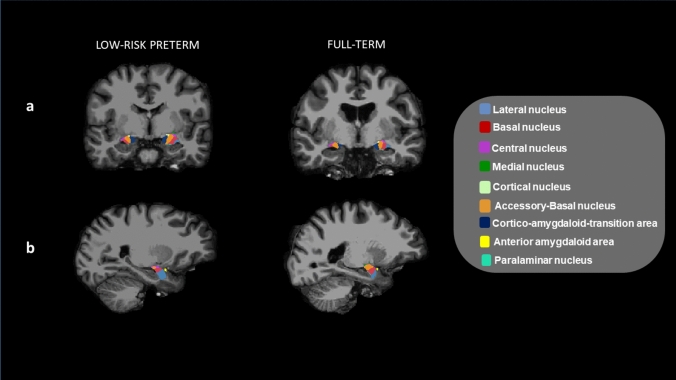 Figure 1
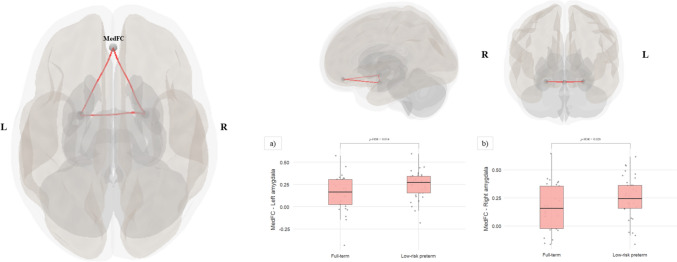 Figure 2
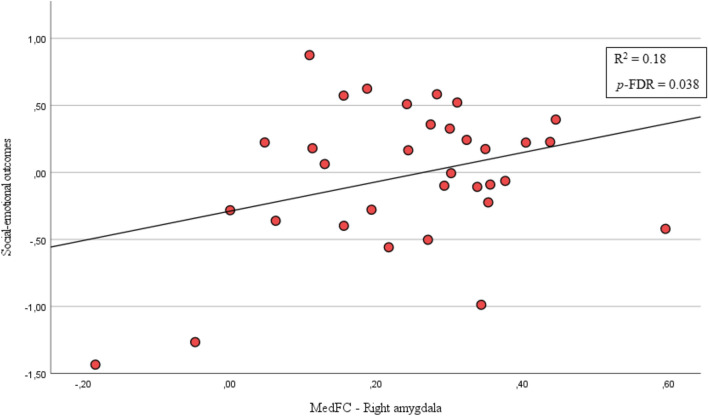 Figure 3
Peer Reviews
No public reviews on file for this paper yet. If you reviewed it on a platform where reviews are public (OpenReview, ICLR, NeurIPS, ICML), you can paste yours below so the community can read it here.
Videos
No videos yet. Explain this paper in a talk, walkthrough, or lecture? Add one.
Taxonomy
TopicsNuclear Materials and Properties · Thermodynamic and Structural Properties of Metals and Alloys