Comparative peculiarities of genomic diversity in Gallus gallus domesticus chickens with decorative plumage: the muffs and beard phenotype
N.V. Dementieva, Y.S. Shcherbakov, A.E. Ryabova, A.B. Vakhrameev, A.V. Makarova, O.A. Nikolaeva, A.P. Dysin, A.I. Azovtseva, N.R. Reinbah, O.V. Mitrofanova

TL;DR
This study explores the genetic diversity of chickens with decorative muffs and beard traits to understand how these ornamental features evolved.
Contribution
The study provides new insights into the genomic diversity and clustering patterns of chicken breeds with the muffs and beard phenotype.
Findings
Multidimensional scaling revealed distinct genetic groupings among chicken breeds with muffs and beard.
The Ukrainian Muffed and Orloff breeds showed notable genetic similarity.
The Russian White breed had the most short homozygous regions in its genome.
Abstract
Throughout history, humans have been attempting to develop the ornamental features of domestic animals in addition to their productive qualities. Many chicken breeds have developed tufts of elongated feathers that jut out from the sides and bottom of the beak, leading to the phenotype known as muffs and beard. It is an incomplete autosomal dominant phenotype determined by the Mb locus localised on chromosome GGA27. This project aimed to analyse the genetic diversity of chicken breeds using full genomic genotyping with the Chicken 60K BeadChip. A total of 53,313 Single Nucleotide Polymorphisms were analysed. DNA was obtained from breeds with the muffs and beard as a marker phenotype: Faverolles (n = 20), Ukrainian Muffed (n = 18), Orloff (n = 20), Novopavlov White (n = 20), and Novopavlov Coloured (n = 15). The Russian White (n = 20) was selected as an alternative breed without the muffs…
Genes, proteins, chemicals, diseases, species, mutations and cell lines named across the full text — each resolved to its canonical identifier and authoritative record.
Click any figure to enlarge with its caption.
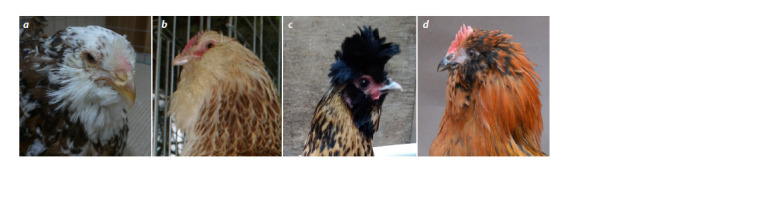 Figure 1
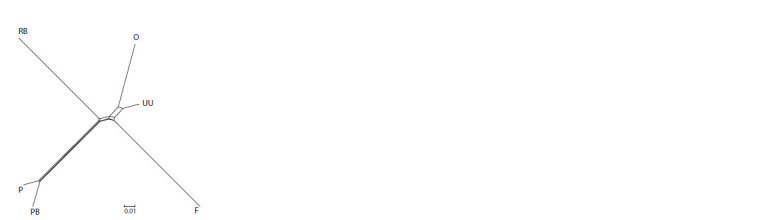 Figure 2
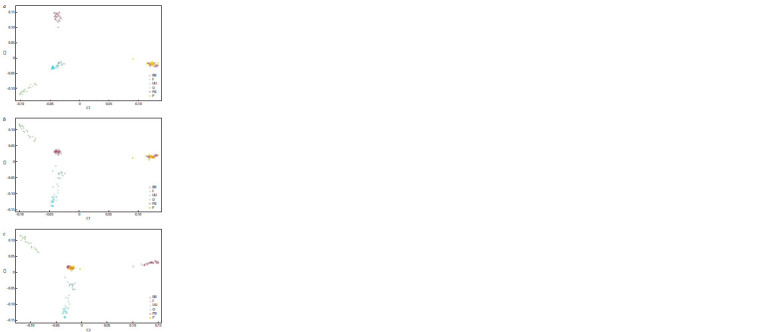 Figure 3
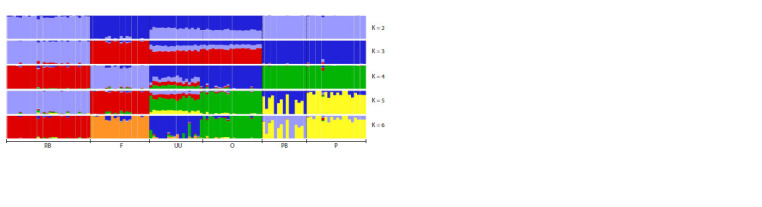 Figure 4
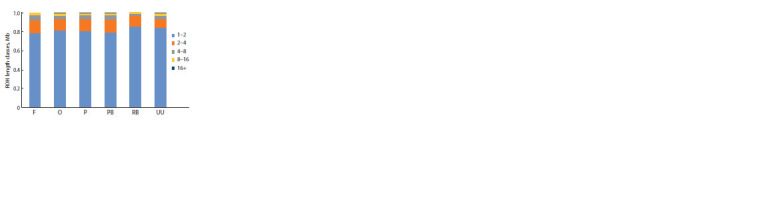 Figure 5
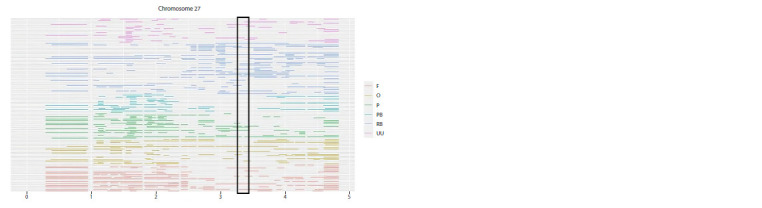 Figure 6
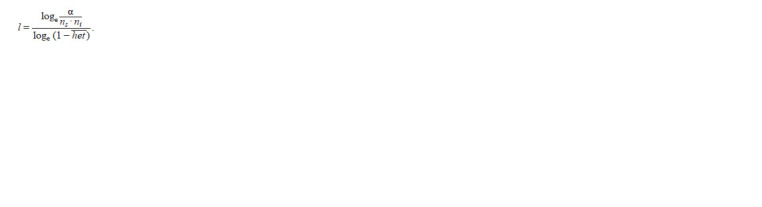 Figure 7
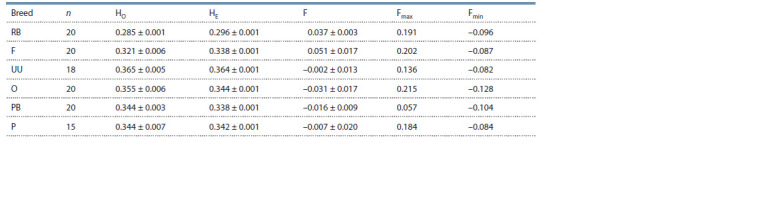 Figure 8
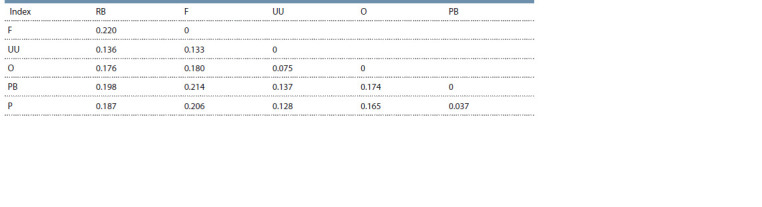 Figure 9
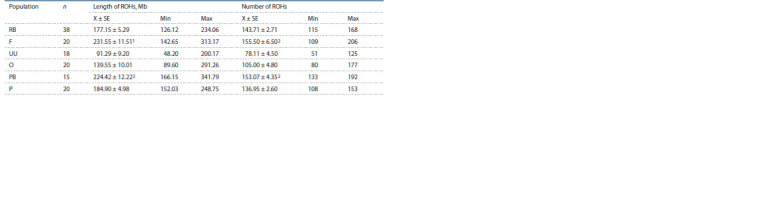 Figure 10
Peer Reviews
No public reviews on file for this paper yet. If you reviewed it on a platform where reviews are public (OpenReview, ICLR, NeurIPS, ICML), you can paste yours below so the community can read it here.
Videos
No videos yet. Explain this paper in a talk, walkthrough, or lecture? Add one.
Taxonomy
TopicsLivestock and Poultry Management · Animal Nutrition and Physiology · Genetic diversity and population structure