Hair Tourniquet Syndrome Involving the Uvula Secondary to an Airway Foreign Body
Theresa A Schneider, Jatin Ahluwalia, Ani Mnatsakanian, Michael Haupert

TL;DR
A six-month-old baby had a rare condition where hair caused a tourniquet effect on her uvula, requiring emergency treatment.
Contribution
This paper reports a rare case of hair tourniquet syndrome affecting the uvula due to an airway foreign body.
Findings
Hair tourniquet syndrome involving the uvula is a rare oropharyngeal manifestation.
Timely removal of the foreign body in the OR was necessary to prevent tissue necrosis.
The case highlights the importance of recognizing unusual presentations of hair tourniquet syndrome.
Abstract
Hair tourniquet syndrome is a rare condition that can cause ischemia and necrosis secondary to hair fibers constricting a patient's appendages. Typically, the syndrome affects patients aged two to six months. Hair tourniquet syndrome often involves the toes, fingers, or genitalia, and it has been rarely reported to have oropharyngeal manifestations. Accurate and timely treatment of this syndrome is imperative to save the involved appendage. We discuss a case of a six-month-old female who presented to the emergency room (ER) with increased agitation and was found to have hair tourniquet syndrome of the uvula, requiring the removal of the foreign body in the operating room (OR).
Genes, proteins, chemicals, diseases, species, mutations and cell lines named across the full text — each resolved to its canonical identifier and authoritative record.
Click any figure to enlarge with its caption.
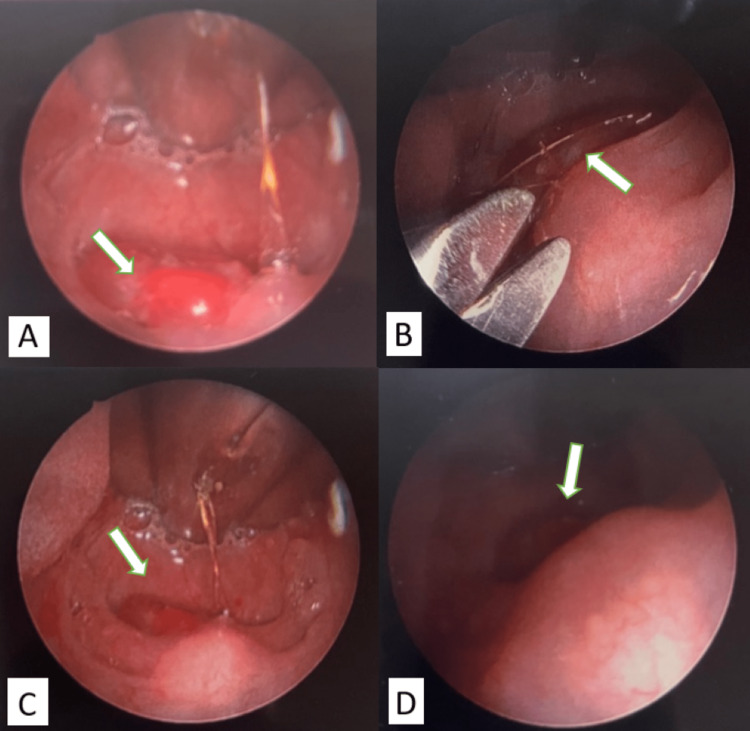 Figure 1
Peer Reviews
No public reviews on file for this paper yet. If you reviewed it on a platform where reviews are public (OpenReview, ICLR, NeurIPS, ICML), you can paste yours below so the community can read it here.
Videos
No videos yet. Explain this paper in a talk, walkthrough, or lecture? Add one.
Taxonomy
TopicsGenital Health and Disease · Facial Rejuvenation and Surgery Techniques · Parvovirus B19 Infection Studies