dCROX and ROX Indices Predict Clinical Outcomes in Patients with COVID-19 Pneumonia Treated with High-Flow Nasal Cannula Oxygen Therapy
Pitchayapa Ruchiwit, Kanpisut Pongtongkam, Narongkorn Saiphoklang

TL;DR
This study introduces new indices, dCROX and ROX, to predict successful weaning from high-flow nasal cannula therapy in patients with COVID-19 pneumonia.
Contribution
The study introduces dCROX and ROX indices as novel predictive tools for weaning success in patients with COVID-19 pneumonia.
Findings
The ROX index had higher accuracy (AUC of 0.79) compared to dCROX (AUC of 0.71) for predicting weaning success.
A dCROX cutoff of 3.15 predicted weaning success with 66.2% sensitivity and 70.7% specificity.
Weaning success occurred in 61.3% of patients within 14 days.
Abstract
High-flow nasal cannula (HFNC) therapy is a common respiratory support in patients with COVID-19 pneumonia. Predictive tools for the evaluation of successful weaning from HFNC therapy for COVID-19 pneumonia have been limited. This study aimed to develop a new predictor for weaning success from HFNC treatment in patients with COVID-19 pneumonia. We conducted a retrospective cohort study at Thammasat University Hospital, Thailand. Patients with COVID-19 pneumonia requiring HFNC therapy from April 2020 to September 2021 were included. The ROX index was defined as the ratio of oxygen saturation (SpO2)/fraction of inspired oxygen (FiO2) to respiratory rate. The CROX index was defined as the ratio of C-reactive protein (CRP) to the ROX index. dCROX was defined as the difference in CROX index between 24 hours and 72 hours. Weaning success was defined as the ability to sustain spontaneous…
Genes, proteins, chemicals, diseases, species, mutations and cell lines named across the full text — each resolved to its canonical identifier and authoritative record.
Click any figure to enlarge with its caption.
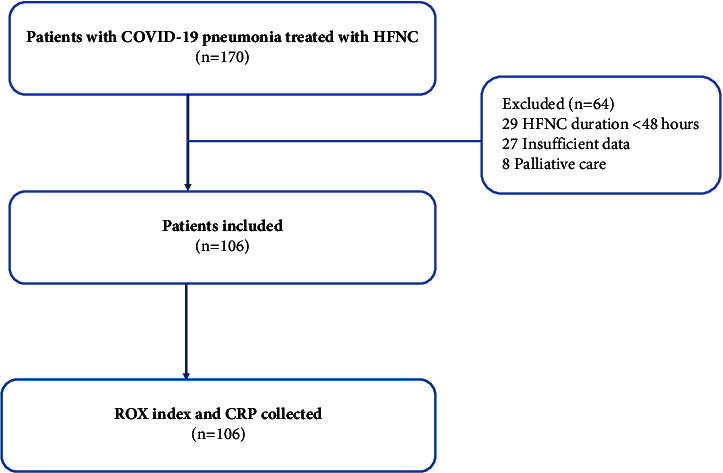 Figure 1
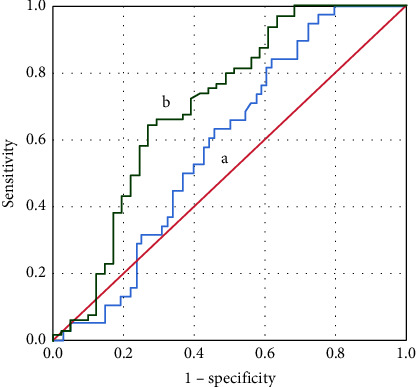 Figure 2
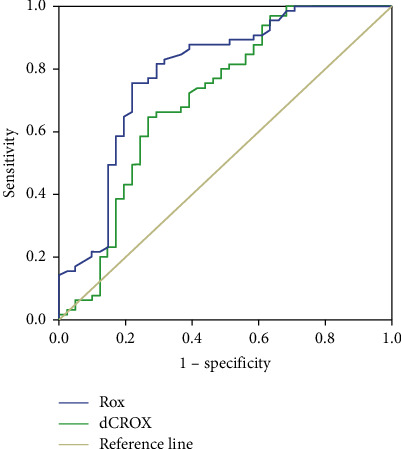 Figure 3
Peer Reviews
No public reviews on file for this paper yet. If you reviewed it on a platform where reviews are public (OpenReview, ICLR, NeurIPS, ICML), you can paste yours below so the community can read it here.
Videos
No videos yet. Explain this paper in a talk, walkthrough, or lecture? Add one.
Taxonomy
TopicsRespiratory Support and Mechanisms · COVID-19 diagnosis using AI · COVID-19 Clinical Research Studies