Sex dimorphic cortical brain volumes associated with antisocial behavior in young adults
Ke Ding, Miao Xu, Taicheng Huang, Yiying Song, Feng Kong, Zonglei Zhen

TL;DR
The study finds brain volume differences in males and females linked to antisocial behavior in young adults.
Contribution
It provides the first neuroanatomical evidence from a large non-clinical sample on sex differences in antisocial behavior.
Findings
Gray matter volume in three brain regions correlates with antisocial behavior differently in males and females.
A common neural substrate for antisocial behavior was found in the anterior temporal lobe to the insula in both sexes.
The study suggests sex differences in social cue processing may influence brain structure related to antisocial behavior.
Abstract
Although sex differences in antisocial behavior are well-documented, the extent to which neuroanatomical differences are related to sex differences in antisocial behavior is unclear. The inconsistent results from different clinical populations exhibiting antisocial behaviors are mainly due to the heterogeneity in etiologies, comorbidity inequality, and small sample size, especially in females. The study aimed to find sexual dimorphic brain regions associated with individual differences in antisocial behavior while avoiding the issues of heterogeneity and sample size. We collected structural neuroimaging data from 281 college students (131 males, 150 females) and analyzed the data using voxel-based morphometry. The gray matter volume in three brain regions correlates with self-reported antisocial behavior in males and females differently: the posterior superior temporal sulcus, middle…
Genes, proteins, chemicals, diseases, species, mutations and cell lines named across the full text — each resolved to its canonical identifier and authoritative record.
Click any figure to enlarge with its caption.
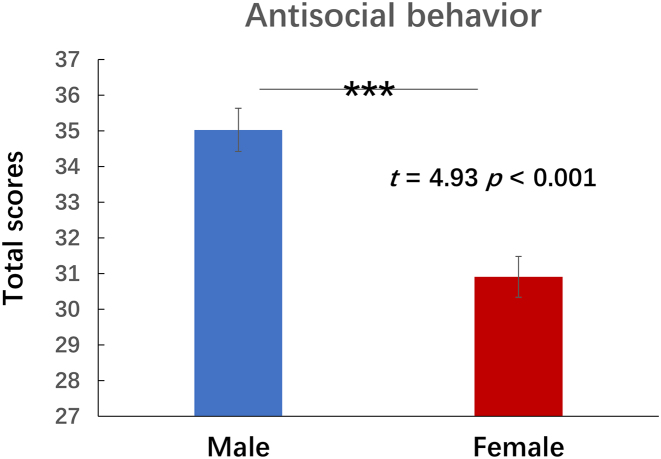 Figure 1
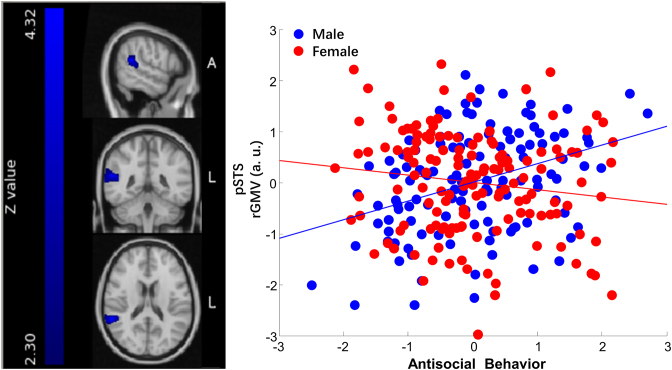 Figure 2
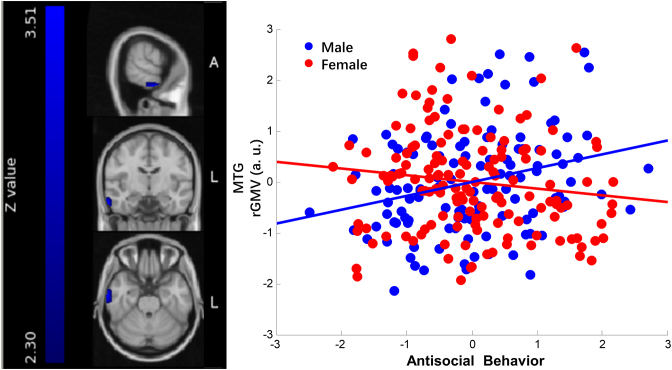 Figure 3
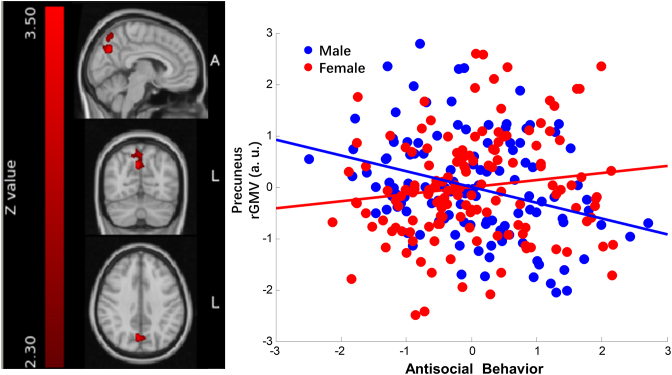 Figure 4
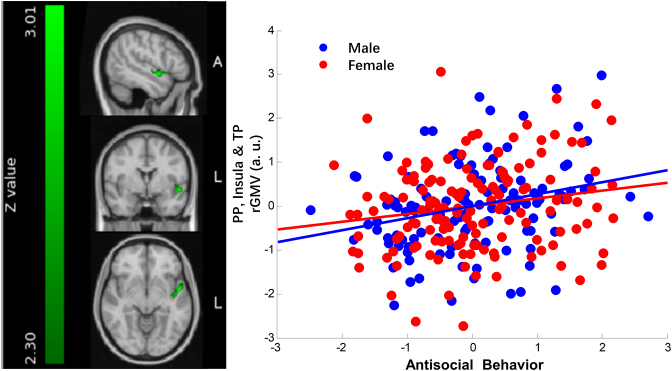 Figure 5
Peer Reviews
No public reviews on file for this paper yet. If you reviewed it on a platform where reviews are public (OpenReview, ICLR, NeurIPS, ICML), you can paste yours below so the community can read it here.
Videos
No videos yet. Explain this paper in a talk, walkthrough, or lecture? Add one.
Taxonomy
TopicsPsychopathy, Forensic Psychiatry, Sexual Offending · Neural and Behavioral Psychology Studies · Neurotransmitter Receptor Influence on Behavior