[Corrigendum] Upregulation of centromere protein M promotes tumorigenesis: A potential predictive target for cancer in humans
Ying Liu, Wenfeng Yu, Peng Ren, Ting Zhang

Abstract
Genes, proteins, chemicals, diseases, species, mutations and cell lines named across the full text — each resolved to its canonical identifier and authoritative record.
Click any figure to enlarge with its caption.
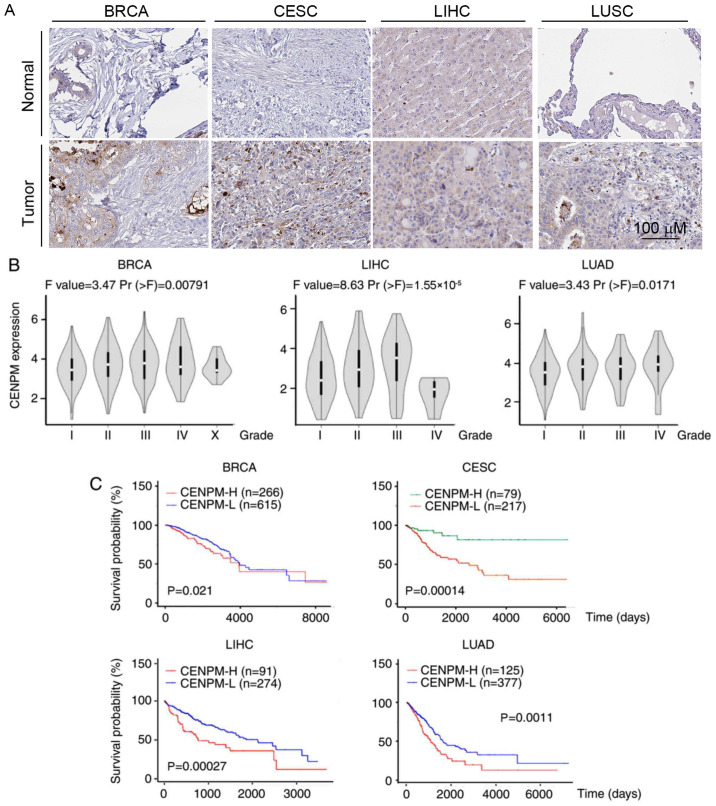 Figure 1
Peer Reviews
No public reviews on file for this paper yet. If you reviewed it on a platform where reviews are public (OpenReview, ICLR, NeurIPS, ICML), you can paste yours below so the community can read it here.
Videos
No videos yet. Explain this paper in a talk, walkthrough, or lecture? Add one.
Taxonomy
TopicsPlant Genetic and Mutation Studies · Genetics, Bioinformatics, and Biomedical Research · RNA modifications and cancer
Mol Med Rep 22: 3922–3934, 2020; DOI: 10.3892/mmr.2020.11461
Subsequently to the publication of this paper, the authors’ have realized that Fig. 2A on p. 3927 was published featuring an error; specifically, there was an unintentional duplication of one of the representative images chosen for the figure (the same image was selected to represent the ‘BRCA/Normal’ and ‘Tumor/LUSC’ experiments). Additionally, the sample numbers in Fig. 2A were also incorrect. The correct sample numbers are as follows: 3 samples of breast tissue, 12 samples of breast cancer tissue, 3 samples of normal cervical tissue, 9 samples of CESC, 7 samples of LIHC, 3 samples of normal lung tissue and 6 samples of LUSC. These errors were due to negligence during the storage of HPA database images.
The revised version of Fig. 2, showing the correct data for the ‘Tumor/LUSC’ experiment in Fig. 2A (where the error occurred), is shown on the next page. Note that this error did not significantly affect either the results or the conclusions reported in this paper, and all the authors agree to the corrigendum. The authors do stress the importance of a larger sample size to ascertain statistically significant differences in CENPM protein expression, predominantly localized in the cell nucleus. Furthermore, the authors thank the Editor of Molecular Medicine Reports for allowing them the opportunity to publish this corrigendum, and apologize to the readership for any inconvenience caused.