Screening and Identification of DNA Nanostructure Aptamer Using the SELEX Method for Detection of Epsilon Toxin
Nafiseh Shafiei, Hamideh Mahmoodzadeh Hosseini, Jafar Amani, Seyed Ali Mirhosseini, Hanieh Jafary

TL;DR
This study developed DNA aptamers to detect epsilon toxin, a potent toxin from Clostridium perfringens, using the SELEX method for potential use in rapid diagnostic tests.
Contribution
The study presents novel DNA aptamers with high affinity and specificity for epsilon toxin, suitable for rapid detection.
Findings
Two aptamers, ETX3 and ETX11, showed high specificity for epsilon toxin with Kd values of 8.4 ± 2.4E-9M and 6.3 ± 1.3E-9M, respectively.
The detection limits for ETX3 and ETX11 were 0.21 and 0.08 μg/mL, indicating their potential for sensitive detection.
The aptamers can be used in rapid diagnostic tests for epsilon toxin.
Abstract
Epsilon toxin (ETX), produced by Clostridium perfringens, is one of the most potent toxins known, with a lethal potency approaching that of botulinum neurotoxins. Epsilon toxin is responsible for enteritis. Therefore, the development of rapid and simple methods to detect ETX is imperative. Aptamers are single-stranded oligonucleotides that can bind tightly to specific target molecules with an affinity comparable to that of monoclonal antibodies (mAbs). DNA aptamers can serve as tools for the molecular identification of organisms, such as pathogen subspecies. This study aimed to isolate high-affinity single-stranded DNA (ssDNA) aptamers against ETX. This study identified aptamers using the Systematic Evolution of Ligands by Exponential Enrichment (SELEX) method, enzyme-linked apta-sorbent assay (ELASA), and surface plasmon resonance (SPR) to determine the affinity and specificity of…
Genes, proteins, chemicals, diseases, species, mutations and cell lines named across the full text — each resolved to its canonical identifier and authoritative record.
Click any figure to enlarge with its caption.
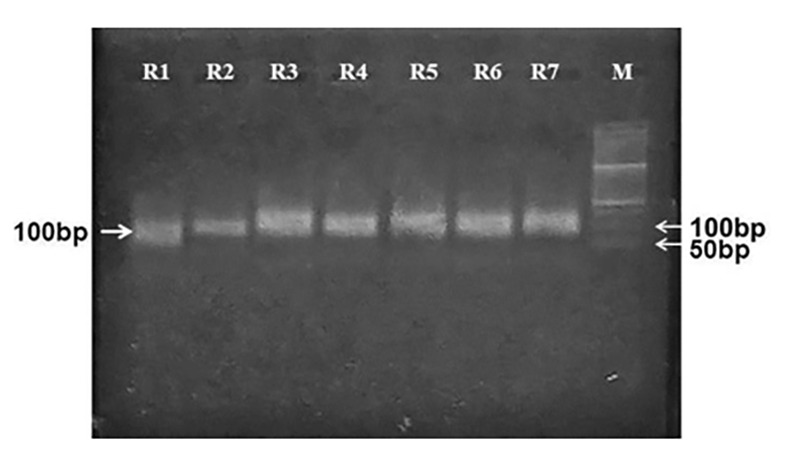 Figure 1
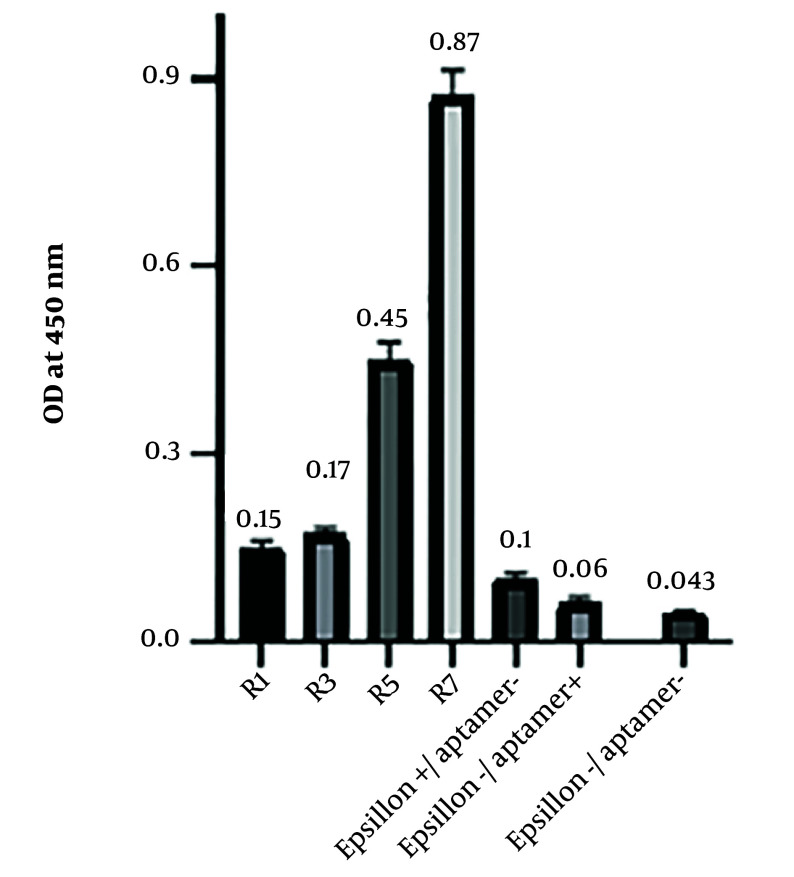 Figure 2
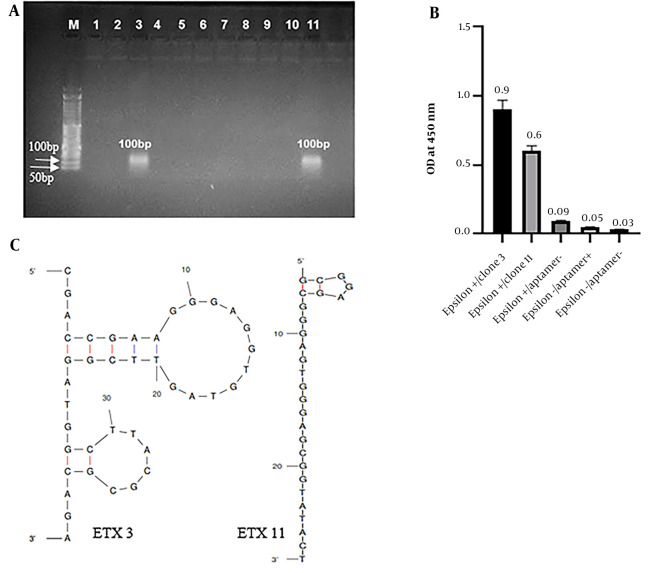 Figure 3
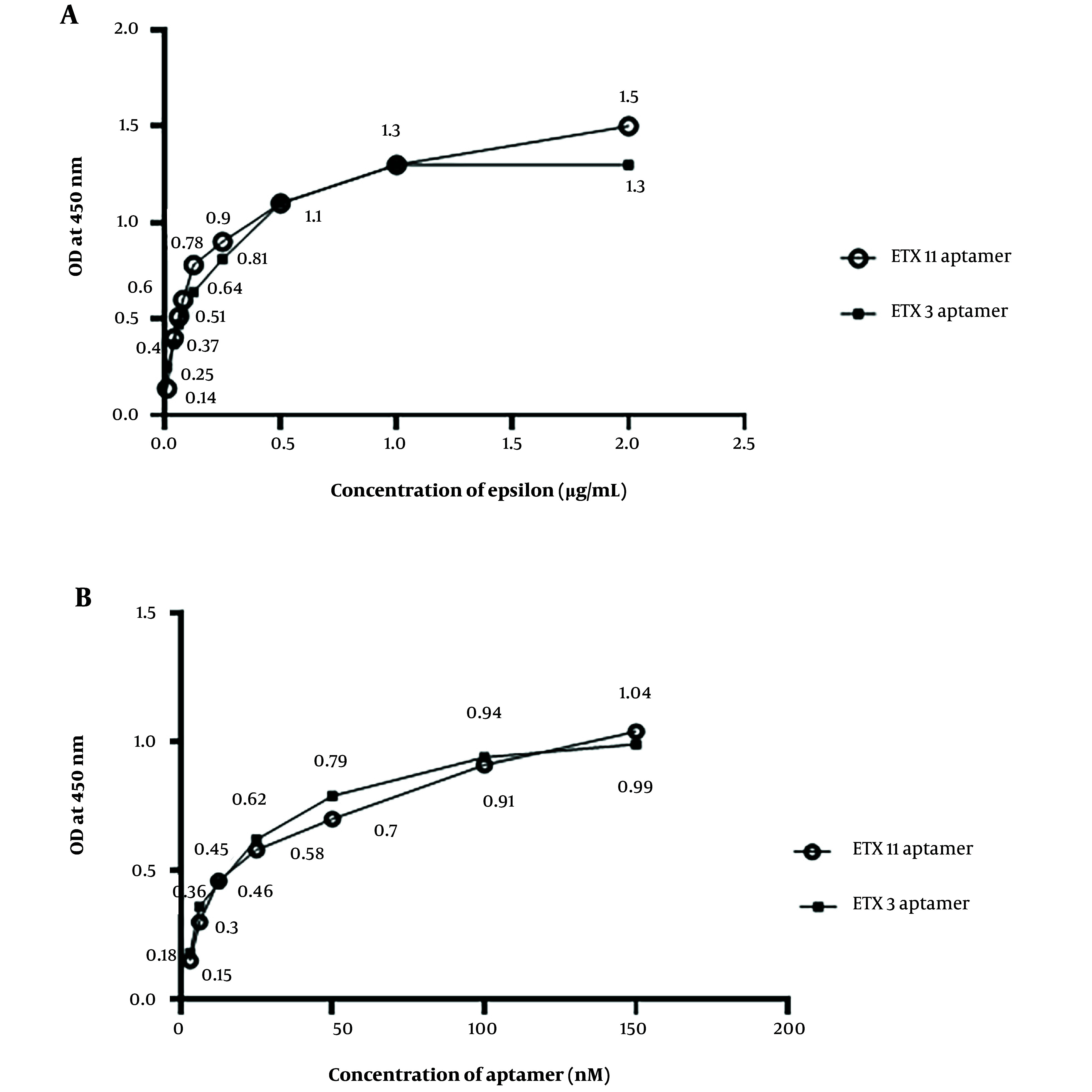 Figure 4
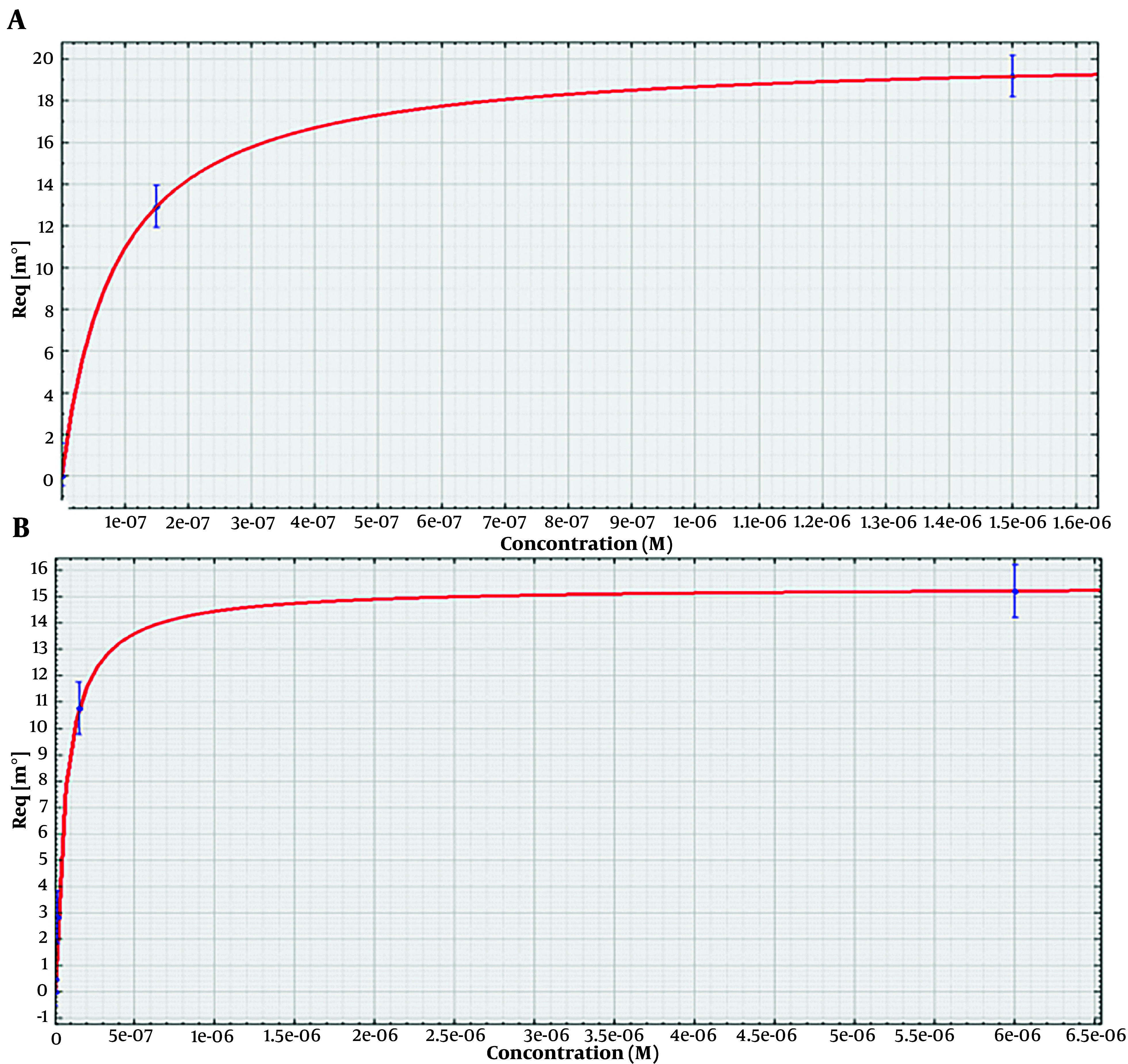 Figure 5
Peer Reviews
No public reviews on file for this paper yet. If you reviewed it on a platform where reviews are public (OpenReview, ICLR, NeurIPS, ICML), you can paste yours below so the community can read it here.
Videos
No videos yet. Explain this paper in a talk, walkthrough, or lecture? Add one.
Taxonomy
TopicsBacteriophages and microbial interactions · Bacterial Genetics and Biotechnology · Advanced biosensing and bioanalysis techniques