Non-KAM classical chaos topology for electrons in superlattice minibands determines the inter-well quantum transition rates
F. Wang, M. T. Greenaway, A. G. Balanov, T. M. Fromhold

TL;DR
The study shows how classical chaos in superlattices influences quantum tunneling rates between wells.
Contribution
A novel connection between classical chaos topology and quantum transition rates in superlattices is established.
Findings
Quantum tunneling rates are determined by classical phase trajectory topology in superlattices.
Classical models accurately estimate quantum transitions between displaced harmonic oscillator states.
Abstract
We investigate the quantum-classical correspondence for a particle tunnelling through a periodic superlattice structure with an applied bias voltage and an additional tilted harmonic oscillator potential. We show that the quantum mechanical tunnelling rate between neighbouring quantum wells of the superlattice is determined by the topology of the phase trajectories of the analogous classical system. This result also enables us to estimate, with high accuracy, the tunnelling rate between two spatially displaced simple harmonic oscillator states using a classical model, and thus gain new insight into this generic quantum phenomenon. This finding opens new directions for exploring and understanding the quantum-classical correspondence principle and quantum jumps between displaced harmonic oscillators, which are important in many branches of natural science.
Genes, proteins, chemicals, diseases, species, mutations and cell lines named across the full text — each resolved to its canonical identifier and authoritative record.
Click any figure to enlarge with its caption.
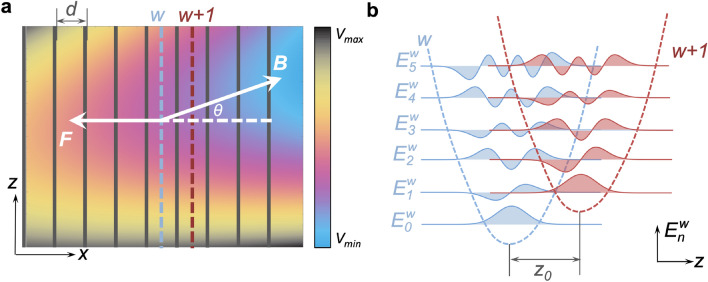 Figure 1
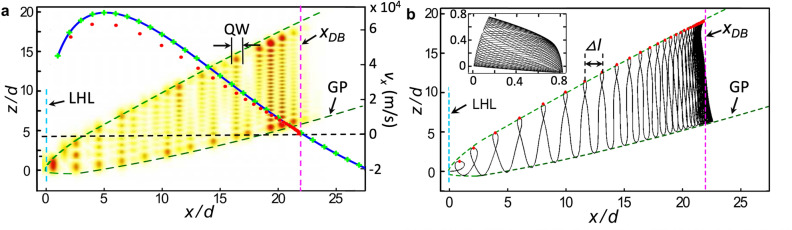 Figure 2
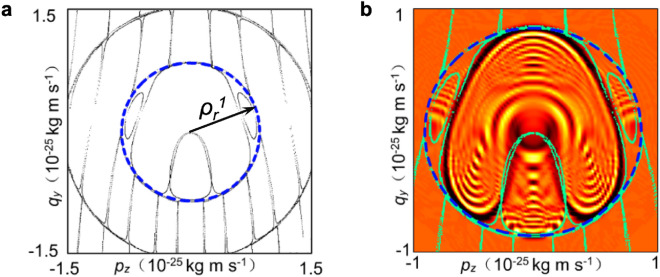 Figure 3
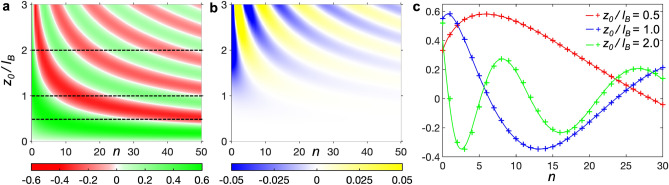 Figure 4
Peer Reviews
No public reviews on file for this paper yet. If you reviewed it on a platform where reviews are public (OpenReview, ICLR, NeurIPS, ICML), you can paste yours below so the community can read it here.
Videos
No videos yet. Explain this paper in a talk, walkthrough, or lecture? Add one.
Taxonomy
TopicsQuantum chaos and dynamical systems · Quantum optics and atomic interactions · Spectroscopy and Quantum Chemical Studies