An array of signal-specific MoYpd1 isoforms determines full virulence in the pathogenic fungus Magnaporthe oryzae
Sri Bühring, Antonia Brunner, Klemens Heeb, Marius-Peter Mergard, Greta Schmauck, Stefan Jacob

TL;DR
The study shows how different versions of a protein in a plant pathogen help it become more harmful to its host.
Contribution
The discovery of signal-specific MoYpd1 isoforms and their role in orchestrating virulence in Magnaporthe oryzae is novel.
Findings
Three MoYpd1 isoforms are produced in a signal-specific manner in Magnaporthe oryzae.
Each isoform responds differently to external stress and contributes to virulence.
Mutant strains with only one isoform are less virulent, showing the need for isoform combinations.
Abstract
Magnaporthe oryzae is placed first on a list of the world’s top ten plant pathogens with the highest scientific and economic importance. The locus MGG_07173 occurs only once in the genome of M. oryzae and encodes the phosphotransfer protein MoYpd1p, which plays an important role in the high osmolarity glycerol (HOG) signaling pathway for osmoregulation. Originating from this locus, at least three MoYPD1 isoforms are produced in a signal-specific manner. The transcript levels of these MoYPD1-isoforms were individually affected by external stress. Salt (KCI) stress raised MoYPD1_T0 abundance, whereas osmotic stress by sorbitol elevates MoYPD1_T1 levels. In line with this, signal-specific nuclear translocation of green fluorescent protein-fused MoYpd1p isoforms in response to stress was observed. Mutant strains that produce only one of the MoYpd1p isoforms are less virulent, suggesting a…
Genes, proteins, chemicals, diseases, species, mutations and cell lines named across the full text — each resolved to its canonical identifier and authoritative record.
Click any figure to enlarge with its caption.
 Figure 1
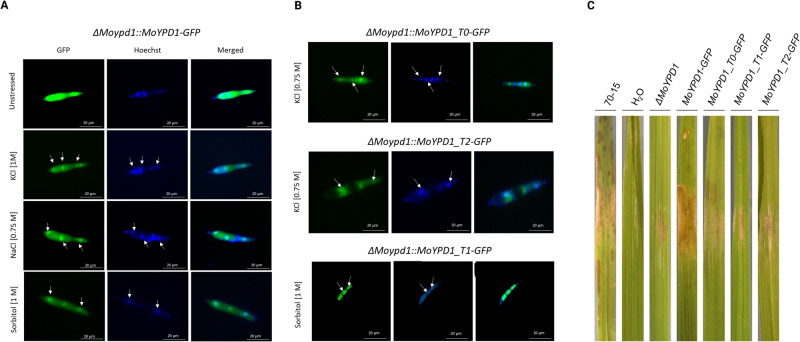 Figure 2
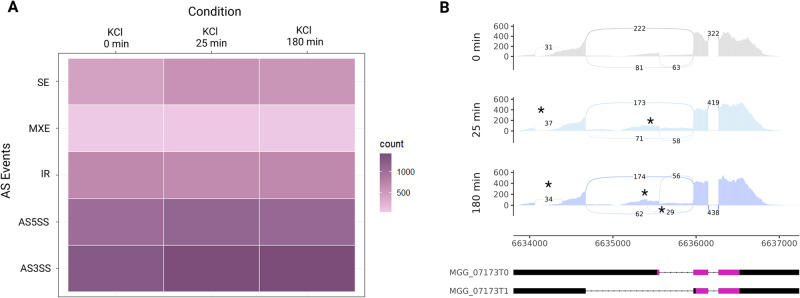 Figure 3
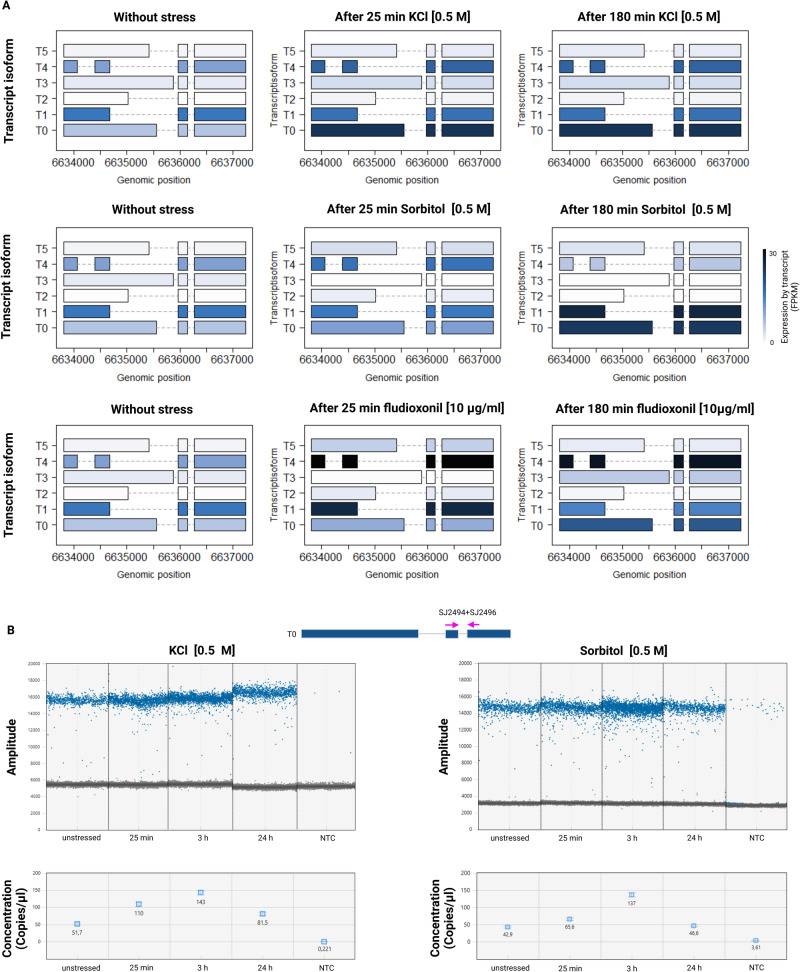 Figure 4
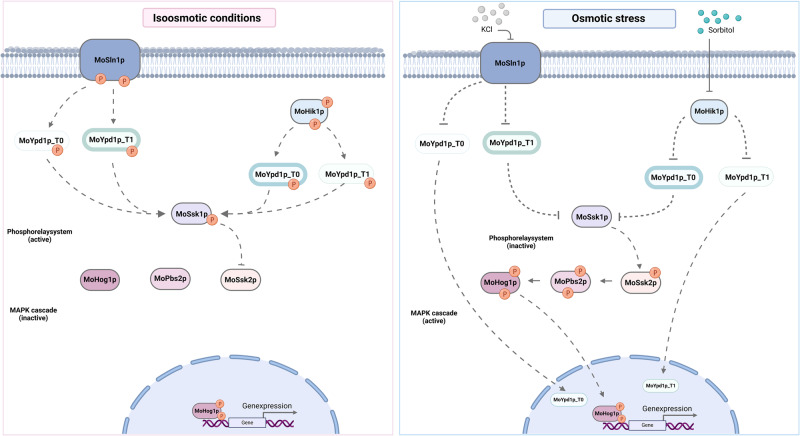 Figure 5
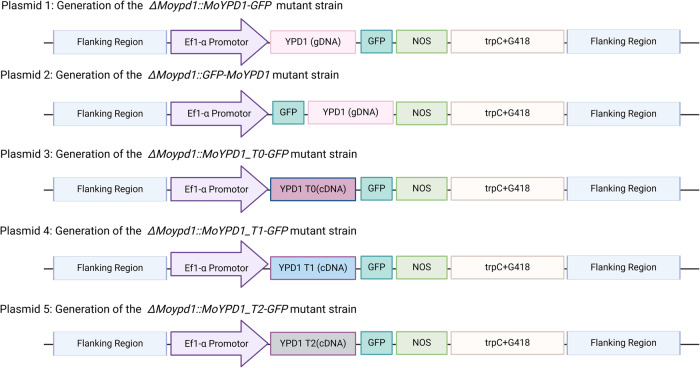 Figure 6
 Figure 7
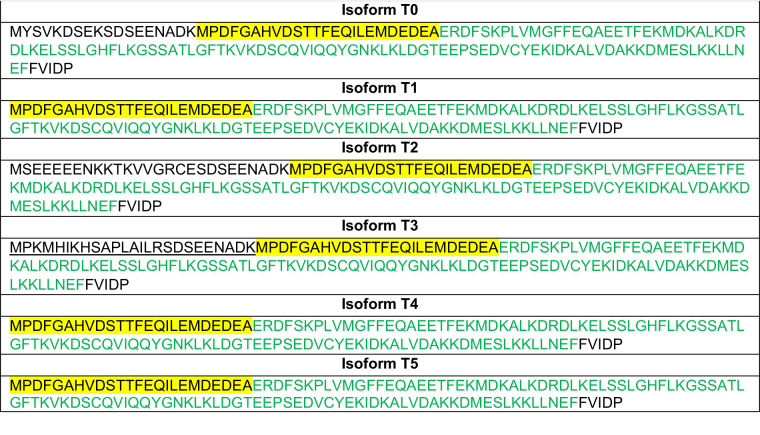 Figure 8
Peer Reviews
No public reviews on file for this paper yet. If you reviewed it on a platform where reviews are public (OpenReview, ICLR, NeurIPS, ICML), you can paste yours below so the community can read it here.
Videos
No videos yet. Explain this paper in a talk, walkthrough, or lecture? Add one.
Taxonomy
TopicsFungal and yeast genetics research · Plant Pathogens and Fungal Diseases · Fungal Biology and Applications