Eye-tracking does not reveal early attention processing of sexual copulatory movement in heterosexual men and women
Ondřej Vaníček, Lucie Krejčová, Martin Hůla, Kateřina Potyszová, Kateřina Klapilová, Klára Bártová

TL;DR
Eye-tracking showed no significant differences in how men and women process sexual movement cues, suggesting similar early attention patterns.
Contribution
A novel eye-tracking method was developed to study attention to sexual copulatory movement in heterosexual individuals.
Findings
Attention bias effects were small and statistically insignificant.
No gender-specific differences in attentional capture were observed.
Copulatory movement does not drive gender-nonspecific responses in women.
Abstract
Men and women respond differently when presented with sexual stimuli. Men's reaction is gender-specific, and women's reaction is gender-nonspecific. This might be a result of differential cognitive processing of sexual cues, namely copulatory movement (CM), which is present in almost every dynamic erotic stimulus. A novelty eye-tracking procedure was developed to assess the saliency of short film clips containing CM or non-CM sexual activities. Results from 29 gynephilic men and 31 androphilic women showed only small and insignificant effects in attention bias and no effects in attentional capture. Our results suggest that CM is not processed differently in men and women and, therefore, is not the reason behind gender-nonspecific sexual responses in women.
Genes, proteins, chemicals, diseases, species, mutations and cell lines named across the full text — each resolved to its canonical identifier and authoritative record.
Click any figure to enlarge with its caption.
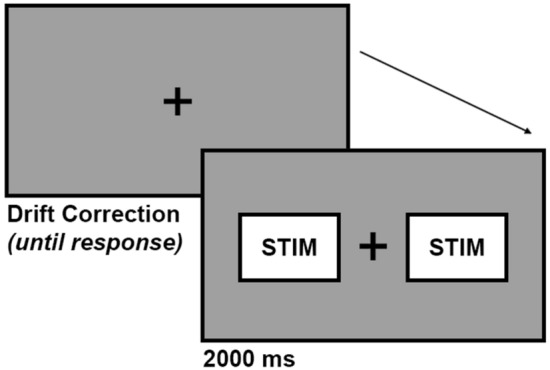 Figure 1
Peer Reviews
No public reviews on file for this paper yet. If you reviewed it on a platform where reviews are public (OpenReview, ICLR, NeurIPS, ICML), you can paste yours below so the community can read it here.
Videos
No videos yet. Explain this paper in a talk, walkthrough, or lecture? Add one.
Taxonomy
TopicsEvolutionary Psychology and Human Behavior · Sexuality, Behavior, and Technology · Sexual function and dysfunction studies