Children with bilateral cerebral palsy use their hip joint to complete a step-up task
Vatsala Goyal, Keith E. Gordon, Theresa Sukal-Moulton

TL;DR
Children with bilateral cerebral palsy rely more on their hip joint when performing a step-up task, which may explain difficulties with stair climbing.
Contribution
The study identifies hip joint dependency and timing differences in children with bilateral CP during a step-up task.
Findings
Peak support and hip abduction moments were similar between CP and typically developing children.
Children with CP timed their peak moments closer together and relied more on the hip joint.
Increased hip dependency was observed in the more affected lower limb of children with CP.
Abstract
Performance in stair-climbing is largely associated with disruptions to mobility and community participation in children with cerebral palsy (CP). It is important to understand the nature of motor impairments responsible for making stairs a challenge in children with bilateral CP to clarify underlying causes of impaired mobility. In pediatric clinical populations, sensitive measurements of movement quality can be captured during the initial step of stair ascent. Thus, the purpose of this study was to quantify the lower limb joint moments of children with bilateral CP during the stance phases of a step-up task. Participants performed multiple stepping trials in a university gait laboratory. Outcome measures included extensor support moments (the sum of hip, knee, and ankle sagittal plane moments), hip abduction moments, and their timing. We recruited seven participants per group. We…
Genes, proteins, chemicals, diseases, species, mutations and cell lines named across the full text — each resolved to its canonical identifier and authoritative record.
Click any figure to enlarge with its caption.
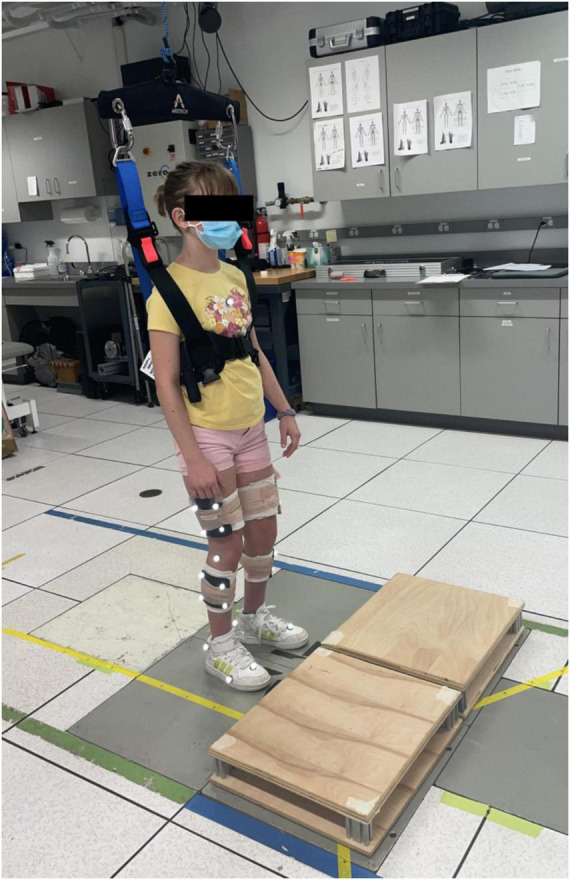 Figure 1
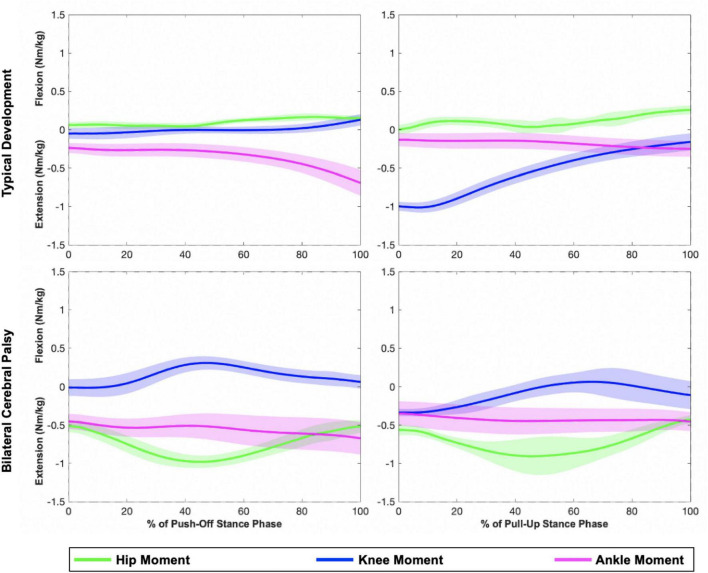 Figure 2
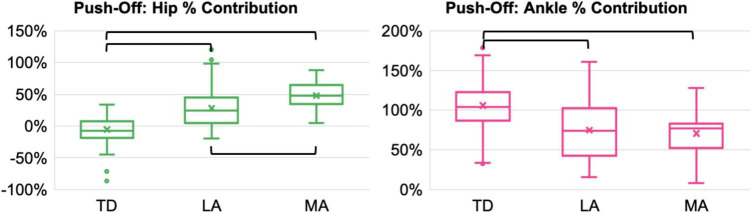 Figure 3
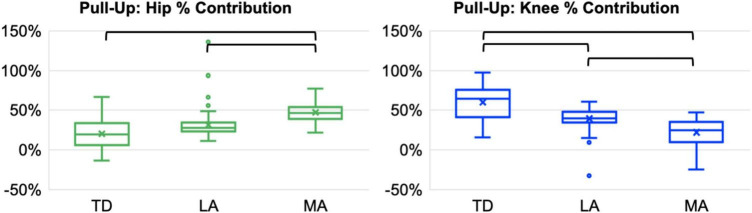 Figure 4
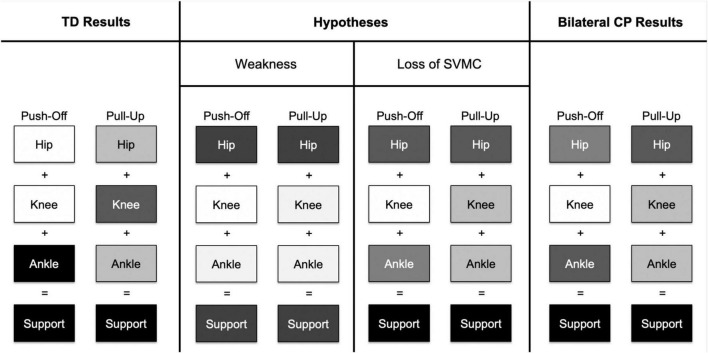 Figure 5
Peer Reviews
No public reviews on file for this paper yet. If you reviewed it on a platform where reviews are public (OpenReview, ICLR, NeurIPS, ICML), you can paste yours below so the community can read it here.
Videos
No videos yet. Explain this paper in a talk, walkthrough, or lecture? Add one.
Taxonomy
TopicsCerebral Palsy and Movement Disorders · Family and Disability Support Research · Infant Development and Preterm Care