Redescending Stomach: A Rare and Potentially Lethal Complication of Gastric Herniation
Sam Verrept, Mathieu Lefere, Yves De Bruecker

TL;DR
A rare and dangerous stomach complication called redescending stomach can occur with gastric herniation and may lead to life-threatening issues.
Contribution
The paper highlights gastric fundus redescent as an under-recognized cause of gastric strangulation in intrathoracic herniation.
Findings
Gastric fundus redescent can cause gastric strangulation in intrathoracic herniation.
Gastric pneumatosis, a sign of ischemia, can be detected on a plain chest radiograph in this condition.
Abstract
Large gastric hernias are common and usually cause minor symptoms. Rarely, complete intrathoracic herniation of the stomach is complicated by strangulation. The underlying mechanism can be gastric volvulus or the less recognized phenomenon of gastric fundus redescent. We describe a case where this rare but potentially lethal complication of gastric herniation is present. Additionally, we show that gastric pneumatosis, a sign associated with ischemia, can be initially visualized on a plain chest radiograph in this setting. Teaching point: Redescent of the fundus is a possible, but unrecognized cause of gastric strangulation in intrathoracic stomachs.
Genes, proteins, chemicals, diseases, species, mutations and cell lines named across the full text — each resolved to its canonical identifier and authoritative record.
Click any figure to enlarge with its caption.
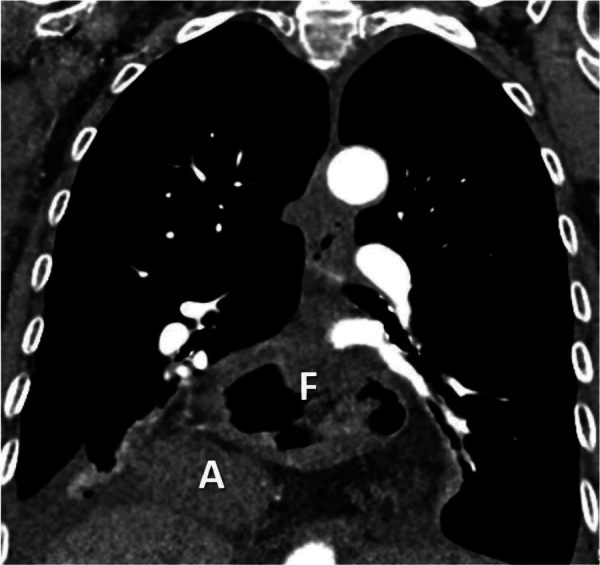 Figure 1
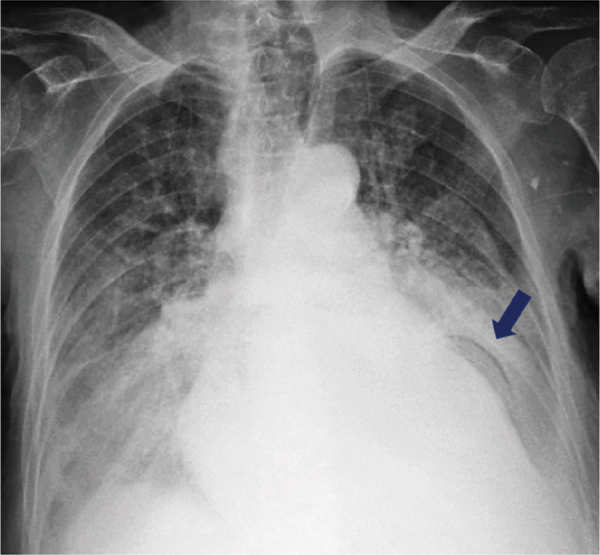 Figure 2
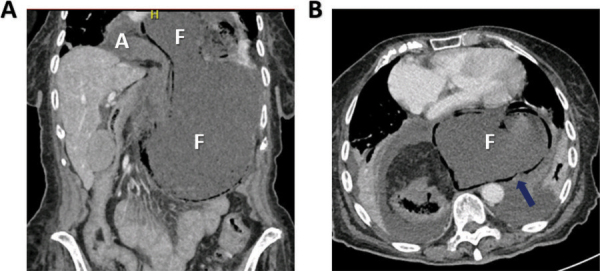 Figure 3
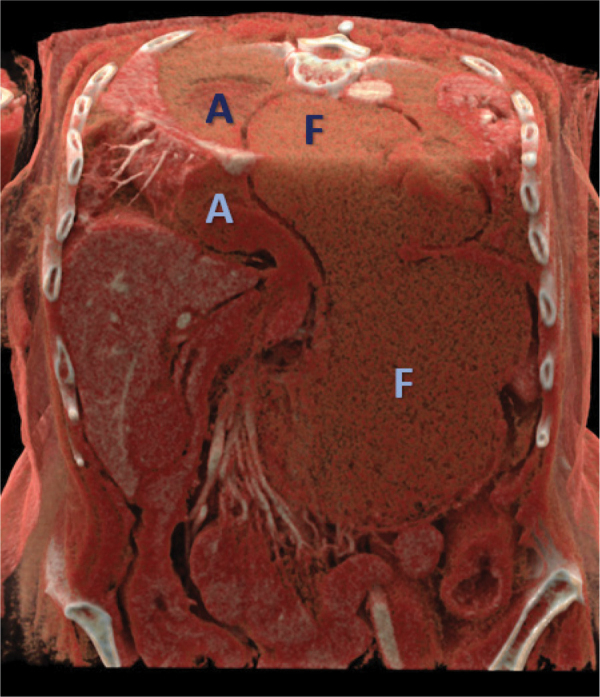 Figure 4
Peer Reviews
No public reviews on file for this paper yet. If you reviewed it on a platform where reviews are public (OpenReview, ICLR, NeurIPS, ICML), you can paste yours below so the community can read it here.
Videos
No videos yet. Explain this paper in a talk, walkthrough, or lecture? Add one.
Taxonomy
TopicsEsophageal and GI Pathology · Congenital Diaphragmatic Hernia Studies · Intestinal and Peritoneal Adhesions