Association between dietary phytochemical index and risk of benign prostatic hyperplasia: a case-control study
Seyedeh Neda Mousavi, Maryam Nouri, Esmaeil Yousefi Rad, Reza Kazemi, Mehdi Birjandi, Shelly Coe, Somayeh Saboori

TL;DR
A study in Iran found that higher intake of phytochemical-rich foods is linked to a lower risk of benign prostatic hyperplasia in men.
Contribution
This is the first case-control study to demonstrate a significant inverse association between a Dietary Phytochemical Index and BPH risk in a Middle-Eastern population.
Findings
Participants in the highest DPI tertile had a 70% lower odds of BPH compared to those in the lowest tertile.
Higher DPI was associated with increased consumption of whole grains, fruits, vegetables, and legumes, and reduced consumption of red meat and refined grains.
Abstract
Dietary intake of phytochemicals has been associated with a reduced risk of chronic diseases, but research on their relationship with benign prostatic hyperplasia (BPH) is limited. This case-control study aimed to investigate the association between a Dietary Phytochemical Index (DPI) and BPH risk in a Middle-Eastern population. The study recruited 112 BPH patients and 112 age-matched healthy controls (40–75 years) from Al-Zahra Hospital Clinic in Isfahan, Iran between 2021 and 2022. Dietary intake was assessed using a validated food-frequency questionnaire, and DPI was calculated as the ratio of energy intake from phytochemical-rich foods to total daily energy intake. Logistic regression analysis was performed, adjusting for potential confounders. In the crude model, participants in the highest DPI tertile had a 70% lower odds of BPH compared to those in the lowest tertile (OR:0.3,…
Genes, proteins, chemicals, diseases, species, mutations and cell lines named across the full text — each resolved to its canonical identifier and authoritative record.
Click any figure to enlarge with its caption.
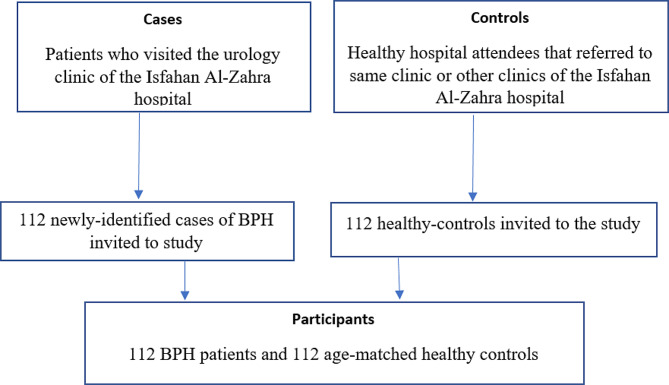 Figure 1
Peer Reviews
No public reviews on file for this paper yet. If you reviewed it on a platform where reviews are public (OpenReview, ICLR, NeurIPS, ICML), you can paste yours below so the community can read it here.
Videos
No videos yet. Explain this paper in a talk, walkthrough, or lecture? Add one.
Taxonomy
TopicsPhytoestrogen effects and research · Nuts composition and effects · Urinary Bladder and Prostate Research