Draft genome sequencing and assembly of Favolaschia claudopus CIRM-BRFM 2984 isolated from oak limbs
David Navarro, Elodie Drula, Delphine Chaduli, Robert Cazenave, Steven Ahrendt, Jie Wang, Anna Lipzen, Chris Daum, Kerrie Barry, Igor V. Grigoriev, Anne Favel, Marie-Noëlle Rosso, Francis Martin

TL;DR
This paper presents the genome sequence of Favolaschia claudopus, an invasive fungus found in Europe, to help understand its spread.
Contribution
The study provides a new genome assembly for Favolaschia claudopus, offering insights into its genetic makeup and invasive potential.
Findings
The genome of Favolaschia claudopus strain CIRM-BRFM 2984 was sequenced and assembled.
The genome has a large size and a high number of protein-coding genes, similar to other Mycenaceae species.
The data may help explain the fungus's successful global spread.
Abstract
Favolaschia claudopus, a wood-inhabiting basidiomycete of the Mycenaceae family, is considered an invasive species that has recently spread from Oceania to Europe. The CIRM-BRFM 2984 strain of this fungus was originally isolated from a basidiome collected from the fallen limb of a decayed oak tree in Southwest France. The genome sequence of this strain shared characteristics with other Mycenaceae species, including a large genome size and enriched content of protein-coding genes. The genome sequence provided here will facilitate further investigation on the factors that contribute to the successful global dissemination of F. claudopus.
Genes, proteins, chemicals, diseases, species, mutations and cell lines named across the full text — each resolved to its canonical identifier and authoritative record.
Click any figure to enlarge with its caption.
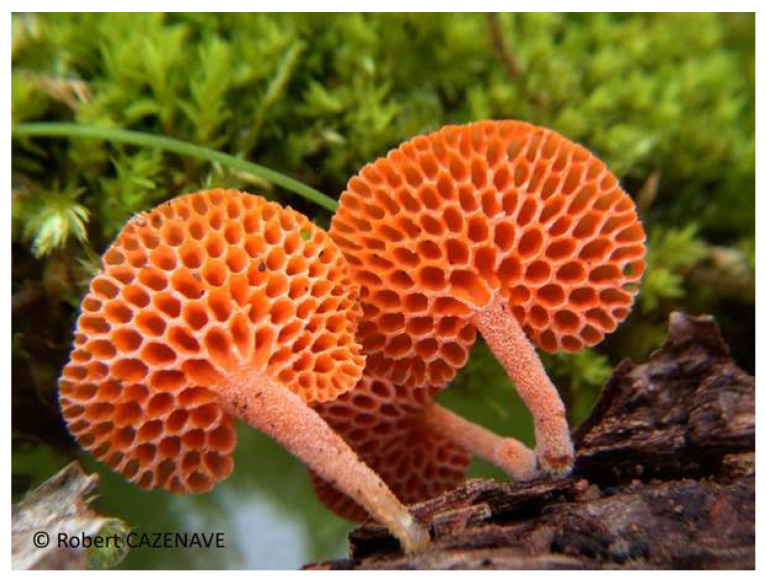 Figure 1
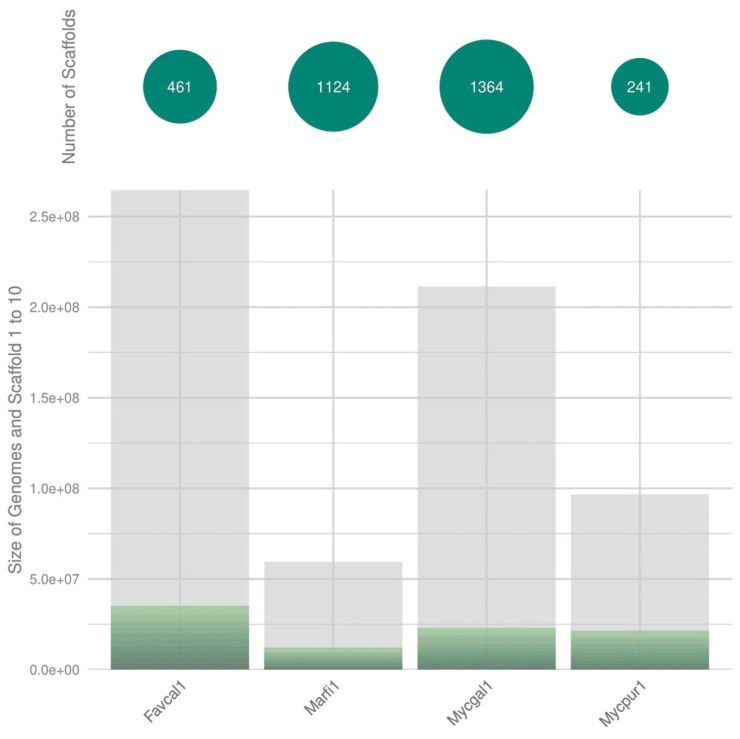 Figure 2
Peer Reviews
No public reviews on file for this paper yet. If you reviewed it on a platform where reviews are public (OpenReview, ICLR, NeurIPS, ICML), you can paste yours below so the community can read it here.
Videos
No videos yet. Explain this paper in a talk, walkthrough, or lecture? Add one.
Taxonomy
TopicsPlant Pathogens and Fungal Diseases · Mycorrhizal Fungi and Plant Interactions · Yeasts and Rust Fungi Studies