Plastid genome of Passiflora tripartita var. mollissima (poro-poro) from Huánuco, Peru
Flavio Aliaga, Mario Zapata-Cruz, Silvia Ana Valverde-Zavaleta, Abdullah Abdullah, Flavio Aliaga, Rahul G Shelke, Flavio Aliaga

TL;DR
This study reports the first plastid genome of Passiflora tripartita var. mollissima from Peru, providing a valuable resource for genetic research and conservation.
Contribution
The first plastid genome sequence of Passiflora tripartita var. mollissima from Peru is presented.
Findings
The plastid genome is 163,451 bp long with specific regions and gene content detailed.
The phylogenetic analysis shows poro-poro is closely related to Passiflora menispermifolia and Passiflora oerstedii.
The genome provides a foundation for molecular markers, evolution, and conservation studies.
Abstract
Passiflora tripartita var. mollissima, known locally as poro-poro, is an important native fruit used in traditional Peruvian medicine with relevant agro-industrial and pharmaceutical potential for its antioxidant capacity for human health. However, to date, only a few genetic data are available, which limits exploring its genetic diversity and developing new genetic studies for its improvement. We report the poro-poro plastid genome to expand the knowledge of its molecular markers, evolutionary studies, molecular pathways, and conservation genetics. Total genomic DNA was extracted from fresh leaves (herbarium voucher: USM:MHN331530). The DNA was sequenced using Illumina Novaseq 6000 platform providing 163,451 bp in length, with a large single-copy region of 85,525 bp and a small single-copy region of 13,518 bp, separated by a pair of inverted repeat regions (IR) of 32,204 bp, and the…
Genes, proteins, chemicals, diseases, species, mutations and cell lines named across the full text — each resolved to its canonical identifier and authoritative record.
Click any figure to enlarge with its caption.
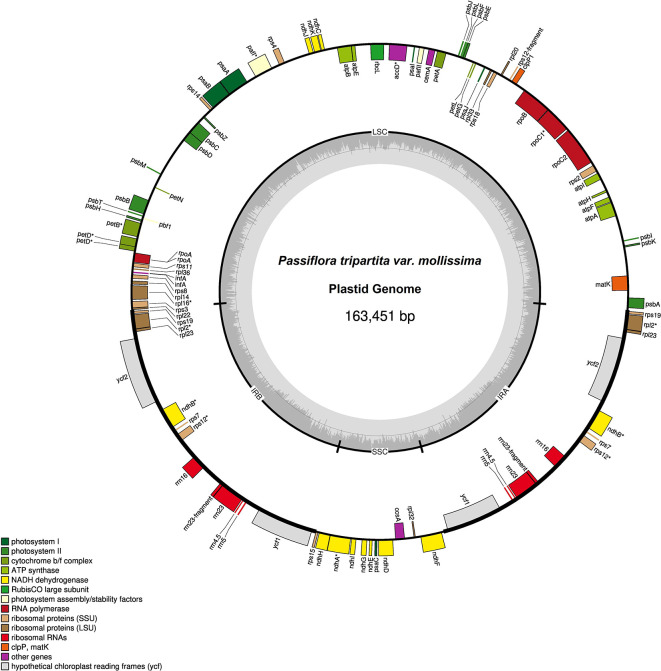 Figure 1
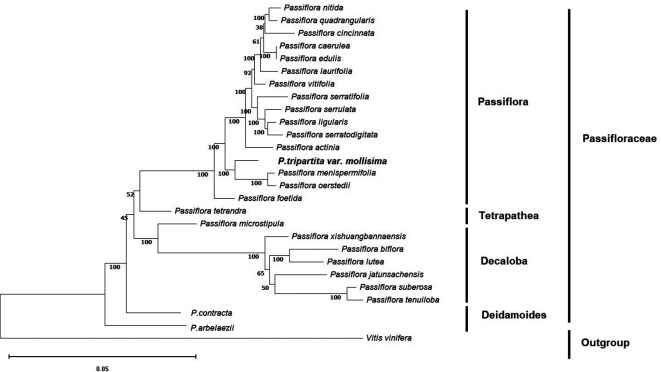 Figure 2
Peer Reviews
No public reviews on file for this paper yet. If you reviewed it on a platform where reviews are public (OpenReview, ICLR, NeurIPS, ICML), you can paste yours below so the community can read it here.
Videos
No videos yet. Explain this paper in a talk, walkthrough, or lecture? Add one.
Taxonomy
TopicsCocoa and Sweet Potato Agronomy · Banana Cultivation and Research · Microbial Metabolites in Food Biotechnology