Severe COVID-19 and long COVID are associated with high expression of STING, cGAS and IFN-α
Maria Alice Freitas Queiroz, Wandrey Roberto dos Santos Brito, Keise Adrielle Santos Pereira, Leonn Mendes Soares Pereira, Ednelza da Silva Graça Amoras, Sandra Souza Lima, Erika Ferreira dos Santos, Flávia Póvoa da Costa, Kevin Matheus Lima de Sarges

TL;DR
This study shows that severe and long-term effects of COVID-19 are linked to increased activity of the cGAS-STING pathway and inflammatory markers like IFN-α.
Contribution
The study identifies a potential role of the cGAS-STING pathway in both severe and long-term inflammation following SARS-CoV-2 infection.
Findings
Severe acute COVID-19 is associated with higher cGAS, STING, IFN-α, TNF-α, and IL-6 levels.
Long COVID is linked to elevated cGAS, STING, and IFN-α levels.
The cGAS-STING pathway may drive systemic inflammation in severe and post-COVID-19 conditions.
Abstract
The cGAS-STING pathway appears to contribute to dysregulated inflammation during coronavirus disease 2019 (COVID-19); however, inflammatory factors related to long COVID are still being investigated. In the present study, we evaluated the association of cGAS and STING gene expression levels and plasma IFN-α, TNF-α and IL-6 levels with COVID-19 severity in acute infection and long COVID, based on analysis of blood samples from 148 individuals, 87 with acute COVID-19 and 61 in the post-COVID-19 period. Quantification of gene expression was performed by real-time PCR, and cytokine levels were quantified by ELISA and flow cytometry. In acute COVID-19, cGAS, STING, IFN-α, TNF-α, and IL-6 levels were higher in patients with severe disease than in those with nonsevere manifestations (p < 0.05). Long COVID was associated with elevated cGAS, STING and IFN-α levels (p < 0.05). Activation of the…
Genes, proteins, chemicals, diseases, species, mutations and cell lines named across the full text — each resolved to its canonical identifier and authoritative record.
Click any figure to enlarge with its caption.
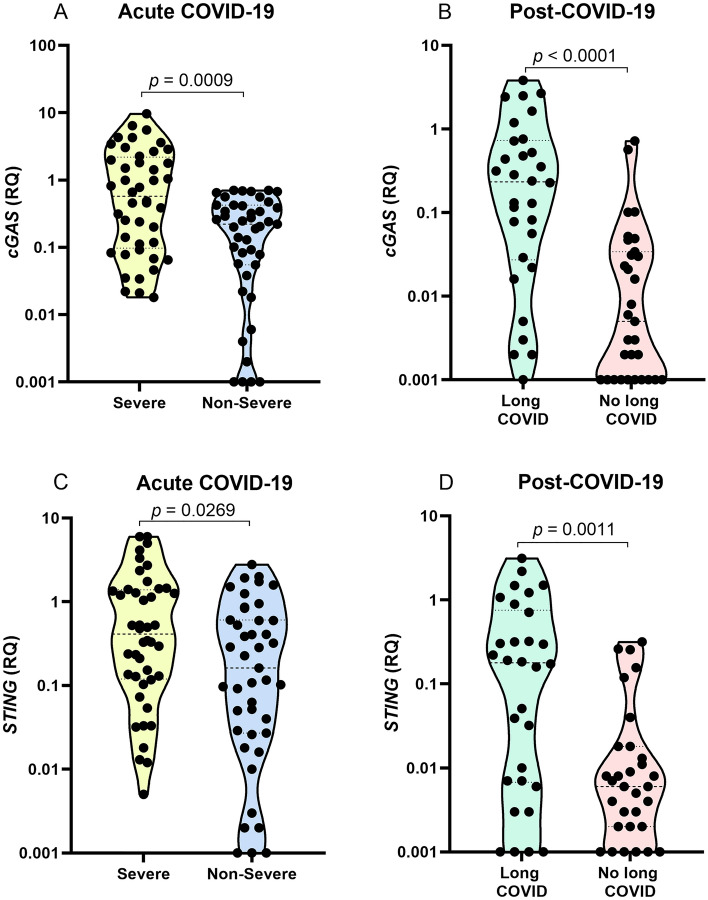 Figure 1
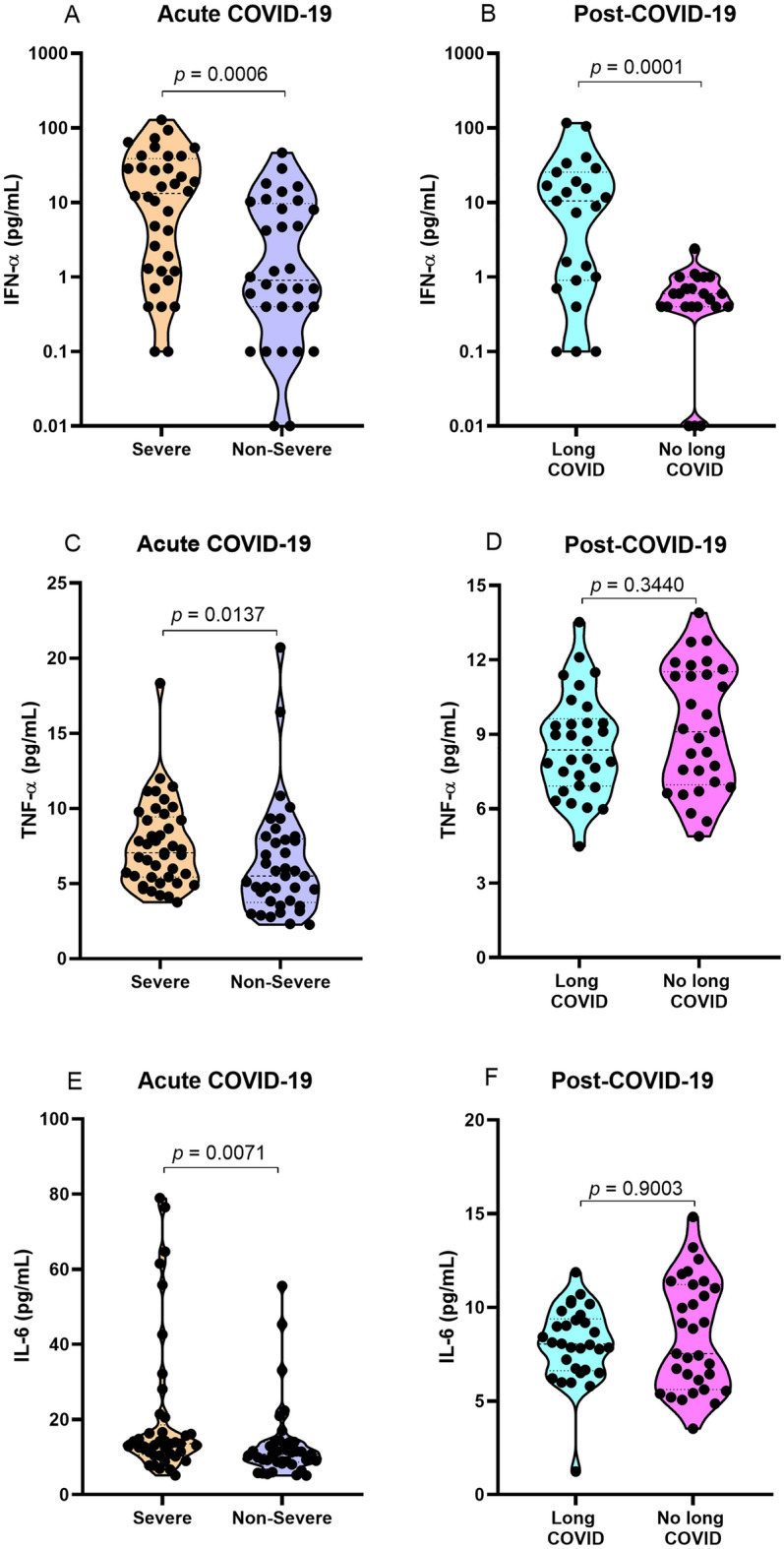 Figure 2
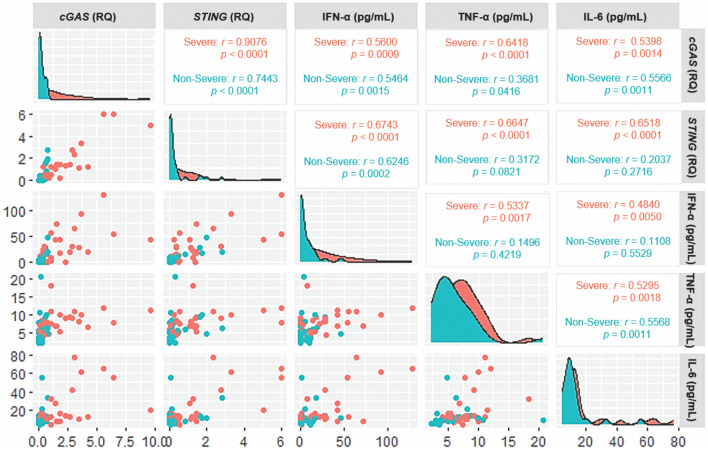 Figure 3
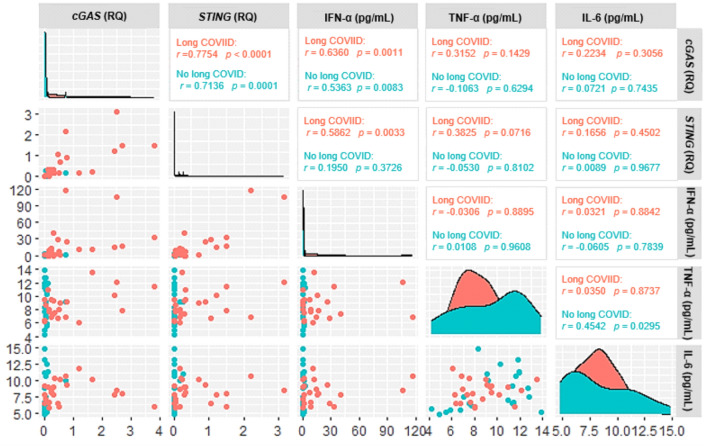 Figure 4
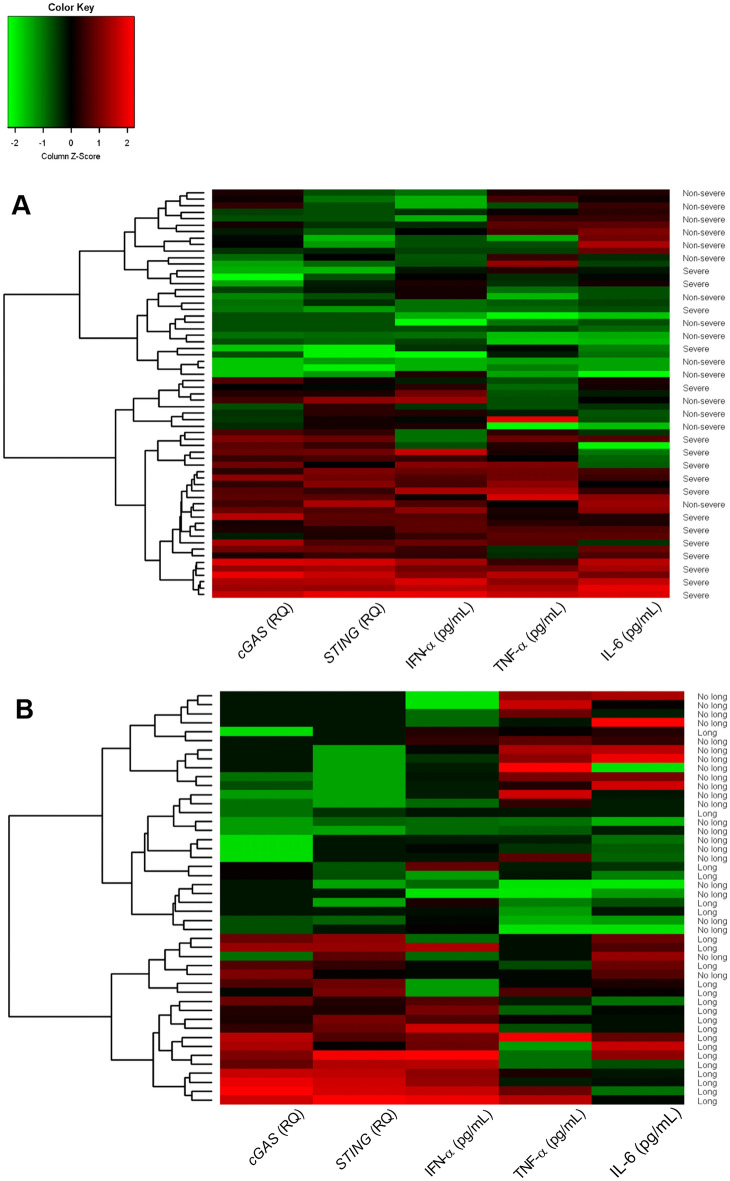 Figure 5
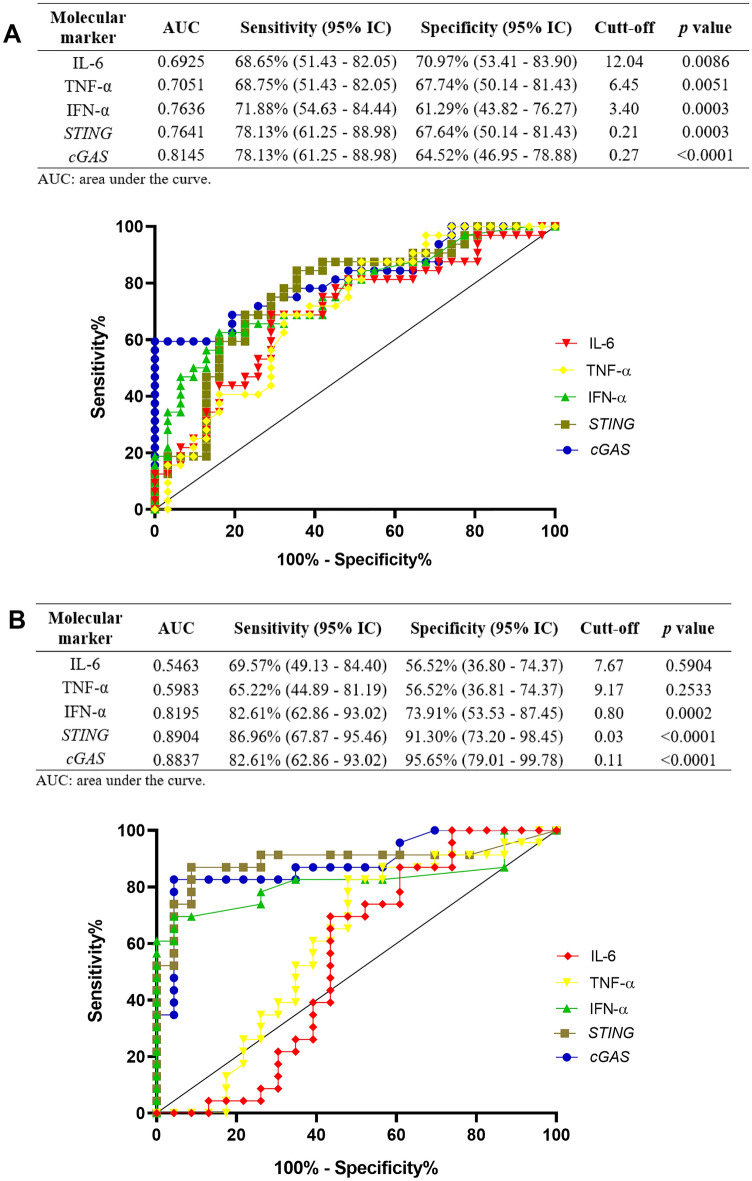 Figure 6
Peer Reviews
No public reviews on file for this paper yet. If you reviewed it on a platform where reviews are public (OpenReview, ICLR, NeurIPS, ICML), you can paste yours below so the community can read it here.
Videos
No videos yet. Explain this paper in a talk, walkthrough, or lecture? Add one.
Taxonomy
TopicsSuperconducting Materials and Applications